
Lieferung heute & morgen

Qualitätsgarantie

Willkommens-Angebote freischalten: KOSTENLOSE Lieferung | Bis zu 80 % RABATT | Kostenlose 30-Tage-JoyPlus-Testphase
App herunterladen
An A6 notebook fits into many bags and rucksacks, but offers considerably less writing space than an A5 model. That is precisely why choosing the right features matters. If you decide based solely on colour or an apparently low price, you may only notice important differences in everyday use.
Typical buying problems arise from three factors:
For school pupils, students, professionals and journal fans, it is therefore more useful to look at the technical details than to make a decision based solely on marketing terms.
The A6 format measures approximately 105 × 148 mm as standard. Depending on the cover, binding and features, the actual external dimensions may vary. A notebook with a thick hardcover, pocket or elastic strap needs slightly more space than a slim model.
As a pocket notebook and notebook for on the go, A6 is particularly suitable for:
Before buying, check whether the notebook will fit in the handbag, jacket pocket or rucksack you intend to use. Weight can also be relevant: a model with 192 pages and additional features will naturally be heavier than a thin notebook.
An A6 notebook with a hardcover provides a firm writing surface and protects the pages better against pressure and creasing. This is useful if the book is often used without a table or carried alongside other items. However, a hardcover can add a little extra weight and volume.
An A6 notebook with a softcover is more flexible and easier to store in a bag. It is suitable for users who want to carry as little weight as possible. If it will be used frequently in a full rucksack, however, the level of protection provided by the cover should still be considered.
The binding also matters. A thread-sewn binding may open differently from a glued binding. If you regularly write or sketch across a double-page spread, pay attention to the binding type stated in the listing.
Paper weight is stated in g/m². It describes the paper’s basis weight, but is not by itself proof of suitability for a particular type of ink. Several details are therefore important when choosing a notebook for writing and sketching:
An A6 journal or an undated A6 planner is particularly flexible if you are not planning to use it every day. With a classic lined notebook, on the other hand, you have more freedom to organise notes, lists and sketches.
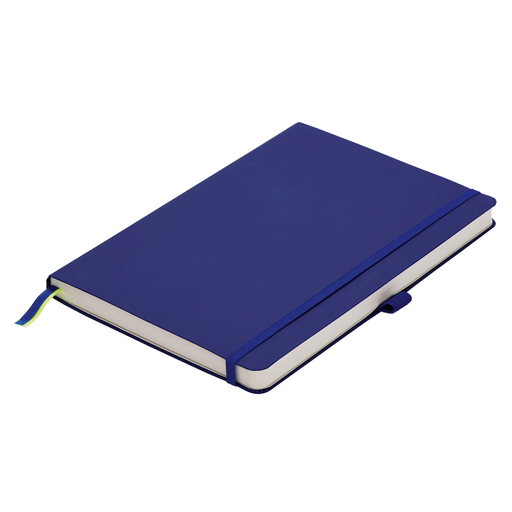
Why this product suits this profile: The flexible A6 softcover is suitable for school pupils, students and anyone looking for a small notebook that takes up little space for everyday notes.
The product description clearly states the A6 format, 192 pages, 90-g/m² paper and Lamy ruling. This makes it easier to assess the page count and ruling before buying.
192 pages of heavy, ivory-coloured 90 g/m² paper, plus a pen loop, two bookmarks and a back pocket.
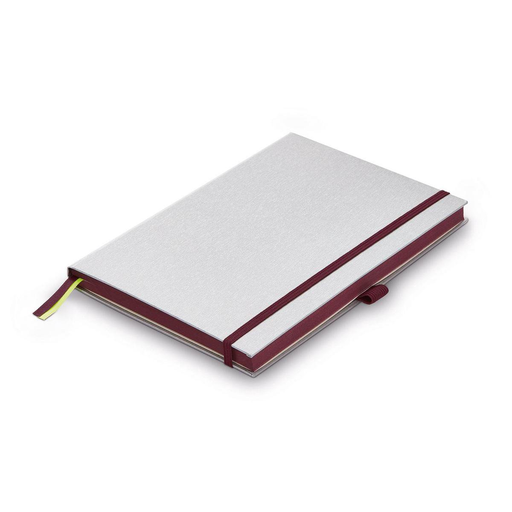
Why this product suits this profile: The sturdy hardcover and stated thread-sewn binding make this notebook appealing to professionals and creatives who want to carry it regularly and use it over an extended period.
The description states 192 pages, 90-g/m² paper, acid-free paper and a note about resistance to ink bleed-through. These details are more specific than simply describing the paper as ‘premium’.
Metal-effect hardcover, thread-sewn binding, two bookmarks, pen loop, elastic strap, back pocket and eight detachable sheets.
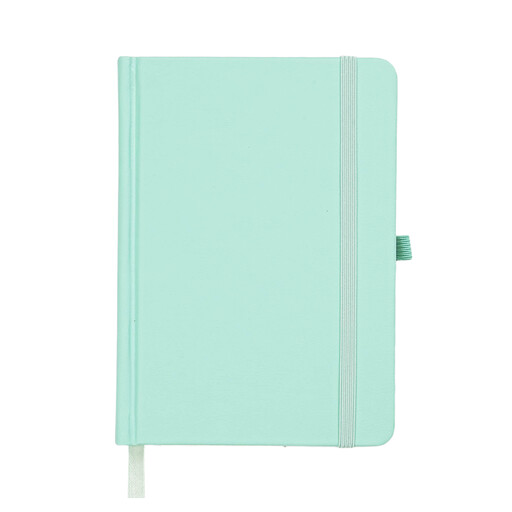
Why this product suits this profile: This small notebook combines lined pages with features for use on the go, making it suitable for journalling, lists, personal entries and spontaneous ideas.
The details clearly distinguish between 80 sheets and 160 pages. The paper weight, ruling and integrated accessories are also specified clearly.
PU hardcover, 100-g/m² paper, lined pages, bookmark, elastic strap and pen loop; available in several colour options.
We have put together a complete, regularly updated list of products that fully meet these strict selection criteria and the safety regulations applicable in the EU.
The A6 paper format measures approximately 105 × 148 mm. The external dimensions may be larger because of the hardcover, binding, elastic strap or back pocket. When checking whether it will fit in your bag, the stated product dimensions therefore matter more than the format designation alone.
A hardcover protects the pages and provides a firm writing surface. A softcover is more flexible and can be stored more easily. A hardcover may be practical for everyday transport in a well-filled bag, while a softcover is often the better choice if keeping weight to a minimum is your priority.
Its lifespan depends on the paper, binding, cover and how it is handled. Moisture, intense heat, pressure and frequent bending can damage the pages and cover. A notebook should be stored in a dry place and kept closed wherever possible during transport. It is also important that the number of pages matches the amount of writing you intend to do.