
Lieferung heute & morgen

Qualitätsgarantie

Willkommens-Angebote freischalten: KOSTENLOSE Lieferung | Bis zu 80 % RABATT | Kostenlose 30-Tage-JoyPlus-Testphase
App herunterladen
By the Joybuy Product Recommendation Officer, July 10, 2026
Whether for children's toys, game controllers, digital cameras, or remote controls, the need for AA batteries in any household is constant. However, using single-use batteries not only leads to recurring costs but also creates a significant environmental impact. AA rechargeable batteries, also known as Mignon cells, represent an economically and ecologically sound alternative.
This buyer's guide is designed to help you understand the key technical features and make an informed decision. We will introduce a selection of models based on objective parameters like capacity, longevity, and technology to help you find the right NiMH AA battery for your needs.
The selection of rechargeable batteries is vast. To make the right choice, three criteria are particularly important: capacity, longevity, and the underlying technology.
A battery's capacity is measured in milliampere-hours (mAh) and describes how much energy it can store. A higher mAh rating means a potentially longer runtime per charge. However, the highest capacity isn't always the right choice for every purpose.
A battery's lifespan is determined by two factors: the number of possible charge cycles and its self-discharge rate.
Modern AA rechargeable batteries are based almost exclusively on Nickel-Metal Hydride (NiMH) technology. Unlike older NiCd (Nickel-Cadmium) batteries, they do not suffer from a memory effect. This means they can be recharged at any time without their capacity being compromised. Furthermore, they are more environmentally friendly as they do not contain toxic cadmium.
Based on the criteria mentioned, we have compiled a selection of rechargeable AA batteries suitable for various applications.
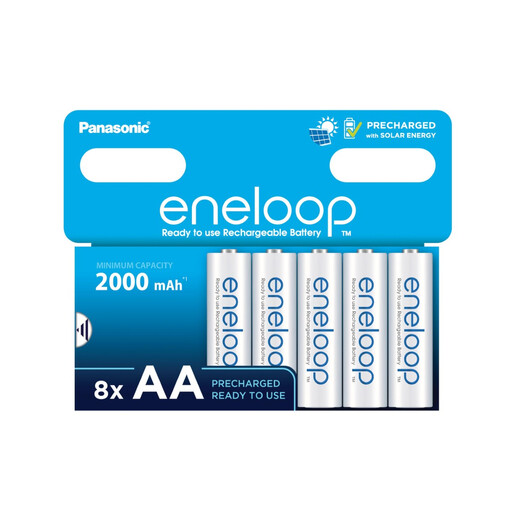
What sets them apart: The standard eneloop batteries are renowned for their reliability and durability. According to the manufacturer, they can be recharged up to 2,100 times and have an extremely low self-discharge rate—retaining up to 70% of their original charge even after 10 years of storage. They are delivered pre-charged with solar energy and are ready to use out of the box.
Advantages:
Who it's for: This model is an excellent all-around solution for any household. It is ideal for families who need a reliable power source for toys, controllers, and everyday devices and who value a long-term investment.
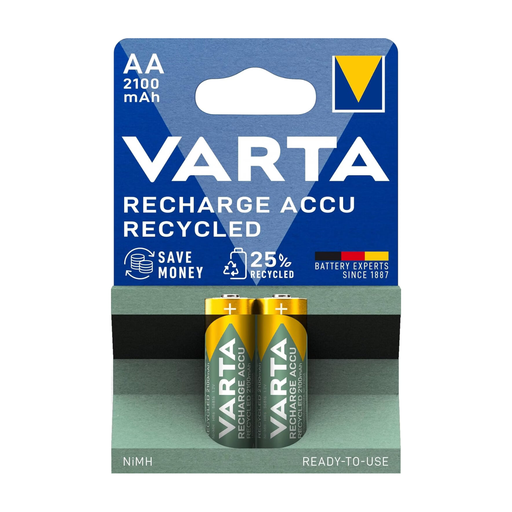
What sets them apart: The Varta AA Recharge Accu Recycled combine solid performance with a focus on sustainability. According to VARTA, they are made with 21% recycled material. With a capacity of 2100 mAh and "Ready to Use" technology, they are ready for immediate use and designed for high-consumption devices like digital cameras or camera flashes.
Advantages:
Who it's for: These batteries are aimed at environmentally conscious consumers who are looking for a reliable power source for demanding devices and want to contribute to resource conservation.
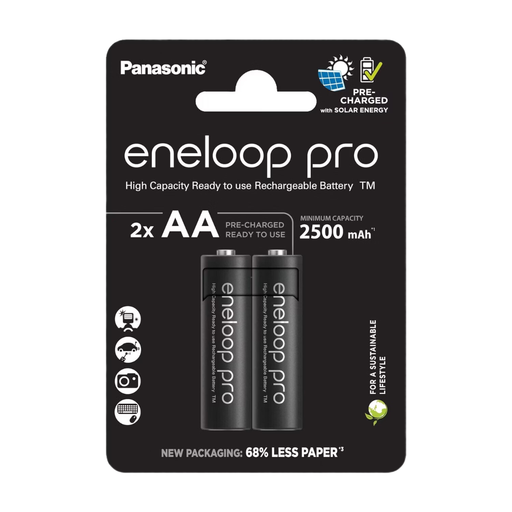
What sets them apart: The eneloop AA Pro series is specifically designed for professional applications and devices with extremely high energy demands. With a minimum capacity of 2500 mAh, they offer longer runtime in power-hungry devices. Although the number of charge cycles is lower than the standard models at up to 500, the manufacturer states they still retain 85% of their charge after one year of storage.
Advantages:
Who it's for: Ideal for photographers, gamers, and tech enthusiasts who need batteries for cameras (especially flash units) or batteries for controllers and prioritise maximum performance over a longer usage period per charge.
The models featured cover many, but not all, use cases. If you are looking for different capacities, pack sizes, or specific features, you may find the right product in our broader selection.
Explore Our Full Range of Pre-charged NiMH Batteries
The main difference is reusability. Regular AA batteries (alkaline) are designed for single use and must be disposed of after they are depleted. AA rechargeable batteries (NiMH) can be recharged hundreds of times. Another technical difference is the voltage: alkaline batteries have a nominal voltage of 1.5 volts, whereas NiMH rechargeable batteries have a voltage of 1.2 volts. For most modern devices, this voltage difference is not an issue.
The lifespan depends on the number of charge cycles, usage, and storage conditions. High-quality, long-lasting batteries can be recharged up to 2,100 times, as stated by the manufacturer. With regular use and proper care, they can serve as a reliable power source for several years.
In principle, NiMH AA rechargeable batteries are compatible with most NiMH chargers. However, for optimal lifespan and performance, it is recommended to use a high-quality charger that features individual cell monitoring and an automatic shut-off function. This prevents overcharging the batteries, which can shorten their lifespan.