
Lieferung heute & morgen

Qualitätsgarantie

Willkommens-Angebote freischalten: KOSTENLOSE Lieferung | Bis zu 80 % RABATT | Kostenlose 30-Tage-JoyPlus-Testphase
App herunterladen
From remote controls and wall clocks to modern smart home sensors, countless everyday devices rely on AAA batteries, also known as micro batteries. However, the selection available can be overwhelming: Should you choose alkaline, lithium, or rechargeable batteries? Each technology has specific pros and cons that make it more or less suitable for certain applications.
This guide is designed to provide clarity. As your Joybuy Product Recommendation Officer, I have compiled the relevant information to give you an objective basis for your decision. Our goal is to help you identify the most suitable and cost-effective energy solution for your devices.
The choice of the right battery depends primarily on its intended use. Three criteria are particularly crucial.
The chemical composition determines a battery's performance, lifespan, and cost.
Capacity, measured in milliampere-hours (mAh), describes how much energy a battery can store. A higher mAh rating generally means a longer runtime. The voltage, measured in volts (V), must match the device's requirements. Standard AAA batteries (alkaline and lithium) provide 1.5V. Classic NiMH rechargeable batteries often only have 1.2V, which can cause issues with some sensitive devices. Modern Li-ion rechargeables, however, deliver a constant 1.5V, bypassing this problem.
If you buy batteries in bulk, shelf life is a key factor. Alkaline batteries typically last for 5 to 7 years. Lithium batteries set the standard here, with a shelf life of up to 20 years. Rechargeable batteries are prone to self-discharge, meaning they lose charge even when not in use. However, modern "Low Self-Discharge" batteries can retain their charge for many months.
Based on these criteria, we have put together a selection of products for different user profiles.
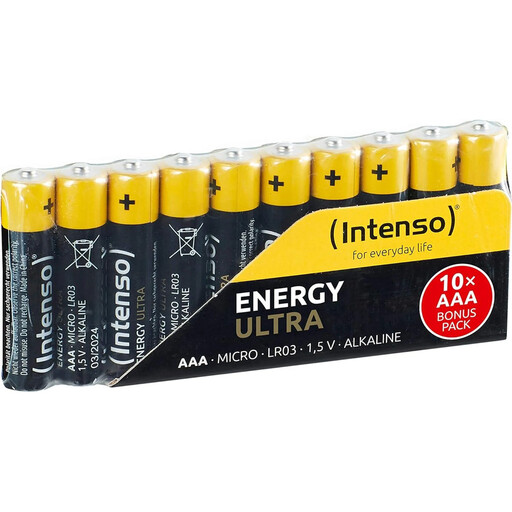
Why It's a Great Choice The Intenso Energy Ultra batteries are a reliable power source for all standard household applications. They meet international safety standards IEC 60086-1 and 60086-2 and offer consistent power output. The convenient 10-pack ensures you always have a replacement on hand.
Advantages
Who It's For Budget-conscious households looking for a reliable, standard power supply for low-drain devices like remote controls, wall clocks, alarm clocks, or toys.
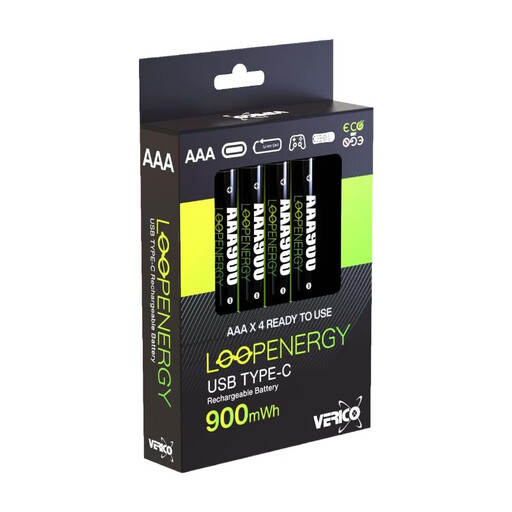
Why It's a Great Choice The VERICO LoopEnergy batteries revolutionise charging. Thanks to the integrated USB-C port, a separate charger is no longer needed. The Li-ion technology provides a stable 1.5V, ensuring high compatibility. According to the manufacturer, these batteries can be recharged over 1,000 times, which reduces waste and saves money in the long run.
Advantages
Who It's For Tech-savvy and eco-conscious users looking for a convenient and sustainable solution for high-drain devices, such as game controllers, wireless mice, milk frothers, or cameras.
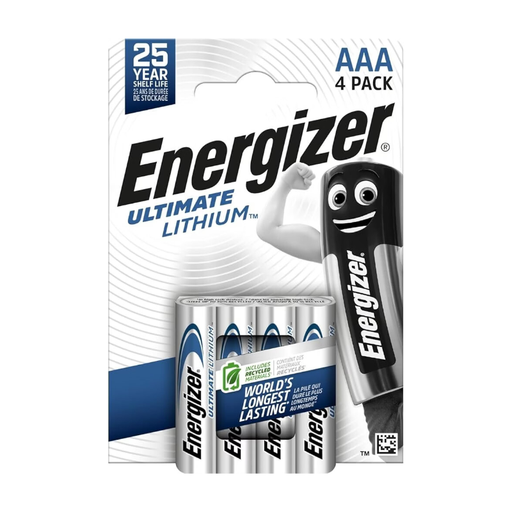
Why It's a Great Choice The Energizer Ultimate Lithium battery is designed for extreme conditions. It delivers reliable power even in very low or high temperatures and features a 100% leak-proof design (according to the manufacturer) to protect sensitive electronics. With a shelf life of 20 years, it's the ideal choice for emergency preparedness or for devices that are used infrequently but must work reliably.
Advantages
Who It's For Demanding users who require maximum performance, longevity, and reliability for critical devices such as smart home sensors, outdoor security cameras, GPS units, or medical equipment.
This selection covers the most common use cases. However, the market offers an even greater variety of specialty batteries and other brands. If you need a different capacity, a larger pack size, or another type of battery, you can find more alternatives in our main category.
? Explore our full range of AAA batteries and find the perfect solution for your needs.
The abbreviations denote the battery type. LR03 stands for an alkaline round cell, while FR03 designates a lithium round cell. In short: LR03 (Alkaline) is the cost-effective standard for everyday devices, whereas FR03 (Lithium) is the high-performance option for demanding applications and extreme temperatures.
Most modern devices are compatible with AAA rechargeable batteries. A key parameter is the voltage. While older NiMH rechargeables often only supply 1.2V, which can lead to shorter runtimes or malfunctions in some devices, modern Li-ion rechargeables (like the featured Verico model) provide a stable 1.5V. This makes them a full-fledged alternative to single-use batteries.
Batteries should be stored in a cool, dry place, ideally in their original packaging. This prevents premature discharge and protects against short circuits that can occur from contact with metal objects (e.g., coins or keys). Due to their extremely long shelf life of up to 20 years, lithium batteries are particularly well-suited for long-term storage.