
Lieferung heute & morgen

Qualitätsgarantie

Willkommens-Angebote freischalten: KOSTENLOSE Lieferung | Bis zu 80 % RABATT | Kostenlose 30-Tage-JoyPlus-Testphase
App herunterladen
Accent furniture pieces are the unsung heroes of any home. They fill empty niches, create order, and add stylish touches without dominating the room. However, the search for the perfect piece—be it a narrow console table for the hallway or a practical coffee table with storage—can quickly become overwhelming. Many products that look promising online turn out to be a bad purchase in reality. This guide will help you navigate the typical pitfalls and make an informed decision.
Before you invest, you should be aware of the most common problems that often only become apparent after assembly.
To avoid these problems, focus on objective, verifiable criteria. These three parameters are crucial for a choice that will satisfy you in the long run.
The longevity of an accent furniture piece depends directly on its material.
Measure the intended space precisely: length, width, and height. Also, consider the clearance needed for movement around the furniture.
The style should match your existing decor but also take functional aspects into account. A farmhouse-style coffee table brings warmth to the room, while a modern side table has a sleek, minimalist effect. Open shelves are great for decoration, while closed compartments and drawers ensure a tidy appearance.
Here are some recommendations tailored to specific living situations and needs.
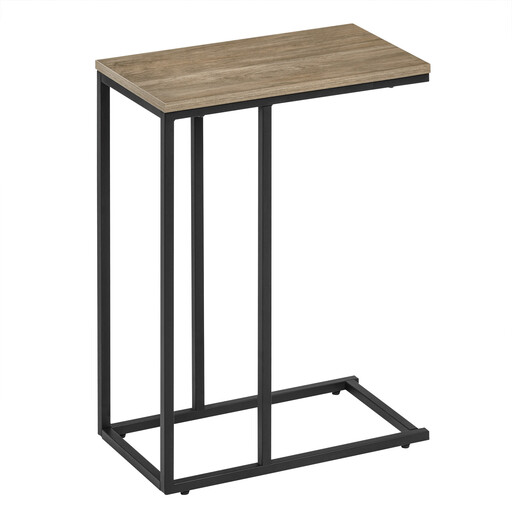
Why This Fits Their Persona: Ideal for small apartments or as a flexible addition. The C-shape allows the table to be slid over a sofa arm or bed, making it perfect for laptops, drinks, or snacks without permanently taking up space.
It solves the problem of impractical dimensions. Its slim, clever C-shape is explicitly designed to offer maximum utility in tight areas instead of getting in the way.
Lightweight and mobile (2.9 kg); stable metal frame; space-saving design for multifunctional use.
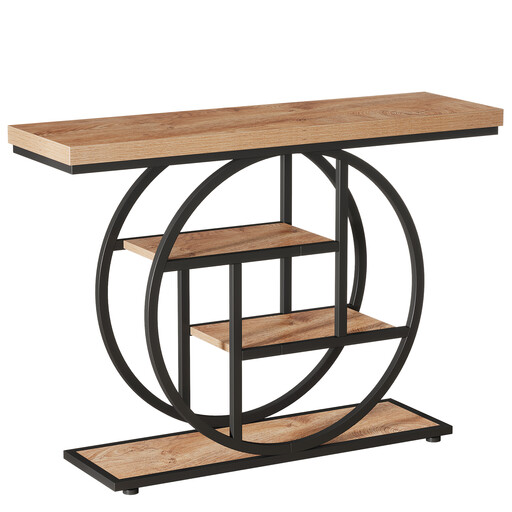
Why This Fits Their Persona: For anyone seeking a functional piece of furniture with a strong character. The design, with its round metal element, is an eye-catcher, while the four tiers provide genuine storage for books, decor, or everyday items.
It counteracts the deceptive storage "gimmick". The four staggered, open shelves are fully usable and offer a generous and visible organisational surface, rather than hiding small, impractical compartments.
Sturdy base thanks to a 4 cm thick tabletop and metal frame; adjustable feet for uneven floors; versatile as a hallway, sofa, or accent table.
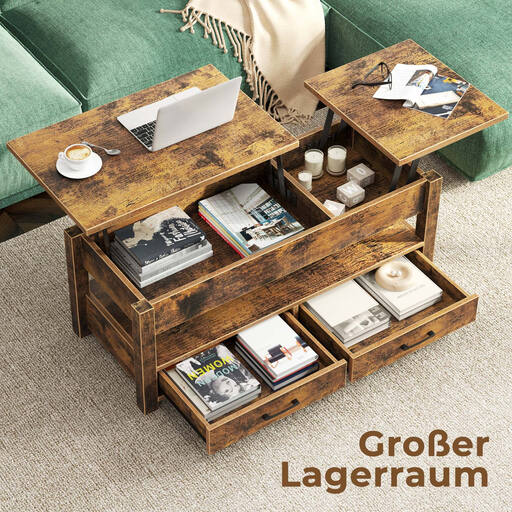
Why This Fits Their Persona: Perfect for modern family life, where the coffee table is used for eating, working, and playing. The split lift-top allows for simultaneous use by multiple people without disturbing each other.
It sidesteps the pitfall of unstable construction in functional tables. According to the manufacturer, a gas strut mechanism ensures a smooth and stable lift, which is a significant improvement over wobbly spring mechanisms.
Split lift-top for flexible use; ample hidden storage with 2 compartments and 2 drawers; solid structure for daily use.
We've compiled a complete, up-to-date list of products that fully meet these strict selection criteria and rigorous safety standards.
1. How can I ensure a piece of small furniture is stable when buying online? Pay attention to the material specifications (MDF is generally more stable than particleboard), the material thickness, and the frame construction (a metal frame is often an indicator of stability). Also, check the stated maximum load capacity. Customer reviews can also provide insight into stability during everyday use.
2. What is the difference between MDF and particleboard in small furniture? MDF (Medium-Density Fibreboard) is made from finer wood fibres pressed under high pressure. This makes it denser, more resistant to bending, and gives it a smoother surface that is well-suited for lacquers and coatings. Particleboard is made from coarser wood chips, is lighter and less expensive, but also more susceptible to moisture and sagging under load.
3. How do I measure correctly for a narrow console table in the hallway? Measure the maximum length and depth of the available space. Plan for a clear width of at least 80–90 cm for comfortable passage. A narrow console table with a depth of about 30 cm is usually a good choice. Also, consider the height to ensure the table does not interfere with light switches, power outlets, or radiators.