Who photographs acorns in the park?

Walkers looking to take close-ups

You want to photograph an acorn up close during a visit to the park, without changing lenses, then quickly put your camera away. OM SYSTEM and Ricoh Imaging specify close-up modes for their respective compact cameras.

Detail photographers

You want to capture the acorn’s cap, surface or small imperfections in close detail, and are happy to check the lens mount, focus and lighting carefully. Nikon Deutschland and Sony Deutschland specify a 1:1 magnification ratio for the macro lenses mentioned.

All-rounders for park photography

You want to switch between acorns, trees and other park scenes; you don’t need extreme magnification for every shot. Canon Deutschland specifies a maximum magnification of 0.16x with autofocus for the RF-S 18-45mm at 45 mm.

What should you look for when buying?

Compact camera with a close-up mode

Ideal if: You want to take spontaneous close-up shots of acorns on a walk, without changing lenses.

The trade-off: A fixed lens setup is simple to use, but doesn’t offer the same freedom to choose lenses as a mirrorless system.

Mirrorless camera with a macro lens

Ideal if: You want to capture tiny acorn details in close-up and choose a compatible camera body and lens.

The trade-off: The lens mount and lens must be compatible; lighting can also be more challenging at short working distances.

Mirrorless camera with a standard zoom

Ideal if: You want the flexibility to frame acorns alongside paths, trees or autumn leaves.

The trade-off: A standard zoom is not the same as a macro lens; Canon specifies 0.16x with autofocus for the RF-S 18-45mm at 45 mm.

Buying priority What to look for Who it matters most to
Magnify tiny details Check the lens’s magnification ratio or the specific camera’s close-up mode; a short minimum focusing distance alone does not confirm 1:1 magnification. If I want to show the cap, surface or small imperfections clearly, magnification is key. Around 33% of consumers prioritise capturing acorn details as large as possible.
Easy to take with you Check whether the camera, lens you need and accessories are included in the chosen kit. For spontaneous subjects when I’m out and about, I want to get started without changing lenses. Around 27% of consumers prioritise a camera that’s ready to use quickly.
Control lighting and focus Consider the working distance, available lighting and close-up focusing options. When photographing close-up subjects, I want to make sure light reaches the acorn and the area I want is in focus. Around 20% of consumers prioritise lighting and controllable focus.
Photograph a variety of park scenes Check the kit lens and magnification ratio separately; don’t mistake a standard zoom for a macro lens. If I want to photograph both acorns and their surroundings, my equipment should cover both types of shot. Around 20% of consumers prioritise versatility and a kit with the right range of equipment.

Common buying mistakes

  • Assuming a 1 cm focusing distance means 1:1 magnification

    Focusing distance and magnification describe different things. A close-up mode from 1 cm doesn’t, by itself, tell you how large the acorn will appear on the sensor.

    Check the magnification ratio or the features of the close-up mode for the specific model. OM SYSTEM and Ricoh Imaging specify a Microscope mode from 1 cm for the TG-7 and WG-90 respectively.

  • Assuming a mirrorless camera kit is automatically a macro kit

    The camera body alone doesn’t guarantee macro capability. Canon specifies a maximum magnification of 0.16x with autofocus for the RF-S 18-45mm at 45 mm; a separately sold macro lens won’t automatically be included in the kit.

    Before you buy, check the full lens name and make sure you know exactly which components are included.

    Depending on the kit and the lighting you want, you may need additional lighting accessories.

Key brands at a glance

OM SYSTEM

The Tough TG-7 is a rugged compact camera for close-up photography without changing lenses.

  • OM SYSTEM specifies focusing from 1 cm in Microscope mode.
  • A review by dkamera.de describes focus stacking and focus bracketing.
  • The LG-1 light guide is included in the separately described Micro Adventure kit, but not automatically with every TG-7 offer.

PENTAX

Ricoh Imaging offers the WG-90, a rugged compact camera with a close-up mode.

  • Ricoh Imaging specifies a Digital Microscope mode from 1 cm and six adjustable macro LEDs.
  • These specifications don’t confirm 1:1 magnification or the image quality of other PENTAX models.

Nikon

A Z system camera can be paired with the NIKKOR Z MC 50mm f/2.8 for macro detail shots.

  • Nikon Deutschland specifies a 1:1 magnification ratio for the lens and says it can be used with Z DX cameras.
  • Make sure the camera body, Z mount and compatible lens are all included in the offer you choose.

Sony

The Alpha 6400 with E-mount can be paired with the E 30mm F3.5 Macro, sold separately.

  • Sony Deutschland specifies a 1:1 magnification ratio for the lens.
  • At the stated closest focusing setting, the distance between the front of the lens and the subject is 2.4 cm; standard zoom offers don’t automatically include the macro lens.

Canon

The EOS R50 is suited to a range of park scenes; its close-up capabilities depend on the lens you choose.

  • Canon Deutschland specifies a maximum magnification of 0.5x for the RF 35mm F1.8 Macro IS STM.
  • For the RF-S 18-45mm, Canon gives a maximum magnification of 0.16x with autofocus and 0.26x with manual focus at 45 mm. This standard zoom is not the same as a 1:1 macro setup.

Joybuy products

The Joybuy products listed here are action cameras for outdoor photography. If you want to fill the frame with close-up shots of acorns, check the close-focusing capabilities of the model you’re considering.
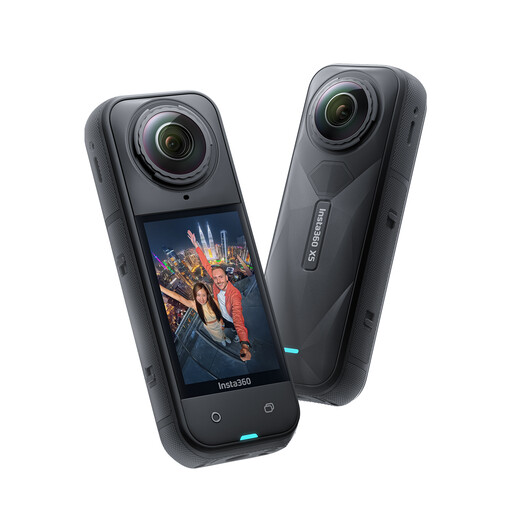
Insta360 X5 8K 360° action camera

Insta360 X5 8K 360° action camera

For outdoor photography; for close-up shots of acorns, check whether the focusing distance is suitable for the level of detail you want.

360° action camera; two 1/1.28-inch sensors; 8K 360° video at 30 fps; replaceable lens elements.

View at Joybuy
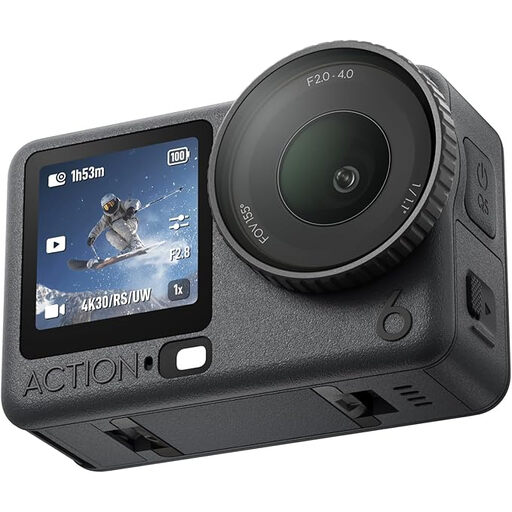
Osmo Action 6 Standard Combo action camera

Osmo Action 6 Standard Combo

Described as an action camera for outdoor photography; for close-up shots of acorns, check whether the focusing distance is suitable for the level of detail you want.

1/1.1-inch sensor; variable f/2.0–f/4.0 aperture; 4K action camera.

View at Joybuy

Frequently asked questions

How can I tell whether a camera will really show an acorn in close-up?

Check the maximum magnification ratio of the specific lens: 1:1 means the subject is reproduced at life size on the sensor. The minimum focusing distance alone isn’t a substitute. The stated figures for the Canon RF-S 18-45mm also depend on the focal length and focusing method.

How should I start when shooting close to the ground?

First, frame your shot and check the focus on the screen or in the viewfinder. With very close subjects, make sure you’re not casting a shadow yourself. If your camera supports it and your subject is still, a focus stack can help you capture a greater depth of field; this technique isn’t a guaranteed feature of every model.

What extra costs and consumer rights should I check before buying?

Check whether the camera body, macro lens and, if needed, close-up lighting accessories are actually included. The Verbraucherzentrale distinguishes between your statutory rights against the seller and a voluntary guarantee. If a product is faulty, the requirements for having it repaired or replaced are what matter first.

Do I need permission to photograph acorns in a city park?

There’s no single answer for all of Germany; it depends on the specific park and how you plan to use the images. Grün Berlin requires permission for commercial photography in its parks. The Britzer Garten, which is operated by Grün Berlin, allows photography, but commercial shoots and commercial publications are subject to an agreement. Check the rules set by the relevant park operator, especially before commercial use or setting up extensive equipment.