If you want to take close-up photos of acorns while you’re out and about without changing lenses, a compact camera with a dedicated close-up mode is a natural choice. If you often shoot in the rain, you’ll also need to check the protection offered by the specific model. For carefully composed detail shots, a mirrorless camera with a compatible macro lens gives you more flexibility, but requires extra equipment and more careful shooting. Whichever you choose, check how close the camera can focus at the zoom setting you want, and how large the subject will actually appear in the frame.
Which cameras are right for different needs?
Spontaneous close-ups
If you want to photograph an acorn up close without changing lenses, compare the close-up mode on the specific model. OM Digital Solutions says the Tough TG-7 can take close-ups from as near as 1 cm; Ricoh Imaging Europe describes the WG-80’s digital microscope function as working from 1 cm.
Out and about in changeable weather
If you want to take photos on longer walks, even in the rain, check the protection ratings for the exact camera model and read its usage instructions. OM Digital Solutions says the Tough TG-7 is protected against water and dust.
Carefully composed macro details
If you want to bring out small textures and are prepared to spend more time on focusing and stability, a mirrorless camera with a suitable macro lens could be a good option. Canon gives the RF 35mm F1.8 MACRO IS STM a magnification ratio of 1:2.
What should you look for when choosing?
Rugged compact camera with close-up mode
A good fit if: you want to capture acorns by the path at a moment’s notice and keep your camera handy in changeable weather.
Bear in mind: a short focusing distance doesn’t automatically mean high magnification, and protection ratings apply to the specific model.
Compact travel camera with fixed zoom
A good fit if: you want to photograph landscapes and distant holiday scenes as well as acorns, without changing lenses.
Bear in mind: the minimum focusing distance can vary considerably depending on the zoom setting. More zoom doesn’t automatically mean you can get closer to your subject.
Mirrorless camera with macro lens
A good fit if: you want to compose small details with care and switch lenses to photograph other subjects.
Bear in mind: the camera body and lens need to be compatible. You’ll also need extra equipment and to pay more attention to focus and keeping the camera steady.
| What you’re looking for |
What to check |
Who this matters most to |
| Taking close-up photos of acorns without changing lenses |
Check the close-up mode and sample images for the specific model, as well as the zoom setting and actual framing. |
If I want to capture an acorn I’ve found straight away, a useful close-up mode matters more to me than changing lenses. Around 36% of consumers put easy close-up photography first. |
| Taking photos in changeable weather |
Check the protection ratings and usage conditions for the exact model in its instruction manual. |
On wet or muddy paths, I want to be able to use my camera rather than put it away because I’m worried about the conditions. Around 29% of consumers consider weather protection their top buying priority. |
| Photographing acorns and other holiday subjects |
Compare the focal length range and minimum focusing distance at both the wide-angle and telephoto ends. |
If I want to photograph landscapes or distant subjects as well as acorns, I need versatile framing without changing lenses. Around 21% of consumers prioritise this range of holiday subjects. |
| Composing macro details with care |
Check the camera mount, the lens included and its magnification ratio separately. |
For carefully composed acorn details, I’m happy to use an extra lens and spend more time on focus and stability. Around 14% of consumers say carefully composed macro details are their top priority. |
Avoiding common close-up photography buying mistakes
-
Assuming “1 cm macro” means a particular image magnification
The minimum focusing distance tells you how far the camera is from the subject. On its own, it doesn’t tell you how large fine details on an acorn will appear in the image.
Compare the close-up mode, magnification ratio and sample images for the exact model, rather than focusing only on a distance in centimetres.
-
Expecting a standard zoom lens to work like a macro lens
Canon gives the RF-S 18–45mm a maximum magnification of 0.25x with manual focusing; the separate RF 35mm F1.8 MACRO IS STM has a ratio of 1:2. These are different lenses, with different conditions.
Before buying, check that the camera body mount is compatible, confirm exactly what’s included and check the lens’s magnification ratio.
For higher magnification, you may need to buy a compatible macro lens separately.
-
Assuming a high zoom range means close focusing at every setting
Sony gives the RX100 VII a minimum focusing distance of around 8 cm at the wide-angle end and around 100 cm at the telephoto end.
Check the focusing distance for the zoom setting you plan to use for acorn photos.
Brands and models to consider
OM SYSTEM
The Tough TG-7 combines a built-in lens with a dedicated close-up mode and protection ratings for outdoor use. OM Digital Solutions says it can take close-ups from as near as 1 cm and is protected against water and dust.
- Worth considering for spontaneous close-ups without changing lenses.
- The 1 cm figure doesn’t mean a magnification ratio of 1:1; protection ratings apply to this model.
RICOH
Ricoh Imaging Europe describes the WG-80 as a rugged compact camera with a digital microscope function from 1 cm and a fixed zoom equivalent to 28–140 mm in 35 mm format.
- An option for close-ups without changing lenses.
- Specifications and protection conditions for one model can’t be assumed to apply to other WG models.
Sony
Sony Germany gives the RX100 VII a fixed zoom equivalent to 24–200 mm in 35 mm format, with different minimum focusing distances at either end of the zoom range.
- Its zoom range can cover a variety of holiday subjects without changing lenses.
- The stated minimum focusing distance ranges from around 8 cm at the wide-angle end to around 100 cm at the telephoto end.
Canon
The EOS R50 is an RF-system camera body that can be paired with compatible RF and RF-S lenses. Magnification specifications apply to the individual lenses, not to the camera body alone.
- Canon gives the RF 35mm F1.8 MACRO IS STM a magnification ratio of 1:2.
- The RF-S 18–45mm only achieves its stated magnification of 0.25x with manual focusing.
Joybuy products for travel photography
The products below are described as compact devices for taking photos and videos while travelling. If you want to take close-up photos of acorns, also check before buying that the focusing distance and framing suit your needs.
 No image available
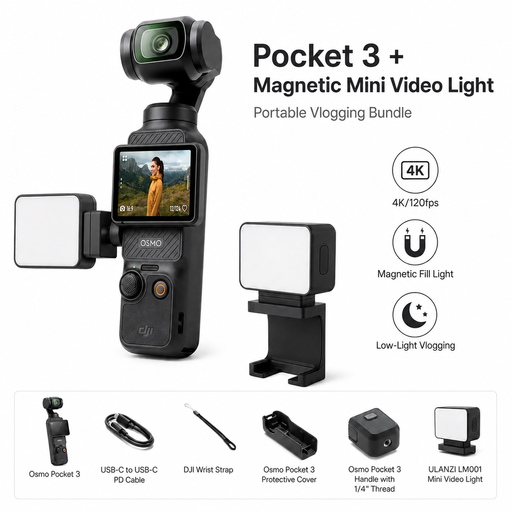
DJI Osmo Pocket 3 Standard Combo with ULANZI LM001 Pocket 3 Magnetic Mini Video Light
Could be a good choice for travel photography and filming on the go; the product description mentions photo and video capture.
1-Inch CMOS, 4K/120fps and 3-Axis Gimbal Camera.
Before buying, check the focusing distance and framing you want for close-up photos of acorns.
Joybuy
 No image available
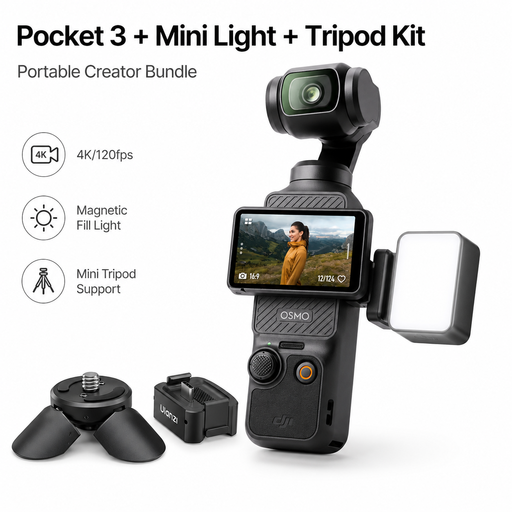
DJI Osmo Pocket 3 Standard Combo with ULANZI LM001 Magnetic Mini Video Light, Pocket 3 Adapter and Mini Tripod
Could be a good choice for travel photography and filming on the go; the product description mentions photo and video capture.
1-Inch CMOS, 4K/120fps and 3-Axis Gimbal Camera.
The bundle also includes a Pocket 3 Adapter and a Mini Tripod. Before buying, check the focusing distance and framing you want for close-up photos of acorns.
Joybuy
Frequently asked questions
How can I tell whether an acorn will appear large enough in the frame?
Check the close-up mode or magnification ratio for the specific model, along with the zoom and focus settings they apply to. A minimum focusing distance of 1 cm and a magnification ratio of 1:1 don’t mean the same thing.
Why is only a small part of an acorn detail often in focus?
At higher magnifications, the depth of field becomes very shallow. Find a stable shooting position and check the focus on the detail you want to capture. For stationary subjects, you could try taking several shots with different focus points.
Do I need an extra lens for macro photography with the Canon EOS R50?
It depends on the lens included and the magnification you want. Canon gives the RF-S 18–45mm a maximum magnification of 0.25x with manual focusing, while the separate RF 35mm F1.8 MACRO IS STM has a ratio of 1:2. So check exactly what’s included.
Who should I contact about a fault with a camera bought in Germany?
Your statutory rights for faulty goods are with the seller and are separate from a manufacturer’s warranty. According to the German consumer advice centre, you can generally exercise your rights for newly purchased goods within two years of their delivery or receipt.
Can I publish a holiday photo that shows identifiable people?
Under § 22 KunstUrhG, you generally need the consent of anyone pictured before distributing or publicly displaying their image. Whether a legal exception applies depends on the circumstances; this rule does not apply to a close-up of an acorn with no people in the picture.


