For an acoustic demo in a reverberant community hall, a directional microphone close to a single source is a good choice when clarity matters more than a sense of space. For an ensemble where you want to capture the sound of the room, a stereo pair or a recorder with built-in stereo microphones may be more suitable. Stereo also picks up reflections more clearly, and an XLR microphone needs compatible inputs and, where required, compatible phantom power. Make a test recording in your chosen spot, and check the recorder or interface, number of channels and power requirements before you buy.
Who is recording in a community hall?
Solo voice or instrument in a reverberant hall
If you want to record a voice or acoustic instrument as directly as possible, try different microphone positions before recording. Shure recommends placing the microphone closer to the loudest part of the instrument when the room acoustics are challenging.
Acoustic ensemble with room ambience
If you want the recording to convey the positions of several musicians, deliberately capture some of the sound of the hall too. Shure describes stereo miking as a way to represent the positions of instruments in the sound image.
A demo without a complicated set-up
If you want to make a stereo recording quickly on location, consider a recorder with built-in microphones instead of setting up a separate microphone pair and interface. Zoom and Tascam list portable recorders with built-in microphones in their product information.
What should you look for in a microphone?
Start by deciding how much direct sound and room ambience you want. Then consider the set-up and connections you already have.
| Priority |
What to check before buying |
Who is this most important to? |
| Direct sound rather than reverb |
Polar pattern and a close, stable position; test the sound in your chosen spot. |
If I want to record a voice or instrument as directly as possible despite the reverb, microphone placement is especially important. Around 36% of consumers put direct sound first. |
| Stereo for an ensemble |
Check whether you want to capture the positions of several sources, and whether two channels or built-in stereo microphones are available. |
If you want the positions of several musicians to come across in your demo, pay particular attention to the stereo image. Around 29% of consumers prioritise the spatial representation of the ensemble. |
| Quick set-up |
Check for built-in microphones, a suitable location, and the required storage media and power supply. |
If I want to record on location without a separate microphone pair and interface, a straightforward set-up is essential. Around 21% of consumers prioritise getting started quickly. |
| Connections and equipment |
Check the available inputs, number of channels, phantom power, cables and stands, or computer connection. |
If you want to avoid buying the wrong connections or accessories, check your existing recording equipment first. Around 14% of consumers prioritise connection compatibility and equipment. |
Common buying misconceptions
-
A microphone placed far away will automatically capture the hall naturally
With a greater distance, unwanted room sound can become more prominent compared with the source you want to record.
First, make a test recording in your chosen spot. If there is too much reverb, move closer to the source and compare the result.
Depending on what you hear, you may need to make another test recording or change the set-up.
-
An XLR condenser microphone is a complete recording system
A microphone such as the AKG P170 or RØDE M5 cannot record on its own; the connection and power it needs must be compatible with your recording device.
Before you buy, check the inputs, number of channels, phantom power and existing accessories against the specific microphone.
Depending on the equipment you already have, you may also need a suitable recorder or interface, XLR cables, a stand and a power supply.
-
Any stereo solution will reduce unwanted hall reverb
Stereo makes spatial information audible, including reflections. Built-in microphones can also differ in their arrangement and polar patterns.
Choose between a directional microphone for a single source, a microphone pair and a portable recorder based on how much direct sound and room ambience you want in your demo.
Key brands at a glance
AKG
The P170 is a single, directional small-diaphragm XLR microphone; the C451 B Matched Pair is a separate stereo option.
- AKG specifies a cardioid polar pattern and a power supply of 44 to 52 V for the P170.
- A single P170 is neither a stereo pair nor a standalone recorder; the product specifications do not prove it will perform better in any particular hall.
RØDE
The M5 is a matched pair of directional small-diaphragm condenser microphones for acoustic instruments or stereo set-ups.
- RØDE specifies a sensitivity difference of no more than 1 dB between the pair, as well as XLR outputs and P24/P48 V power.
- Recording requires two compatible channels and additional recording hardware; the stereo pair alone will not solve room reverb.
Zoom
The H1essential has built-in X/Y microphones for compact recordings; the H4essential adds two XLR/TRS inputs for external sources.
- Zoom’s product information distinguishes the devices by their built-in microphones and inputs.
- The recorder’s position affects how much room sound is captured. Manufacturers’ claims about recording results are not independent evidence of how a device will sound in a particular hall.
Tascam
The DR-05XP is a portable stereo recorder with built-in omnidirectional condenser microphones.
- You don’t need a separate microphone pair to record.
- The omnidirectional pattern may pick up unwanted sounds from other directions in a reverberant or busy hall. Tascam’s manual lists a microSD card as part of the set-up.
Audio-Technica
The AT2020USB-X offers a direct USB connection for recording a single directional source on a computer.
- Audio-Technica specifies USB-C operation and a headphone socket for this model.
- As a single microphone, it cannot replace a stereo pair for creating a spatial image of an ensemble.
Sennheiser
The e 614 is an XLR instrument microphone with a supercardioid polar pattern for focused recording of a single source.
- Sennheiser specifies an XLR connection and P12 to P48 V phantom power.
- It is important to point the microphone towards the source you want to record; you will still need a suitable recording device.
Microphones at Joybuy
The Joybuy models below are individual USB or USB-C microphones for computer, voice and mobile recordings. To capture an ensemble with a spatial stereo image, you’ll need a suitable stereo set-up.
 No image available
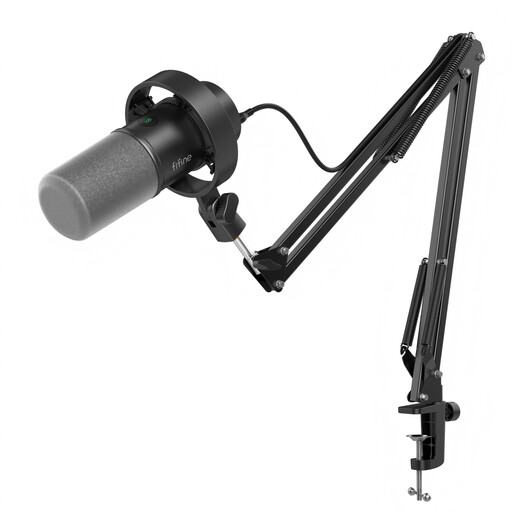
FIFINE K688CT USB/XLR dynamic microphone kit
For recording a single voice when you need USB for a computer or XLR for a mixer. The set includes a boom arm; an XLR cable is not included, and according to the product description, the microphone buttons do not work when using an XLR connection.
View at Joybuy
 No image available
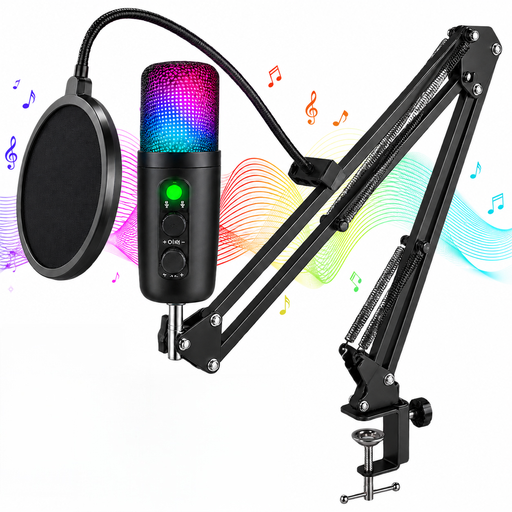
USB condenser microphone for PC, 7-piece set
For individual PC or streaming recordings. The product name and set details list a Type-C adapter and a mute button.
View at Joybuy
 No image available
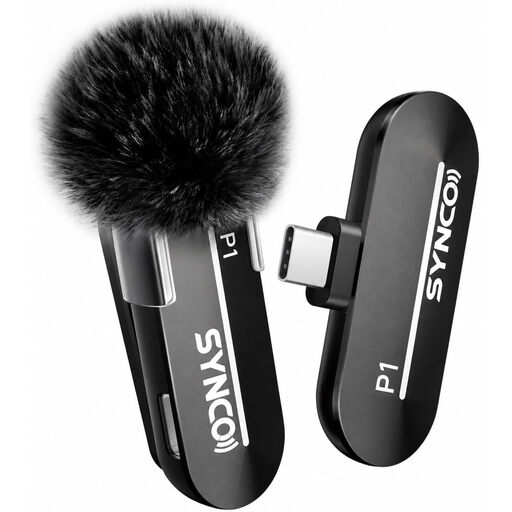
SYNCO P1XT USB-C wireless microphone
For mobile voice and video recordings. The product information states that OTG is required for Android devices with USB-C.
View at Joybuy
 No image available
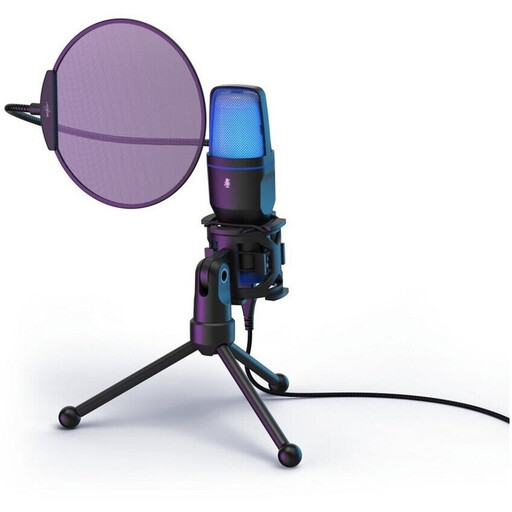
uRage Stream 410 HD gaming microphone
For USB recording on a computer; the product details list a stand and pop filter. Its specified mono configuration does not create a spatial stereo image.
View at Joybuy
Frequently asked questions
Can a single microphone record an entire ensemble in stereo?
To capture the left-to-right positions of different sources, you need a suitable stereo set-up or a device with built-in stereo microphones. A single directional microphone is better suited to situations where one source is the focus.
How do I test microphone positions in a reverberant community hall?
Record short samples from different positions and listen to the balance between instruments, voices, reflections and background noise. If there is too much unwanted room sound, try moving closer to the source you want to record.
What should I check when connecting an XLR condenser microphone?
Check that the connection and phantom power required by the specific model are compatible with your recorder or interface. For example, AKG specifies a balanced XLR output and a power supply of 44 to 52 V for the P170; a microphone alone cannot save a recording.
What equipment should I plan for with a portable recorder?
Check the storage media, power supply and mounting options in advance. The Tascam DR-05XP manual lists a microSD card and batteries as part of the set-up; what else you need depends on the equipment you already have.
Can I record other people’s conversations in a community hall without asking them?
Under the conditions set out in § 201 StGB, unauthorised recording of another person’s words spoken in private is prohibited. Whether a particular conversation is private and whether you have authorisation cannot be determined solely from the description ‘community hall’. If conversations might be picked up, check with the people concerned before recording. This does not mean that the same rule applies to every music recording.
Can I publish a recording of a cover version afterwards?
Before offering a cover version as a download, stream or for sale, you need to clarify the rights to use the protected work. GEMA notes that licensing depends on who represents the rights; further rights may be needed for an adaptation or video. This is not the same as the rules for an unpublished original composition.


