What should you look for when buying?
The key things to consider are how the microphone is directed towards the sound source, the guitar sound you want, the right connection and the accessories you’ll need for a complete setup. Shure, RØDE, AKG and Audio-Technica cover these points in their microphone advice and product information.
| Consideration |
What to check before buying |
Who is this especially important to? |
| Reducing household noise |
Polar pattern and direction of the noise source; how close you can get to the guitar. |
If I want to record despite noticeable household noise, I pay attention to position and direction. Around 36% of consumers say reducing unwanted noise is their main concern. |
| Guitar tone and pick attack |
Microphone type and position; assess the sound with a test recording. |
If string and pick-attack detail are my priority, I take the time to try different positions. Around 29% of consumers say guitar tone is their main concern. |
| Connecting to a computer |
USB or XLR; with XLR, check the interface and the phantom power required by the model. |
If I want to record straight to my computer without a separate XLR interface, the connection is crucial. Around 21% of consumers prioritise an easy connection to their computer. |
| Completing your recording setup |
Check what’s included; see what cables, stands and interfaces you already have. |
If I still need to put together a usable setup, I also consider the accessories and signal chain. For around 14% of consumers, the effort involved in completing the setup is their main concern. |
Microphones for computer recording
This selection is for consumers who want to record acoustic guitar on a computer and compare USB microphones with dynamic or condenser designs.
 No image available
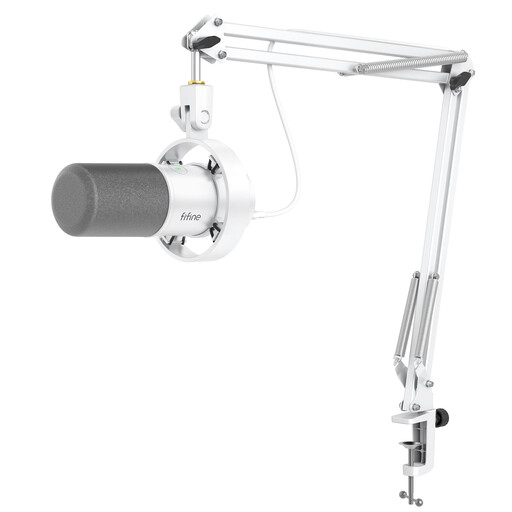
FIFINE K688CTW, White
Could be worth considering if you want to try recording with a single directional microphone. This dynamic microphone is unidirectional and offers USB-C and XLR.
A USB cable and microphone stand are listed as included. A separate cable is required for XLR; a boom arm isn’t included.
View at Joybuy
 No image available
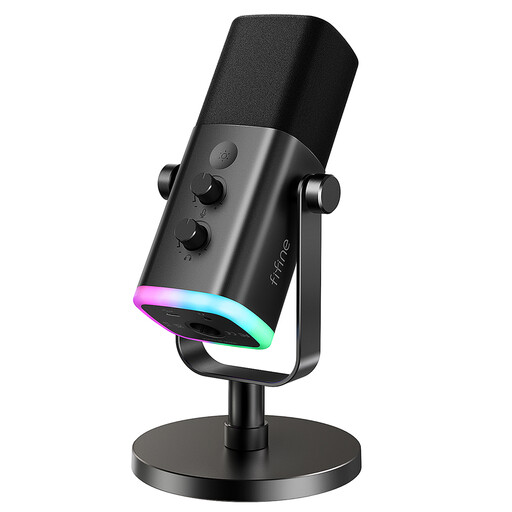
FIFINE AM8
Worth considering for computer recording if you want the option of directional placement. This dynamic microphone has USB-C and XLR connections, plus a unidirectional polar pattern.
A USB cable and microphone stand are listed as included. An XLR cable and boom arm aren’t included.
View at Joybuy
 No image available
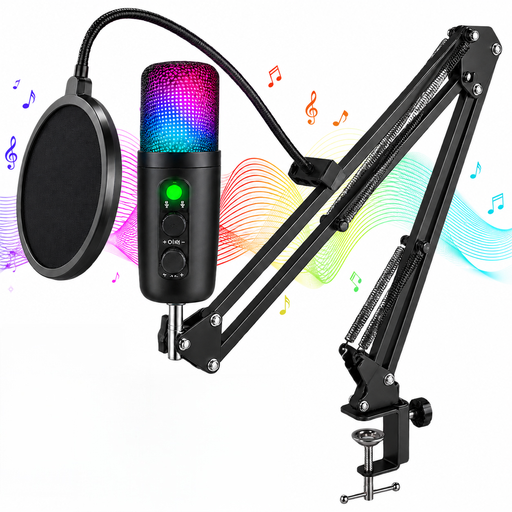
USB condenser microphone with Type-C adapter
Could be an option if you’re looking for a USB condenser microphone for computer recording. The product description lists a headphone socket and a Type-C adapter.
View at Joybuy
Frequently asked questions
Can a directional microphone completely block out household noise?
No. Noise coming from the side or behind may be quieter compared with the guitar, but sound from the microphone’s preferred pickup direction will still be an issue. Test the distance and position with the kinds of noise you actually experience.
How should I start positioning a single microphone?
RØDE recommends starting by pointing the microphone at the area around the 12th fret. For the NT1-A, RØDE’s guide suggests positioning it 20 to 30 cm in front of the guitar, where the neck meets the body. Adjust the distance and angle to suit your instrument, playing style, preferred sound and background noise.
Do I need extra equipment for an XLR condenser microphone?
To record to a computer, you’ll need a suitable XLR signal chain, such as an audio interface. Also check the power requirements of the specific model: AKG specifies 44 to 52 V for the P170, while Sennheiser specifies P12 to P48 V for the e 614.
Who should I contact if a microphone I bought for business is faulty?
The seller is responsible for your statutory legal guarantee rights. The EU consumer information service Your Europe states that you have at least two years of legal guarantee cover from the date you receive the goods; this is separate from any voluntary manufacturer’s warranty.
Can I simply record other people’s conversations in my flat?
Section 201 of the German Criminal Code (StGB) makes it an offence, among other things, to record another person’s private spoken words without authorisation. The Federal Ministry of Justice and the Federal Office of Justice explain the provision on “Gesetze im Internet”. Whether a particular recording is unauthorised depends on the circumstances; the law does not impose a blanket ban on recording yourself playing the guitar.


