
Lieferung heute & morgen

Qualitätsgarantie

Willkommens-Angebote freischalten: KOSTENLOSE Lieferung | Bis zu 80 % RABATT | Kostenlose 30-Tage-JoyPlus-Testphase
App herunterladen
A room with excessive echo can significantly detract from your quality of life. Whether in a home office during video calls, the living room on movie night, or an open-plan living and dining area—distracting reverberation makes conversations tiring and sounds unpleasant. Acoustic panels promise a solution that combines functionality with modern design. However, the market is crowded, and not every product that looks good will actually improve your room's acoustics.
Many buyers invest in visually appealing wall coverings only to find that the acoustic effect is non-existent. To save you from this disappointment, we will highlight the most common pitfalls and show you which objective criteria truly matter when making your choice.
The 3 Most Common Mistakes When Buying Acoustic Panels:
To noticeably improve room acoustics, you should base your purchasing decision on technical facts. Three parameters are of central importance here.
The foundation for effective sound absorption is a multi-layered structure. High-quality wood wall panels consist of slats mounted on a dense felt backing.
The arrangement of the slats is not just a design feature. The gaps between the individual slats allow sound waves to hit the absorbent felt directly. A well-designed slat wall thus combines two effects: the slats break up and scatter the sound (diffusion), while the felt absorbs it. This combination is crucial to improve room acoustics. 3D wall panels offer similar, though often purely aesthetic, effects; their structure can also scatter sound, but they usually lack an absorbent backing material.
The mounting method should suit your living situation and the condition of your walls.
Based on these objective criteria, we have compiled a selection of products suitable for different use cases and requirements.
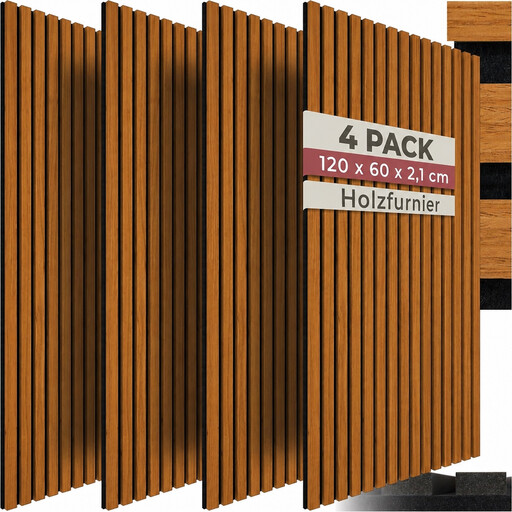
Why This Fits Their Persona: Ideal for targeted acoustic and visual enhancement of smaller areas, such as the wall behind a desk in a home office or as a TV backdrop. The 4-panel set provides a cost-effective entry point.
This panel uses a solid MDF core with a walnut veneer and a dense acoustic felt. It is a functional acoustic element, not a purely decorative plastic film.
The modular size (4 panels at 60x30 cm each) offers flexible application. Installation is possible with both adhesive (renter-friendly) and screws.
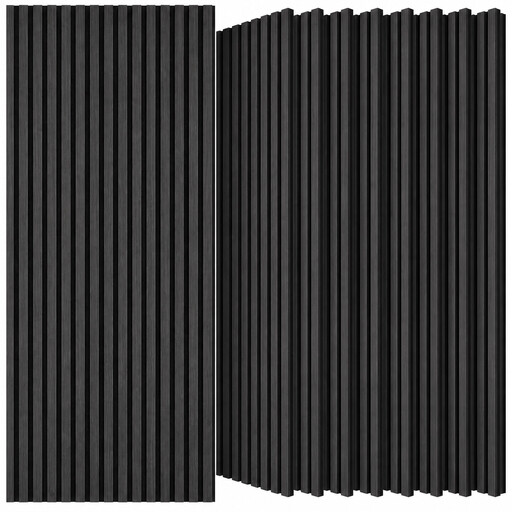
Why This Fits Their Persona: Suitable for covering entire walls in living rooms, offices, or home cinemas. The 20-panel set covers a large area (3.6 m?) and ensures maximum acoustic improvement and a uniform design.
The high-quality materials and dense felt ensure genuine sound absorption over a large area, significantly reducing reverberation throughout the entire room.
This set offers excellent value for money for large projects. The modern grey oak finish complements many contemporary interior design styles.
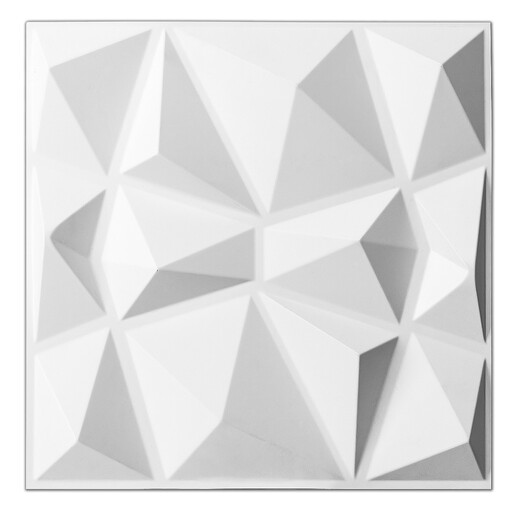
Why This Fits Their Persona: For users where aesthetics are the top priority. These panels create a stunning, textured wall feature but are not primarily intended for sound absorption.
This product is clearly positioned as a decorative 3D wall panel. It doesn't create the false impression of being a highly effective sound absorber, thus avoiding unmet expectations.
Made from lightweight PVC foam, it's very easy to install via DIY methods (adhesive stickers often included). The white surface can be painted in any desired colour if needed.
We have compiled a complete, real-time list of products that fully satisfy these strict selection criteria and UK safety regulations.
A general rule of thumb is that covering 15% to 25% of the wall surface on one or two adjacent walls is often sufficient to achieve a noticeable improvement. It is advisable to start with a smaller area, for example, on the wall opposite the main sound sources (e.g., speakers, television), and add more panels if necessary.
This should be approached with caution. For optimal adhesion, a smooth, clean, and dry surface is required. The uneven texture of wallpaper can significantly reduce adhesive strength. For a secure installation on textured wallpaper, it is recommended to use a few screws in addition to the adhesive, anchoring them through the felt into the wall.
Here, a distinction must be made between sound absorption and wall soundproofing. Acoustic panels are sound absorbers: they improve the acoustics within a room by reducing reverberation. They are not designed to block noise that penetrates through a wall from the outside (e.g., from neighbours). This requires structural sound insulation measures, which involve significantly more mass and the decoupling of building components.