
Lieferung heute & morgen

Qualitätsgarantie

Willkommens-Angebote freischalten: KOSTENLOSE Lieferung | Bis zu 80 % RABATT | Kostenlose 30-Tage-JoyPlus-Testphase
App herunterladen
Echoing conversations in the living room, distracting noise from the next room in your home office, or simply a bare wall that lacks character—many are searching for a solution that both improves room acoustics and is aesthetically pleasing. Acoustic panels promise to be the answer. However, the market is overwhelming and filled with products whose marketing claims often fall short in practice.
As your Joybuy Product Recommendation Officer, I'm here to help you cut through the noise. We'll highlight the most common pitfalls that lead to buyer's remorse and show you the objective criteria that truly matter when making your selection.
To avoid a bad purchase, base your decision on verifiable product features. Focus on the following three core parameters.
The combination of materials is crucial for both function and appearance. Look for a multi-layered construction:
Panels made of pure PVC or thin foam are primarily decorative and offer only minimal acoustic improvement.
A flat wall reflects sound waves directly. A textured surface breaks up and scatters the sound, which further improves acoustics.
This interplay of design and material is crucial for noticeable noise reduction in the office or in living spaces.
Check the installation options and plan your requirements before purchasing.
Here are some product recommendations tailored to specific needs and use cases that meet the quality criteria mentioned.
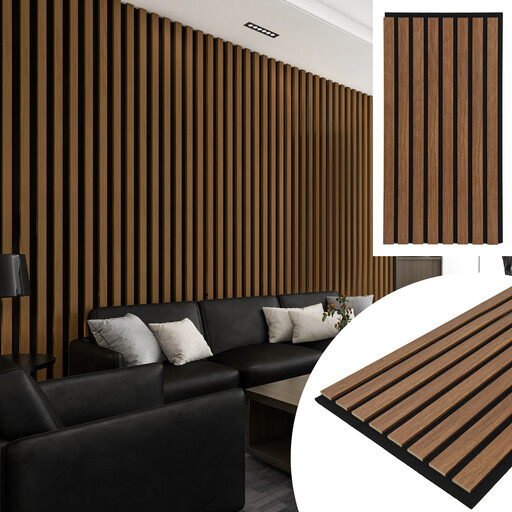
Why This Fits Their Persona: Ideal for those looking to create a stylish accent wall in their living room or bedroom. The set combines a modern slatted wood look with a noticeable reduction in echo, without needing to cover the entire room.
This panel avoids the material deception trap with its authentic wood look and a dense felt backing that demonstrably absorbs sound, rather than just serving as decoration.
Combines high-end aesthetics (walnut finish) with functional sound absorption; modular 4-piece set for flexible design.

Why This Fits Their Persona: Perfect for home office users, podcasters, or musicians who need effective acoustic optimization. The large 3.6 m? set is ideal for covering a large area behind a desk or in a studio to improve speech clarity and recording quality.
This product avoids the confusion trap by being clearly designed for sound absorption via its 3D structure and felt backing—ideal for reducing in-room echo, not for blocking external noise.
Large coverage area for effective acoustic treatment; professional look for work and studio environments.
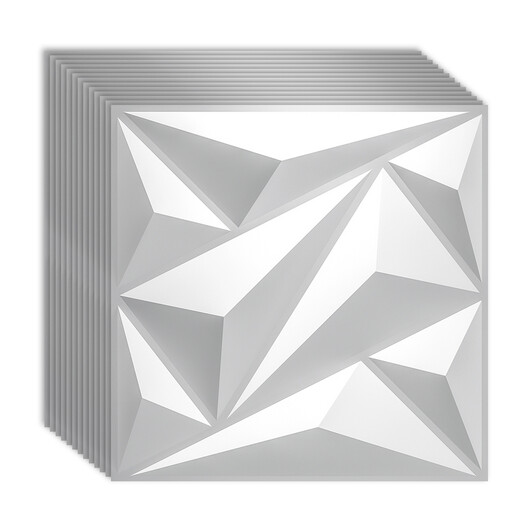
Why This Fits Their Persona: For DIY enthusiasts looking for a fast, cost-effective, and purely decorative change. The PVC panels are ideal for covering uneven walls or creating a modern 3D accent wall without focusing on high acoustic performance.
This product is honestly positioned as a decorative 3D wall covering. It avoids the trap of paying for a non-existent acoustic function, providing a durable, waterproof solution for creative projects.
Water-resistant and easy-to-clean PVC material; simple installation with adhesive; ideal for humid areas like bathrooms or as a kitchen backsplash.
We have compiled a complete, up-to-date list of products that fully meet these strict selection criteria and comply with applicable regulations.
Sound absorption (or sound dampening) reduces echo within a room. Acoustic panels with felt and textured surfaces absorb sound waves, creating clearer, quieter acoustics. Soundproofing (or sound insulation), on the other hand, blocks the transmission of sound between rooms. This requires heavy, dense materials and structural modifications and cannot be achieved with thin wall panels.
A general recommendation is to cover about 25-30% of a room's wall surface to achieve a noticeable improvement in echo. Start with the wall opposite the main sound source (e.g., speakers or where you speak from) and the immediate adjacent walls. For targeted applications, such as reducing flutter echo, even less coverage at strategic points may be sufficient.
Yes, most modern acoustic panels are designed for DIY installation. Mounting with high-quality construction adhesive is the easiest method and typically only requires a measuring tape, a spirit level, and a utility knife. For a permanent and extra-secure installation, especially on ceilings or uneven surfaces, screwing the panels onto a wooden subframe is recommended.