
Lieferung heute & morgen

Qualitätsgarantie

Willkommens-Angebote freischalten: KOSTENLOSE Lieferung | Bis zu 80 % RABATT | Kostenlose 30-Tage-JoyPlus-Testphase
App herunterladen
A reverberant room, muffled conversations during video conferences, or a distracting echo while listening to music—many of us are familiar with these issues in our own homes or home offices. An acoustic wood panel promises a solution that merges functionality with modern design. However, the market is crowded, and not every product that looks good will actually improve your acoustics.
As your Joybuy Product Recommendation Officer, I'll help you identify the crucial features and steer clear of common purchasing traps. This way, you'll find a solution that is not only aesthetically pleasing but also acoustically effective.
Before you invest, you should be aware of the most prevalent shortcomings that often only become apparent after the purchase.
To get real value, you should carefully examine three technical aspects. These determine the effectiveness and longevity of your new modern wood wall panelling.
The most important component for sound absorption is the acoustic felt. Pay attention to the following properties:
The visible wood slats on the wall are more than just decoration. Their construction significantly influences the acoustics.
A well-designed installation solution distinguishes a good product from an impractical one. Ideally, the manufacturer offers two options:
Here are some recommendations tailored to different needs and use cases.
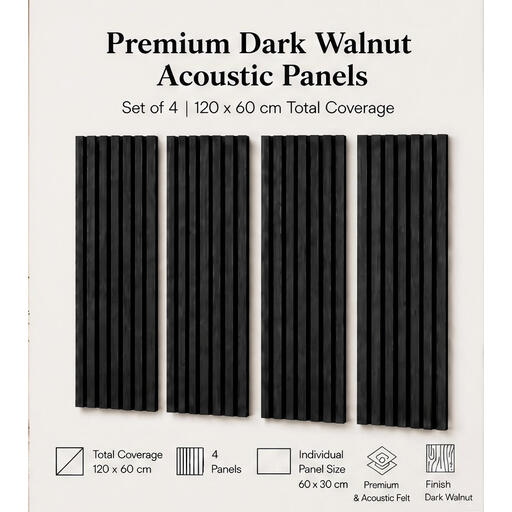
Why This Fits Their Persona: Ideal for targeted acoustic and visual enhancement of a workspace or a small wall area. The modular 4-piece set in a modern grey oak finish is easy to handle and fits perfectly into contemporary living concepts.
Offers flexible installation options (adhesive or screws), thus avoiding wall damage, which is particularly advantageous for renters.
The set features a dense MDF core with a real wood veneer and a solid acoustic felt backing, ensuring a genuine sound-absorbing effect.
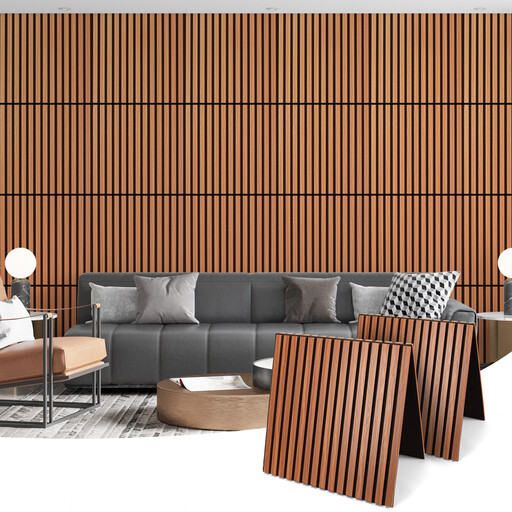
Why This Fits Their Persona: Suitable for content creators or gamers who require high acoustic performance for their studio or **sound control in the home office**. The foldable 3D design maximizes the absorption surface area.
Instead of a simple felt, this uses high-density glass wool as the absorber core. This provides superior sound absorption and bypasses the trap of an underperforming core.
The unique foldable design increases the surface area for sound diffusion and absorption. The panels offer high coverage and a distinctive look.
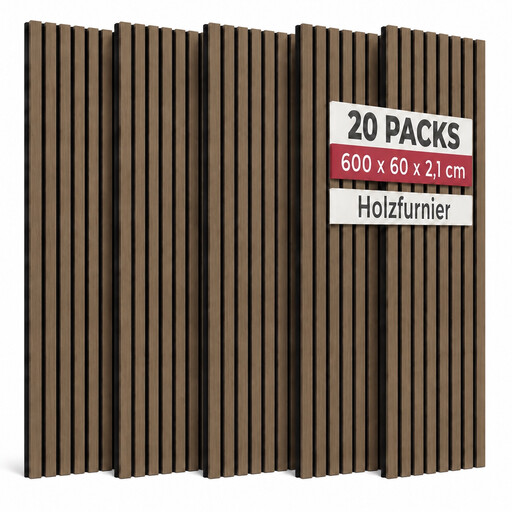
Why This Fits Their Persona: Perfect for creating a full accent wall in a living room or a large office. The 20-piece set provides 3.6 m? of coverage, allowing for a uniform, large-scale installation.
This set bypasses the material deception trap by using MDF with a dark walnut veneer and a dense felt backing, ensuring consistent quality across the entire surface.
The bulk-pack set offers excellent value for covering large walls, creating an impressive visual and acoustic result.
We've compiled a complete, up-to-date list of products that fully meet these strict selection criteria and applicable regulations.
1. How many acoustic wood panels do I need for my room? A general recommendation is to start by covering about 15–25% of the surface area of a single wall. Focus on the so-called first reflection points—these are the walls from which sound reflects directly to your listening position (typically the walls to your left, right, and opposite you). For a noticeable effect in an average-sized room, 2 to 4 square meters is often a good starting point.
2. Can I cut an acoustic panel myself? Yes, most acoustic wood panels with a felt backing are designed to be cut. The felt can be cut with a sharp utility knife. For the wood slats, a fine-toothed saw (e.g., a Japanese saw or a mitre saw with a fine blade) is recommended to achieve clean edges without fraying the veneer. However, always check the manufacturer's specific instructions.
3. Do the panels also improve soundproofing from the neighbouring apartment? It's important to make a distinction here: Wall sound absorbers improve room acoustics by reducing reverberation within a room. They are not primarily designed for wall soundproofing, which is the blocking of sound that passes through the wall. While the added mass on the wall can have a minimal insulating effect, effective soundproofing requires more complex structural measures (e.g., a decoupled wall construction).