
Lieferung heute & morgen

Qualitätsgarantie

Willkommens-Angebote freischalten: KOSTENLOSE Lieferung | Bis zu 80 % RABATT | Kostenlose 30-Tage-JoyPlus-Testphase
App herunterladen
A room with excessive echo, poor speech clarity during home office video conferences, or distracting reverberation in audio recordings—these issues impair concentration and well-being. Acoustic wood panels have emerged as a solution that combines function and aesthetics. However, the market is confusing and full of pitfalls that can lead to a poor investment.
This guide will help you separate the wheat from the chaff. We'll show you which critical features to look for and how to avoid the most common purchasing mistakes, so you can find an acoustically and visually compelling solution for your home or office acoustic panels.
Before you make a decision, you should be aware of the typical flaws in cheap or poorly described products that often only become apparent after the purchase.
To make an informed decision, focus on three objective criteria. These are the primary determinants of the quality, durability, and effectiveness of your sound dampening panels.
The quality of an acoustic panel is defined by its construction. Pay attention to the following two components:
The sound absorption coefficient indicates how much sound energy is absorbed by a material. It is often specified in classes (e.g., Class A to E). Products in Class A or B offer high absorption performance. While exact measurements can often only be determined in a lab, manufacturer specifications on the felt's material density and thickness provide a good indication of the expected performance. It's important to understand the distinction: Acoustic panels are for sound absorption (reducing echo and reverb within a room), not soundproofing (blocking noise from outside).
A well-designed installation solution makes a product versatile. Check whether, in addition to traditional screwing, mounting with an adhesive is also possible. This is a clean and damage-free alternative, especially for rental properties. Modular wooden wall panels that can be easily cut and combined offer maximum design freedom for small accent areas or entire walls.
Based on the criteria above, we have identified several products that are well-suited for specific user profiles.
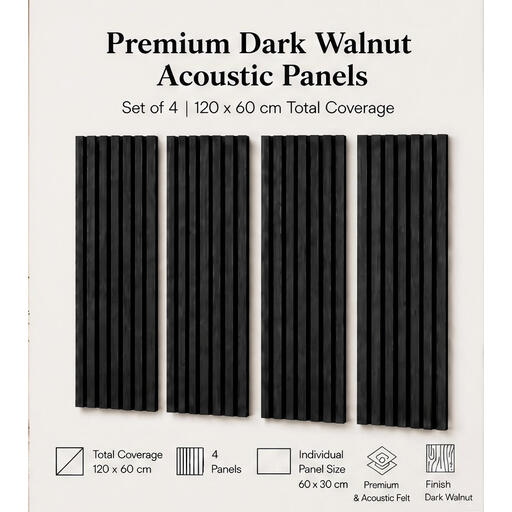
Why it's a good fit: Ideal for creating a stylish accent wall behind a desk. The modular 4-piece set is flexible, and the modern grey oak finish fits seamlessly into a clean, organised office environment. The option for adhesive mounting is a key advantage for users in rental properties.
This set uses a real wood veneer on an MDF core, sidestepping the cheap foil-look trap. The choice between adhesive and screws solves the problem of inflexible installation.
Modular 4-piece set for flexible design; renter-friendly adhesive mounting available.
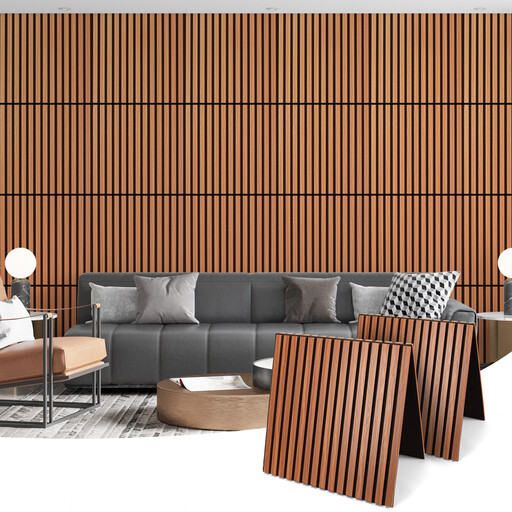
Why it's a good fit: For podcasters, streamers, or musicians, acoustic performance is critical. This set is engineered with a high-density fibreglass wool core and a foldable 3D design to maximise the sound-absorbing surface area and ensure clear audio quality.
This product directly addresses the pitfall of ineffective backing material. Instead of a thin, standard felt, it uses high-density fibreglass wool, a material renowned for its superior sound absorption.
Foldable 3D design to maximise absorption surface area; high-density fibreglass wool core for optimised acoustics.
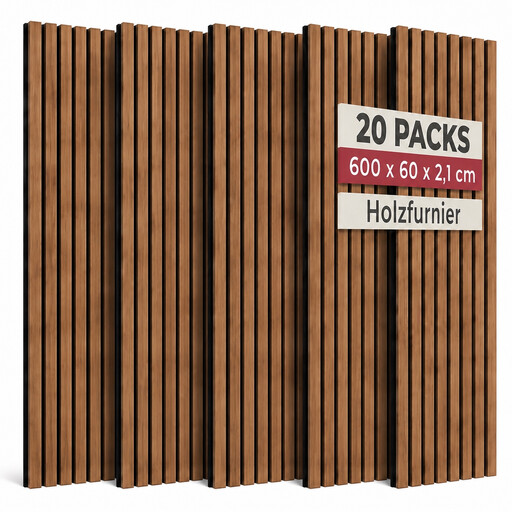
Why it's a good fit: Anyone looking to cover an entire wall in a living room or home cinema needs a large quantity of material with consistent quality. This 20-piece set covers an area of 3.6 m? and ensures a uniform, high-end appearance with an elegant walnut finish.
Buying in bulk ensures that all panels come from the same production batch. This prevents variations in colour and quality that can occur when combining multiple smaller sets from different vendors.
Bulk pack for a 3.6 m? area; ensures uniform appearance and material quality for entire walls.
We have compiled a complete, up-to-date list of products that fully meet these strict selection criteria and all applicable regulations.
A general rule of thumb is that for a noticeable improvement, the surface area of the acoustic panels should cover about 15–25% of the room's total wall area. Focus on the "first reflection points"—these are the walls from which sound is directly reflected to your listening position (typically the walls to the left, right, and opposite of your speakers or where you speak).
Yes, installation is generally manageable for DIY enthusiasts. Most products offer two options:
No, this is a common misconception. Acoustic panels are designed for sound absorption, which means improving the acoustics within a room by reducing reverberation and echoes. They are not designed for soundproofing, which aims to block the transmission of sound between rooms. To reduce noise from outside or from neighbours, structural measures such as wall insulation are required.