
Lieferung heute & morgen

Qualitätsgarantie

Willkommens-Angebote freischalten: KOSTENLOSE Lieferung | Bis zu 80 % RABATT | Kostenlose 30-Tage-JoyPlus-Testphase
App herunterladen
Echoes in your home office, reverberation in the living room or distracting reflections in a studio aren’t caused by noisy equipment alone. Hard surfaces such as glass, concrete, tiles and bare walls reflect sound. Acoustic panels can help shape the acoustics of a room while also serving as decorative wall coverings. The key is not to choose them based on colour or 3D effect alone.
Sound-absorbing wall panels mainly reduce reflections within a room. This can make reverberation less noticeable and speech easier to understand. However, they don’t automatically stop noise travelling through a wall, ceiling or door into adjoining rooms.
If you want to fully shield a room from neighbours, traffic or machinery, you may need structural sound insulation, depending on the situation. Acoustic panels and soundproofing panels don’t always mean the same thing. Before buying, decide whether you want to improve room acoustics or limit sound transmission.
A set may contain several panels but cover only a small section of wall. For example, four panels measuring 60 × 30 cm each cover a total of 0,72 m². That may be enough for a defined feature area, but a larger room will require several sets.
Measure the area you want to cover and allow a little extra for trimming, edges or future replacements. Also check whether the product listing gives the total coverage area or the dimensions of a single panel.
Terms such as ‘3D’, ‘Premium’ or ‘Noise Reduction’ alone tell you little about how a panel is made. Check whether its construction is clearly described, for example MDF core, wood veneer, slatted design and acoustic felt. Details about where it can be used, how it is installed and how to care for it are also important.
For wood-effect finishes, check whether the surface is veneered, covered with decorative foil or made from solid wood. These materials can differ in appearance, weight, price and moisture resistance.
Wooden acoustic panels with vertical slats combine a textured surface with an absorbent backing. The slats break up the look of a flat wall, while a felt or fibre backing can help reduce sound reflections. For MDF products, details such as low VOC emissions are relevant, but should be understood as manufacturer or product claims rather than a blanket guarantee of a particular level of indoor air quality.
For rooms with higher humidity, check whether the specific product is suitable. Water-resistant or mould-resistant properties apply only if they are explicitly stated. According to the product description, the Black 3D Groove Wall Panels Set is waterproof and mould-resistant. Even so, only install it permanently in a poorly ventilated wet room after checking the manufacturer’s guidance.
First, work out:
For a home office, a limited area behind the desk or on the opposite wall is often enough. In a studio, however, you’ll need to consider several reflection areas. Positioning panels behind speakers, beside your workstation or at the side-wall first reflection points will depend on the shape and use of the room.
DIY installation can be convenient, but not every fixing method is suitable for every wall. Adhesive installation may be a good option in a rented home, but the adhesive must be compatible with the surface. When using screws, consider the type of wall plugs, the wall material and the weight of the panel.
Before installation, make sure the surface is dry, clean, sound and as level as possible. If you’re renting, test the fixing method in an inconspicuous spot first. This can help prevent damage to wallpaper, plaster or paint.
The recommendations below group products by specific use case, based on the product details provided.
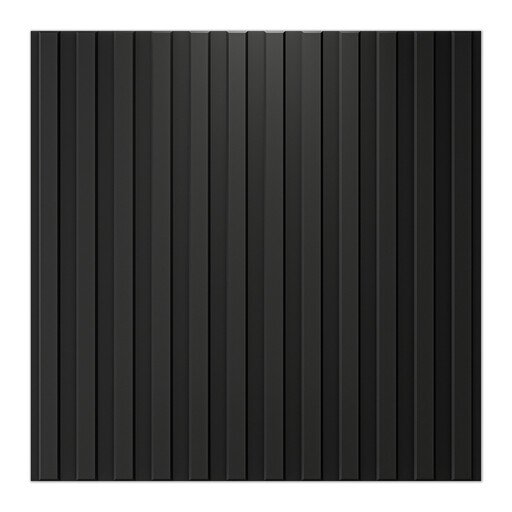
Why it suits this profile: This set is ideal if you want to add a decorative touch to a defined area of wall and handle the installation yourself. The stated size of 50 × 50 cm per panel makes it easier to plan how much coverage you need.
The description lists 12 panels with a stated coverage of 3 sq ft, as well as straightforward DIY installation. This makes it easier to estimate how much material you’ll need before buying.
3D groove surface; described as waterproof and mould-resistant in the product listing.
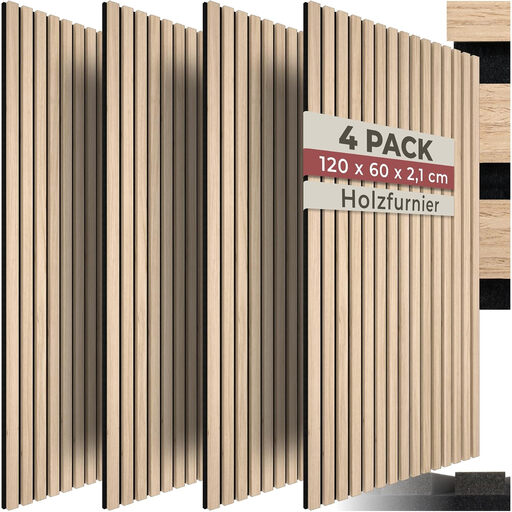
Why it suits this profile: According to the product description, this oak acoustic panel combines an MDF core, an oak veneer surface and an acoustic felt backing. It’s a good fit for a home office, living space or a stylish studio area.
The total coverage is listed as 120 × 60 cm, or 0,72 m². Adhesive installation and screw fixing are also given as options.
Four modular panels; oak veneer and felt backing according to the product description.
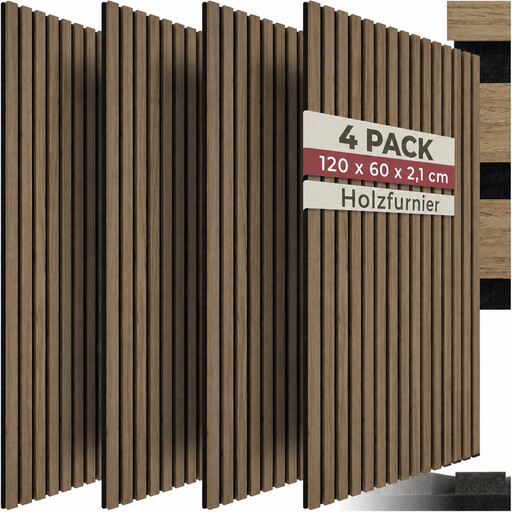
Why it suits this profile: The dark walnut effect works well in studios, podcast workspaces, media rooms or as a striking feature wall. The vertical slat design creates a strong, defined look.
The product details give individual panel dimensions of 60 × 30 cm and a total coverage area of 0,72 m². This helps you work out how many sets you’ll need for a studio or workspace wall.
Walnut veneer; acoustic felt backing and modular sets of four according to the product description.
We’ve put together a complete, regularly updated list of products that meet these strict selection criteria and fully comply with the safety regulations in force in the EU.
It depends on the size of the room, the furniture and the effect you’re looking for. Start with a defined reflection area behind or opposite your desk. Then calculate the coverage per set and allow for sockets and windows. A larger installation area doesn’t automatically mean complete sound insulation.
Many models can be fixed with a suitable mounting adhesive. Whether you can remove the panels without leaving marks depends on the adhesive, wall paint, wallpaper and surface. Test the fixing method first in a small, inconspicuous spot. For more extensive work, check the terms of your tenancy agreement.
Their lifespan depends on the material, room conditions, physical wear and installation. Keeping them in dry indoor spaces, dusting them gently and following the care instructions can help them last longer. Avoid direct moisture, strong heat sources and improper cleaning when caring for MDF panels with a veneer finish.