
Lieferung heute & morgen

Qualitätsgarantie

Willkommens-Angebote freischalten: KOSTENLOSE Lieferung | Bis zu 80 % RABATT | Kostenlose 30-Tage-JoyPlus-Testphase
App herunterladen
A reverberant room, poor speech clarity during conference calls, or simply the desire for a quieter, more comfortable atmosphere—the reasons for seeking out wood acoustic panels are many. These elements combine function with aesthetics and have become a central component of modern interior design. However, the market is overwhelming, and not every product that looks like a high-end solution actually meets the acoustic requirements.
As your Joybuy Product Recommendation Officer, I'll help you identify the crucial features and avoid common purchasing pitfalls. This guide is based on objective product parameters, enabling you to make an informed decision for your home or office.
Before you invest, you should be aware of the common problems that often only become apparent after purchase and installation.
To separate the wheat from the chaff, focus on three verifiable criteria. These determine both the look and the functionality of your new wall cladding.
The acoustic performance of a panel depends directly on its three-part construction:
The choice of mounting method should depend on your living situation (owner or renter) and your DIY skills.
Pay attention to the dimensions of the individual panels and the total area a set covers. Modular systems of several smaller panels offer more design freedom than a single, large element. They allow you to create creative patterns or to improve acoustics selectively in specific wall areas, such as behind the desk in a home office or opposite the speakers in the living room.
Here are some product recommendations tailored to specific needs and use cases.
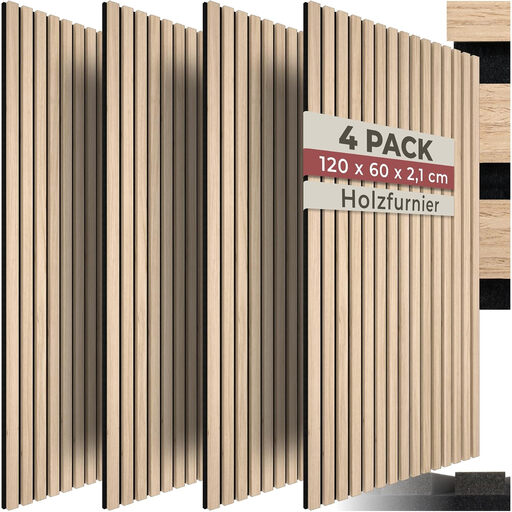
Why it's a great fit: This set combines a bright, modern oak look with flexible installation. It is ideal for renters who want to create a stylish accent wall without permanently altering the building structure. The modular set of 4 allows for flexible arrangement on smaller surfaces.
The product features a genuine acoustic felt backing and explicitly offers a renter-friendly adhesive mounting option as an alternative to screwing. This avoids the pitfalls of purely decorative function and wall damage.
The dual installation option (glue or screw) offers maximum flexibility for different living situations and wall surfaces.
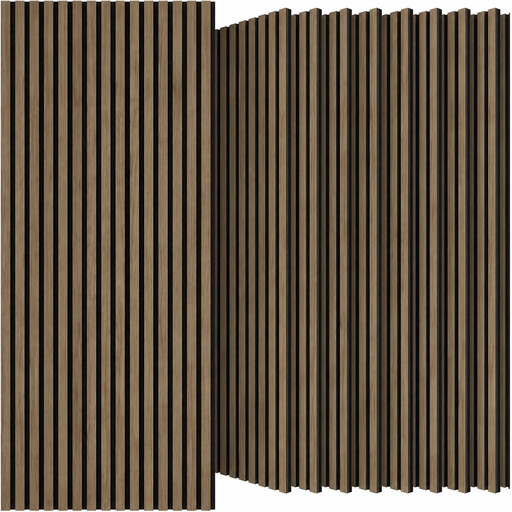
Why it's a great fit: Anyone looking to acoustically optimise a dedicated room for music or film needs a large-scale solution. This 20-piece set covers 3.6 m? and is perfect for cladding an entire wall. The dark walnut finish creates a sophisticated, focused atmosphere.
This product is clearly designed for acoustic performance. The construction of MDF slats on a thick felt backing is engineered for effective sound absorption, ensuring it is not merely a decorative element.
The set provides extensive coverage in one package, simplifying planning and purchasing for full-wall installations and guaranteeing a uniform appearance.
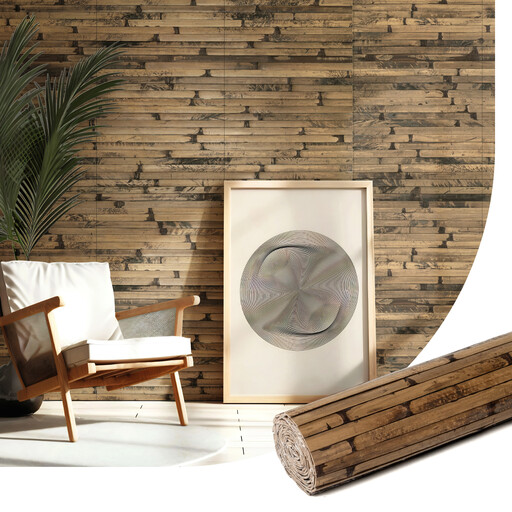
Why it's a great fit: For anyone looking for an alternative to the classic slatted look. This panel, made from carbonised bamboo, is supplied as a roll and offers a unique, natural texture. It is excellent for accent walls, ceilings, or even for finishing furniture.
The product is transparently declared as "100% Renewable Carbonized Bamboo," thus avoiding misleading "wood" labels. It focuses on the natural aesthetics and properties of bamboo rather than promising a function it doesn't primarily fulfil.
The flexible roll format enables creative applications not possible with rigid panels, such as cladding columns or slightly curved walls.
We have compiled a complete, up-to-date list of products that fully meet these strict selection criteria and current regulations.
1. Can you cut wood acoustic panels yourself? Yes, panels with a felt backing and MDF slats can usually be customised. The felt can be cut with a sharp utility knife. For the wood slats, a hand saw or mitre saw with a fine-toothed blade is recommended to achieve clean cuts. Measure everything precisely before cutting.
2. Do acoustic panels improve soundproofing from the neighbouring apartment? It's important to make a distinction here: acoustic panels improve room acoustics by absorbing sound waves within a room, thus reducing reverberation. They are not designed for sound insulation (or soundproofing), which is the blocking of sound that passes through a wall. While they may have a minimal effect, they are not a solution for loud neighbours. That requires structural measures to decouple the walls.
3. How many acoustic panels do I need for my living room? This depends on the desired effect. As a rule of thumb, treating about 15–25% of a single wall's surface is often a good starting point for a noticeable reduction in reverberation in a standard-sized living room. Ideally, start on the wall opposite the primary sound source (e.g., speakers or television). For dedicated home cinemas or recording studios, a higher coverage may be appropriate.