
Lieferung heute & morgen

Qualitätsgarantie

Willkommens-Angebote freischalten: KOSTENLOSE Lieferung | Bis zu 80 % RABATT | Kostenlose 30-Tage-JoyPlus-Testphase
App herunterladen
The sheer variety of creative pens can be overwhelming. Whether you want to paint rocks, decorate wood, or apply permanent labels in the office, there seems to be a specialised pen for every application. This guide is designed to help you understand the features of different acrylic pens and permanent markers. Our goal is to provide a clear, objective foundation so you can make the right choice for your specific project.
To find the perfect product, it helps to be familiar with a few key features. The following points will guide your decision-making process.
A pen's tip is the primary factor determining its best use case. Common types include:
Some acrylic pen sets feature dual tips, combining a fine and a broader tip in one pen for maximum flexibility.
The ink's composition determines its adhesion and durability. Acrylic ink is typically water-based but dries to a permanent, waterproof finish. This makes them ideal pens for rock painting or for projects on both porous and smooth surfaces.
Pay close attention to the manufacturer's compatibility specifications. Many pens for wood, glass, and ceramic may require an additional setting step after drying (e.g., by applying heat in an oven for ceramics) to become dishwasher-safe. In contrast, waterproof pens like permanent markers are often designed for direct, permanent use on almost any material.
The target audience often dictates the product's features. Acrylic markers for children should be explicitly labelled as non-toxic (e.g., compliant with ASTM D-4236) and, ideally, washable. Safety caps designed to prevent choking are another important feature here.
For professional use in an office or workshop, different criteria are relevant. Durability, lightfastness, and reliability take centre stage. A permanent marker with ink that won't dry out immediately even if left uncapped is a major advantage in a busy environment.
Based on the criteria above, we have curated a selection of products that cover a range of different applications.

Why It Stands Out: This acrylic pen set is distinguished by its dual-tip system. Each pen features a fine tip (0.7–2 mm) for details and a round tip (1.7–3 mm) for larger areas. The extensive colour palette, with 60 standard, 24 metallic, and 6 neon colours, offers vast creative potential.
Pros:
Who It's For: Hobby artists and DIY enthusiasts looking for a comprehensive set with maximum colour variety and flexible applications for diverse projects.
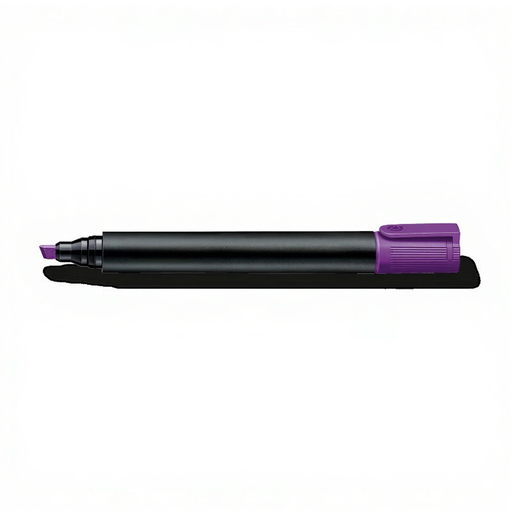
Why It Stands Out: This permanent marker is designed for durability and reliability in a professional setting. According to the manufacturer, its "DRY SAFE" technology allows the pen to be left uncapped for days without drying out (tested according to ISO 554). It is also refillable.
Pros:
Who It's For: Users in offices, logistics, trades, and industry who need an extremely reliable, durable, and waterproof pen for permanent labelling on almost any surface.

Why It Stands Out: These acrylic markers for children were developed specifically for young artists. The key feature is the ultra-washable ink, which the manufacturer claims is easily removed from skin, clothing, and most surfaces with water. Safety aspects, such as anti-choking caps, are a top priority.
Pros:
Who It's For: Parents, educators, and anyone looking for safe, user-friendly, and easy-to-clean creative pens for children aged 3 to 14.
The products featured here cover common use cases, but the market offers many more specialised pens. If you're looking for a different tip type, a specific colour, or pens for a highly specialised material, it's worth taking a look at the broader assortment.
Browse our entire selection of Art & Craft Pens to find more specialised pens for your project.
Yes, most acrylic pens are waterproof and permanent once fully cured. While you are painting, the water-based ink can be mixed or corrected with water. Once the acrylic polymers have dried, they form a durable, water-resistant layer. For enhanced durability on smooth surfaces like glass or ceramic, an additional step like sealing with a clear varnish or baking in an oven (according to the manufacturer's instructions) may be beneficial.
Acrylic markers are known for their versatility. They adhere to a wide range of surfaces, including:
Most acrylic pens with a valve system need to be activated before their first use. The process is typically straightforward: