
Lieferung heute & morgen

Qualitätsgarantie

Willkommens-Angebote freischalten: KOSTENLOSE Lieferung | Bis zu 80 % RABATT | Kostenlose 30-Tage-JoyPlus-Testphase
App herunterladen
Acrylic pens, also known as acrylic markers, have become an indispensable tool for hobby artists and DIY enthusiasts. Their versatility enables creative projects on almost any surface—from stone and wood to canvas and fabric. However, the market is flooded with products whose marketing promises often fall short in practice. Many buyers experience frustration when the pens dry out quickly, the paint fails to cover properly, or the final result fades after a short time.
This guide will help you navigate the common pitfalls. We focus on the objective criteria that truly matter, so you can make an informed decision and find products that meet your creative demands.
The 3 Most Common Problems When Buying Acrylic Pens:
To avoid a bad purchase, you should focus on verifiable technical specifications rather than marketing slogans.
The type of tip largely determines the pen's application.
The quality of the ink is the heart of any acrylic marker. Most high-quality pens use a water-based ink. This is low-odour, generally non-toxic, and therefore well-suited as craft pens for adults and for projects with children, such as pens for decorating Easter eggs.
However, the crucial factor is pigment density. A high concentration of quality pigments ensures high opacity, making the colours vibrant even on dark backgrounds. Look for product descriptions that explicitly mention "high opacity."
Acrylic pens are known for their versatility, but not every pen adheres equally well to all materials.
Before buying, check the manufacturer's recommendations for your intended surfaces.
Based on the criteria mentioned, we have put together a selection of products suitable for different needs and projects.
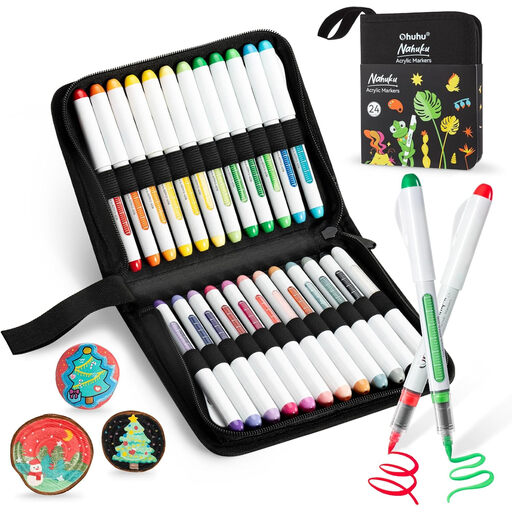
Why This Fits Their Persona: Ideal for creatives who want to work on a wide variety of surfaces like stone, wood, fabric, or canvas without having to buy a separate set of pens for each material. The Ohuhu acrylic pens brand is known for its excellent pigmentation.
The direct-liquid design with an integrated ink regulator ensures a smooth, pump-free flow of colour. The high-opacity ink delivers brilliant results, even on dark surfaces.
The flexible 1-5 mm brush tip allows for both fine lines and filling larger areas. A viewing window to monitor the ink level is a practical detail.
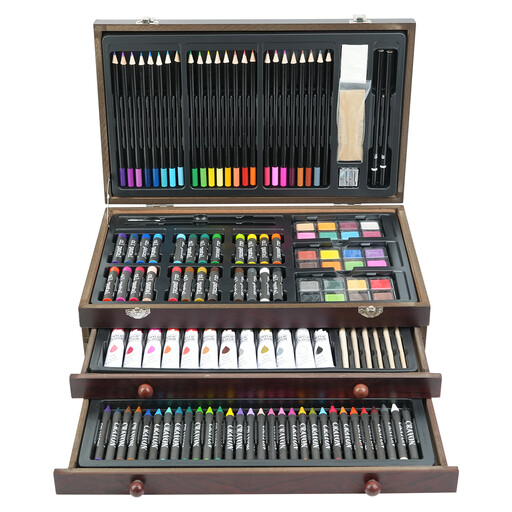
Why This Fits Their Persona: Perfect for beginners who don't want to commit to a single medium yet. This set offers a wide range of materials for trying out different techniques, from coloured pencils and oil pastels to watercolours.
Instead of buying multiple small, specialised sets, this case provides a cost-effective starter kit. It allows you to discover which materials you enjoy most without a major investment.
A comprehensive collection of various painting and drawing tools in a practical and portable wooden case. Everything is neatly organised and ready to use immediately.
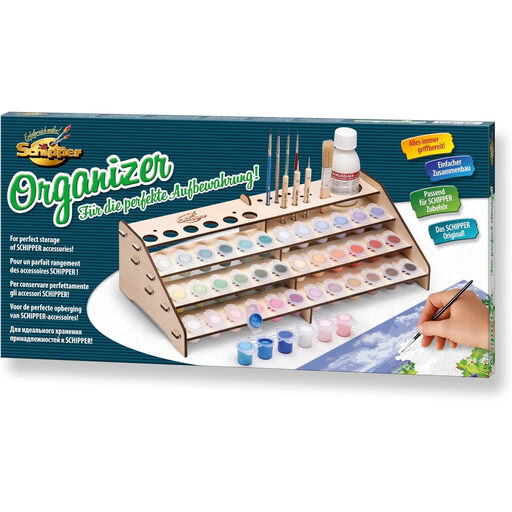
Why This Fits Their Persona: For artists who already own a collection of pens and paints and value a tidy, efficient workspace. This accessory solves the problem of clutter.
Prevents the "hidden costs" of clutter: damaged materials, dried-out pens from lost caps, and time wasted searching for the right tool.
Made from sturdy linden wood, this organiser offers durable and perfectly-sized storage for paint pots, brushes, and pens. Simple assembly.
We have compiled a complete, up-to-date list of products that fully meet these strict selection criteria and all applicable safety regulations.
1. How do you make acrylic pens waterproof? Most acrylic markers are water-resistant after fully drying, but not completely waterproof or scratch-proof. For permanent durability, especially outdoors or on smooth surfaces, applying a transparent acrylic varnish (as a spray or brush-on) is recommended. For ceramics or glass, the paint can often be set by baking it in an oven (follow the manufacturer's instructions).
2. How long do acrylic markers last? The lifespan depends on storage and use. Always store the pens horizontally with the cap tightly sealed to prevent them from drying out or leaking. Pens with a transparent barrel or a viewing window help you keep an eye on the ink level.
3. Can you use acrylic pens on fabric? Yes, many acrylic markers are suitable for fabric. To make the colour wash-proof, the fabric should be ironed on the reverse side after the paint has dried (without steam, using a piece of baking paper between the iron and the fabric). This process bonds the colour pigments to the textile fibres. It is recommended to test this on an inconspicuous area first.