
Lieferung heute & morgen

Qualitätsgarantie

Willkommens-Angebote freischalten: KOSTENLOSE Lieferung | Bis zu 80 % RABATT | Kostenlose 30-Tage-JoyPlus-Testphase
App herunterladen
Choosing an action cam can quickly become overwhelming. Manufacturers tout impressive numbers and features, but not all of them deliver on their promises in practice. Many buyers invest in a device that fails to meet their expectations because they fall for common marketing traps. Before you make a decision, it's crucial to understand the typical pitfalls to avoid a poor investment.
This guide, created by your Joybuy Product Recommendation Officer, focuses on the objective criteria that truly matter. We'll highlight the three most common problems consumers face and show you what to look for to find the right camera for your needs.
The 3 Most Common Traps When Buying an Action Cam:
To avoid falling into these traps, you should focus on the technical fundamentals. These three parameters are crucial for the performance of a sports camera or vlogging camera.
The size of the image sensor is more important than the sheer megapixel count. A larger sensor, such as a 1-inch CMOS sensor, can capture more light. This leads to better dynamic range, less image noise, and visibly higher detail, especially at dusk or in high-contrast scenes. A fast aperture (identified by a low f-number, e.g., f/2.0) enhances this effect by letting more light onto the sensor. A good 4K action camera combines high resolution with a sufficiently large sensor.
Smooth footage is essential. There are two fundamental technologies here:
Check exactly how a model's waterproofing is defined. A camera that is waterproof down to a certain depth (e.g., 10 metres) without an additional housing offers maximum flexibility for use in rain, snow, or while snorkelling. For most users, such models are the more practical choice as a waterproof camera or underwater camera. Models that are only waterproof with an external case are better suited for planned dives but are more cumbersome for everyday use.
Based on the criteria above, we've curated a selection of cameras suitable for different user profiles and requirements.
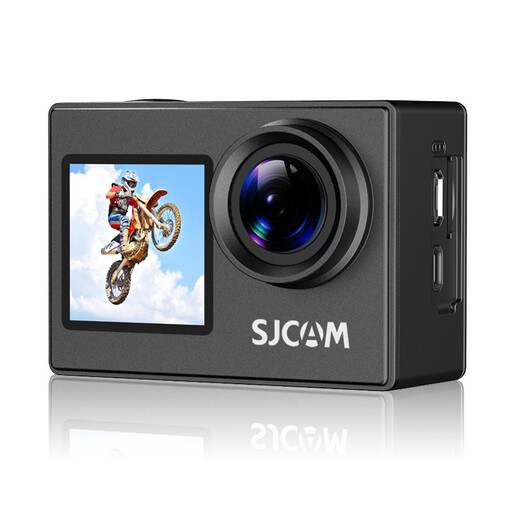
Why This Fits Their Persona: Ideal for users looking to get their first experience with action cams without a large investment. The dual-screen design simplifies shooting selfies and vlogs, while the comprehensive accessory package allows for an immediate start.
This model bypasses the "Waterproof Misconception" by including the necessary housing for depths of up to 30 metres right in the box. The 4K resolution is interpolated, which is a transparent and functional solution for its price point.
Comprehensive accessory bundle including a 64GB memory card and waterproof case. Excellent value for money for beginners.
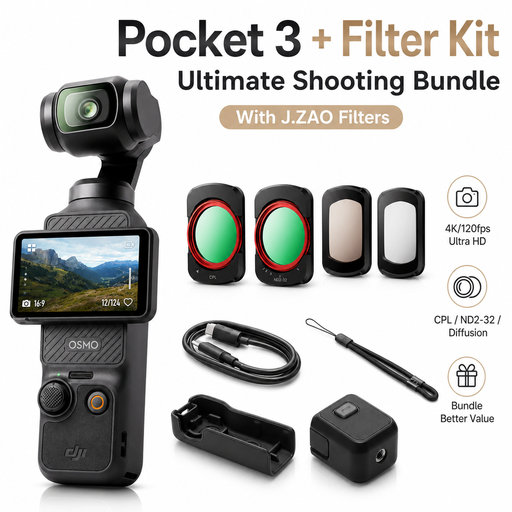
Why This Fits Their Persona: Perfect for content creators seeking a compact yet powerful vlogging camera. The large sensor and mechanical gimbal deliver professional results for travel videos, vlogs, and social media content.
This gimbal camera solves the "4K Trap" and the "Stabilisation Myth" simultaneously: The 1-inch CMOS sensor ensures excellent image quality, while the 3-axis mechanical gimbal provides exceptionally smooth footage.
Mechanical gimbal stabilisation for professional video. Large 1-inch sensor and a rotatable 2-inch touchscreen. The bundle includes useful filters for creative control.
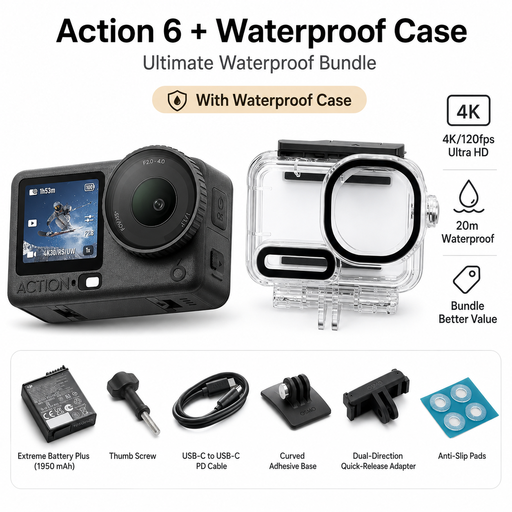
Why This Fits Their Persona: Engineered for use in extreme conditions. Whether for mountain biking, skiing, or diving, this camera is rugged, waterproof, and delivers steady footage even at high speeds, thanks to its advanced stabilisation.
The camera is inherently rugged and waterproof, avoiding the "Waterproof Misconception". Its RockSteady 3.0 and HorizonSteady stabilisation technologies are among the most advanced EIS systems, delivering reliably stable results.
Supports 8K video and 4K/120fps for stunning slow-motion shots. Highly effective electronic stabilisation. The bundle with an additional case is ideal for deeper dives.
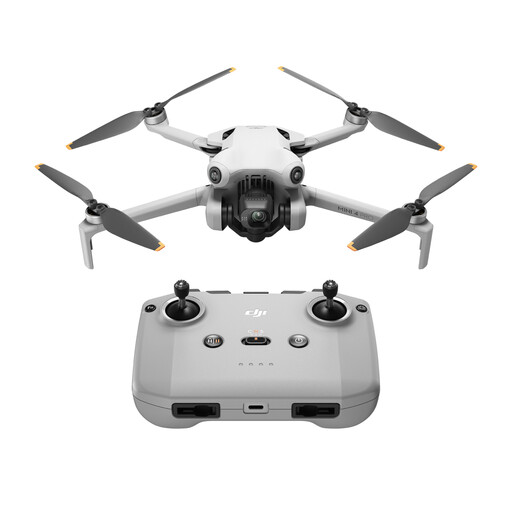
Why This Fits Their Persona: For anyone looking to add a new dimension to their footage. This sub-250g drone is a flying action cam that enables breathtaking aerial shots in 4K HDR quality, while being easy to transport and fly.
As a drone, it features full mechanical gimbal stabilisation. Its C0 certification and sub-249g weight also bypass the bureaucratic hurdle of a "drone licence" in many countries, including the EU.
Sub-249g weight (no major drone licence required in many regions). True vertical shooting in 4K/60fps HDR. Omnidirectional obstacle avoidance for enhanced flight safety.
We have compiled a complete, up-to-date list of products that fully meet these strict selection criteria and local safety regulations.
A fast and reliable memory card is essential for recording 4K video. Look for a microSD card with a UHS Speed Class 3 (U3) or Video Speed Class 30 (V30) rating. These guarantee a minimum write speed of 30 MB/s, which is necessary for the smooth recording of high-resolution video footage. The maximum supported storage capacity varies by camera model.
Battery life depends heavily on the model, selected settings (resolution, frame rate), and ambient temperature. For continuous 4K recording, the battery life of most action cams ranges from 45 to 90 minutes. In colder temperatures, battery performance can decrease. For longer shooting sessions, it is advisable to carry one or more spare batteries.
For drones with a C0 classification and a weight of under 250 grams, like the DJI Mini 4 Pro, a "major drone licence" (such as the A2 CofC in the UK/EU) is generally not required in many regions. However, the operator must typically register with the local aviation authority (e.g., the CAA in the UK or the FAA in the US) and affix their operator ID to the drone. Always check the current local regulations before you fly.