
Lieferung heute & morgen

Qualitätsgarantie

Willkommens-Angebote freischalten: KOSTENLOSE Lieferung | Bis zu 80 % RABATT | Kostenlose 30-Tage-JoyPlus-Testphase
App herunterladen
Choosing the right action cam can be a challenge given the sheer number of models and technical specifications available. Whether for your next ski trip, a mountain bike tour, or vlogging for social media, the demands on a modern action camera are high: it needs to be robust, compact, and powerful. This guide provides a practical overview of key purchasing criteria and presents a selection of models for 2026 to help you make an informed decision.
To find the right camera for your needs, you should consider a few technical features. These three aspects are crucial for most use cases.
Video quality is a decisive factor. A 4K sports camera is now standard, delivering sharp, detailed footage. Some models even offer 5.3K or 8K resolutions, which provides more flexibility for post-production and cropping videos without losing quality. Also, pay attention to the frame rate (fps – frames per second). High frame rates like 60 or 120 fps at 4K resolution are necessary to create smooth slow-motion footage and clearly capture fast movements.
For dynamic shots, an effective camera with image stabilisation is essential. Electronic Image Stabilisation (EIS) systems like RockSteady, HyperSmooth, or FlowState digitally compensate for shakes and vibrations, ensuring smooth, professional-looking videos without needing an external gimbal. Durability is just as important. Many modern action cams are designed as waterproof cameras and can be used at depths of up to 10 metres or more without an additional housing. Pay attention to the manufacturer's specifications for water, dust, and shock resistance, as well as operating temperature, especially if you plan to use the camera for extreme sports or in harsh conditions.
Long battery life is crucial for recording extended activities without interruption. Models with interchangeable or special cold-resistant batteries offer an advantage here. The operation should be intuitive, ideally via a responsive touchscreen and physical buttons that can be operated even with gloves. A front display is particularly useful for vloggers to check their framing. The accessory ecosystem also plays a role. Check the availability of mounts, such as for a helmet camera, or external microphones for better sound quality.
Based on the criteria above, we have compiled a selection of cameras that stand out for their technical features and areas of application.
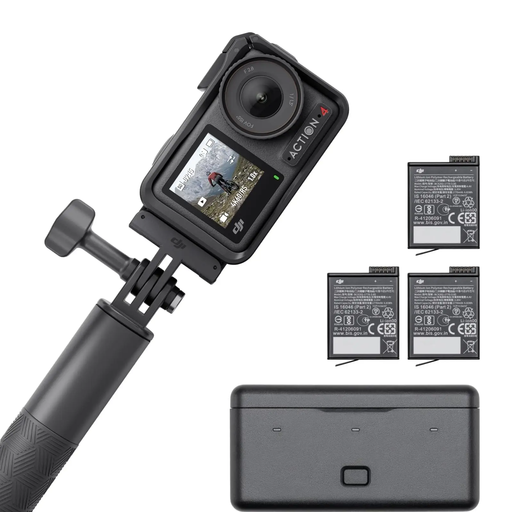
Why it stands out: The DJI Osmo Action 4 is distinguished by its large 1/1.3-inch sensor, which, according to the manufacturer, delivers high image quality even in low-light conditions. The 10-bit & D-Log M colour profiles offer professional users more flexibility in colour grading. Its cold resistance down to -20°C makes it an option for winter sports enthusiasts.
Advantages:
Who it's for: This model is a great choice for vloggers and adventurers looking for a reliable vlogging camera with high image quality in various lighting conditions and simple usability. The cold resistance and the combo's long battery life are particularly beneficial for outdoor enthusiasts.
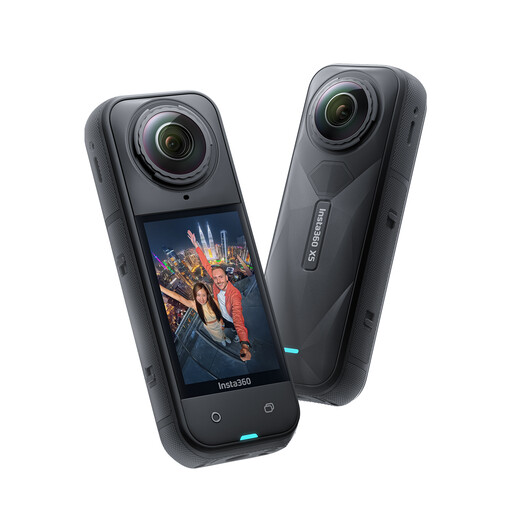
Why it stands out: The Insta360 X5 stands out for its ability to capture immersive 8K 360° videos. The "Invisible Selfie Stick" effect, where the stick is automatically removed from the footage in post-production, enables unique third-person perspectives. The dual 1/1.28-inch sensors and triple AI chip are designed for high performance in low-light conditions.
Advantages:
Who it's for: The Insta360 X5 is aimed at content creators and creative professionals who want maximum flexibility in post-production. The ability to choose the frame later (reframing) makes it ideal for anyone capturing dynamic and unpredictable scenes who wants to select the most interesting perspective afterwards.
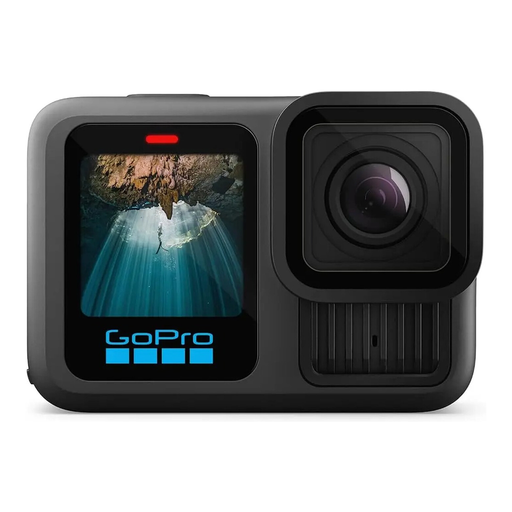
Why it stands out: The GoPro HERO13 Black focuses on high video quality and advanced stabilisation. With video recording up to 5.3K at 60 fps and HyperSmooth 6.0 stabilisation, it is designed for demanding action scenarios. An innovation is its compatibility with the HB lens series, which allows the use of interchangeable lenses (e.g., ultra-wide-angle or macro).
Advantages:
Who it's for: This model is intended for extreme sports athletes and professional users who need uncompromising image quality, class-leading stabilisation, and the flexibility of interchangeable lenses. It is a powerful underwater camera and is suitable for virtually any adventure imaginable.
The models presented cover a wide range of use cases. However, if you haven't found the right device for your specific needs, there are other alternatives to discover. For example, many cameras offer convenient control via Bluetooth remote controls.
Explore our full range of digital cameras with Bluetooth remote control to find more models with different features.
Both factors are important, but their priority depends on the application. For action-packed activities like mountain biking or skiing, excellent image stabilisation is often more crucial, as it can render shaky footage unusable. High resolution (e.g., 4K or higher), on the other hand, offers more detail and the ability to zoom into the frame in post-production without losing quality. For calmer shots or vlogs, resolution may be a higher priority.
Modern action cameras are designed for use in harsh conditions. Most leading models are waterproof to a depth of 10 metres or more without an additional housing. They are also typically dust and shock-resistant. Some cameras, like the DJI Osmo Action 4, even offer extended functionality in extreme temperatures, according to the manufacturer, making them particularly suitable for winter sports.
Yes, many action cams are excellent vlogging cameras. Features like a front-facing screen for self-monitoring, a wide-angle lens to capture the surroundings, and advanced microphone systems make them ideal for this purpose. Models that support external microphones also offer the ability to further improve audio quality, which is crucial for high-quality vlogs.