
Lieferung heute & morgen

Qualitätsgarantie

Willkommens-Angebote freischalten: KOSTENLOSE Lieferung | Bis zu 80 % RABATT | Kostenlose 30-Tage-JoyPlus-Testphase
App herunterladen
Choosing the right camera to capture dynamic experiences can be a challenge. Whether you're skiing, travelling, or creating vlogs, the demands on the device are high: it must be robust, compact, and powerful. This article serves as a guide, introducing various models tailored to specific use cases. The goal is to provide you with an objective basis for your purchasing decision, based on technical features and functionalities.
Camera spec sheets can be overwhelming. The following points highlight the crucial features relevant for capturing high-quality action footage.
Video resolution determines the level of detail in your recordings. A 4K action cam is now a common standard, offering four times the resolution of Full HD (1080p). This not only results in sharper videos but also provides more flexibility in post-production, such as cropping into the frame without a significant loss of quality. Some models even offer 8K resolution for maximum fidelity.
The frame rate, measured in frames per second (fps), is crucial for the smooth depiction of motion. 60 fps ensures very fluid playback, while 120 fps or more enables stunning slow-motion shots—ideal for a sports camera to analyse or aesthetically highlight fast-paced action.
An effective camera with image stabilisation is essential for action shots. It compensates for the shakes and vibrations that are inevitable during movement. There are two main technologies:
Action cameras are designed for use in demanding conditions. Their durability is evident in shock-resistant housings and resilient materials. A key feature is waterproofing. Some models are natively waterproof up to a certain depth, while others require an additional protective case. For diving or water sports, a certified waterproof camera with a clear specification for the maximum dive depth (e.g., 30 metres with a case) is a fundamental requirement.
Here is a selection of models that cater to different needs and use cases. The descriptions are based on the product data provided by the manufacturer.

What sets this model apart The Komery G7-A is positioned as an accessible vlogging camera for beginners and casual users. It combines the compactness of a point-and-shoot camera with the ability to record video in 4K resolution. Its 18x digital zoom and light weight make it a practical travel camera for everyday situations.
Pros:
Who is it for? This model is aimed at content creation beginners, young people, or travellers looking for a straightforward and budget-friendly camera for vlogs and photos, where extreme durability and waterproofing are not the main priorities.
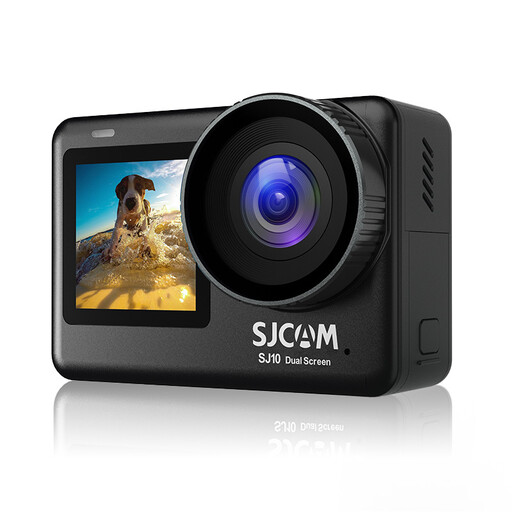
What sets this model apart The SJCAM SJ10 Pro is a classic action camera with a comprehensive feature set. The dual-screen design, with a large touchscreen on the back and a selfie display on the front, makes framing your shot significantly easier. The 6-axis gyro stabilisation ensures smooth footage during fast movements, making it a suitable choice for various sports.
Pros:
Who is it for? This model is a great choice for sports enthusiasts like motorcyclists, skiers, or divers, as well as for vloggers who need a robust, versatile, and high-performance sports camera with reliable stabilisation and good image quality.
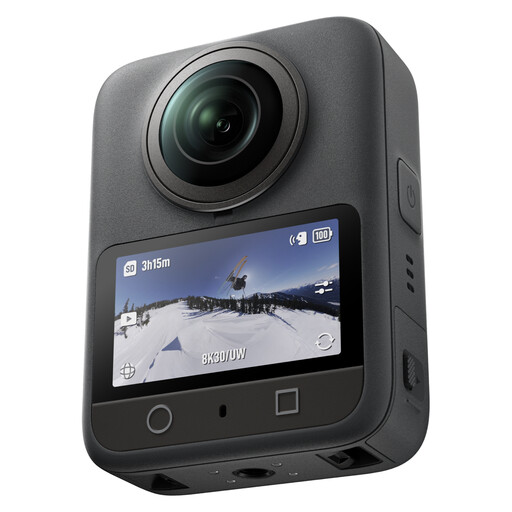
What sets this model apart The DJI Osmo 360 is a specialised 360-degree camera that enables immersive footage of exceptional quality. According to the manufacturer, the large 1-inch sensor ensures high performance even in low-light conditions. The ability to record 8K 360° video opens up creative possibilities for post-production, where the frame can be freely chosen afterwards. The "Invisible Selfie Stick" effect also creates impressive third-person perspectives.
Pros:
Who is it for? This model is aimed at advanced content creators, travel vloggers, and tech enthusiasts who are willing to invest in equipment for unique and immersive content. It is ideal for users who want to fully leverage the creative freedom of 360-degree recording.
The models presented cover specific use cases. If you are looking for a versatile camera for everyday use or travel that doesn't necessarily need to be designed for extreme sports, a look at our broader selection of compact cameras might be helpful.
? Explore more compact camera models here
1. What distinguishes an action camera from a normal digital camera? An action camera is specifically designed for use in motion and under harsh conditions. Key differences include its compact and robust build, often integrated waterproofing, a wide-angle lens to capture a broad field of view, and advanced image stabilisation to minimise shaky footage.
2. Do I need a 4K action cam? A 4K action cam is recommended if you value high image quality and flexibility. The high resolution provides sharper details and allows you to zoom in or crop the image in post-production without losing quality. Furthermore, 4K footage is more future-proof as 4K displays become increasingly common.