
Lieferung heute & morgen

Qualitätsgarantie

Willkommens-Angebote freischalten: KOSTENLOSE Lieferung | Bis zu 80 % RABATT | Kostenlose 30-Tage-JoyPlus-Testphase
App herunterladen
With so many models and technical specifications available, finding the right action camera can be a daunting task. Whether for vlogging, extreme sports, or travel footage, the demands for a modern sports camera are high: it needs to be robust, compact, and powerful. This guide offers objective advice to help you make an informed choice based on key criteria and find a model that meets your specific needs.
Before you decide on a model, it's helpful to understand the core technical features. Three criteria are particularly important for most use cases.
Video resolution determines the level of detail in your footage. A 4K action camera is now the standard, offering high image quality for most purposes. Models with 5.3K or even 8K action camera capabilities provide even more detail, which is especially useful if you plan to crop or zoom in on your footage in post-production. The frame rate, measured in frames per second (fps), is crucial for capturing smooth motion. High rates like 60 or 120 fps enable stunning slow-motion shots.
An effective action cam with image stabilisation is essential for getting shake-free videos during high-motion activities. Modern cameras use advanced electronic image stabilisation (EIS) systems that digitally compensate for vibrations. Some models also offer a horizon lock, which keeps the image level even when the camera is rotated.
For shooting in or near water, a waterproof action camera is a must. Many current models are waterproof to a depth of 10 metres or more without an additional housing. Always check the manufacturer's specifications carefully, especially if you intend to use the camera for diving. A rugged build also protects the camera from bumps and drops, which is a major advantage for outdoor activities.
Here, we present three models that stand out for their different technical features and areas of application.
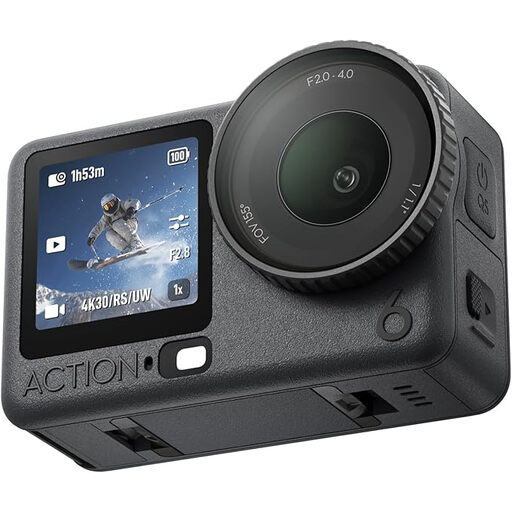
Why It Stands Out The DJI Osmo Action 6 is distinguished by its variable aperture (f/2.0–f/4.0), which allows for flexible adaptation to changing light conditions. According to the manufacturer, the large 1/1.1-inch sensor contributes to improved image quality, especially in low-light situations.
Pros
Who It's For? Users looking for a versatile vlogging camera with long battery life and great flexibility in different lighting conditions. Its robust and waterproof design also makes it an attractive option for water sports and outdoor enthusiasts.
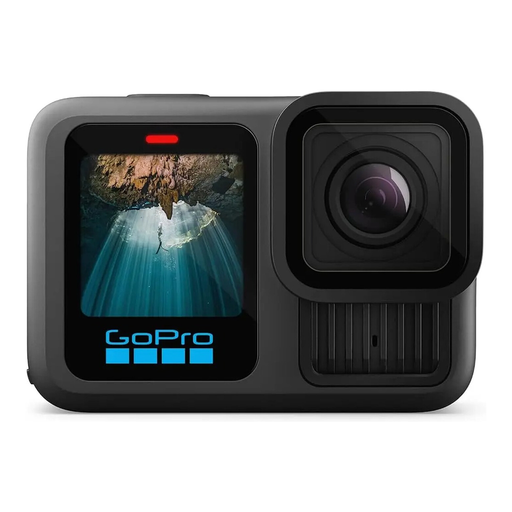
Why It Stands Out The GoPro HERO13 Black focuses on high resolution and advanced image stabilisation. With video recording up to 5.3K at 60 fps and HyperSmooth 6.0 stabilisation, it delivers smooth, detailed footage. Another key feature is its compatibility with the HB lens system, which allows for creative extensions like macro or ultra-wide-angle lenses.
Pros
Who It's For? Content creators and sports enthusiasts who prioritise maximum image quality and highly effective stabilisation. The ability to change lenses also appeals to videographers who need more creative flexibility for their projects.
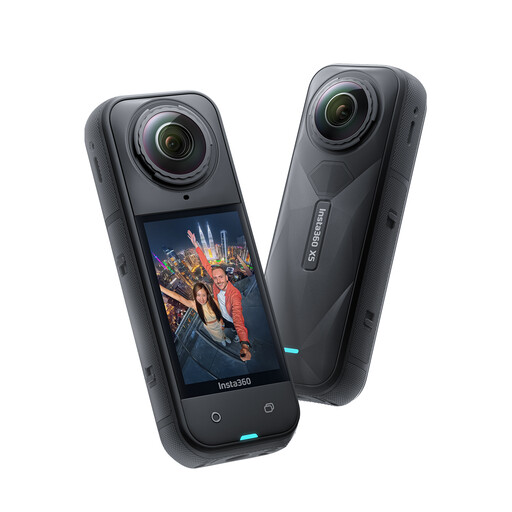
Why It Stands Out The Insta360 X5 is a 360-degree camera that records immersive, all-around videos in 8K resolution. Its strength lies in capturing the entire scene, allowing the user to freely choose the frame later (reframing). The "invisible selfie stick" effect creates third-person perspective shots.
Pros
Who It's For? Creative filmmakers, travellers, and adventurers who want to capture immersive experiences and enjoy the freedom of choosing the perfect shot in post-production. It's a great choice for anyone looking to think beyond the traditional frame.
If these recommendations don't include the perfect model for you, you can find a wider selection of cameras and accessories for every need in our comprehensive Photography category.
What is more important: resolution or image stabilisation? For most action scenarios, good image stabilisation is more important than the highest possible resolution. A smooth 4K video is often more appealing than a shaky 8K video. The ideal camera offers a good balance of both.
Do I need an 8K action camera? An 8K resolution is beneficial if you produce professional videos, need to zoom in heavily on the image, or want to extract high-resolution stills from videos. For everyday use and sharing on social media, a 4K resolution is usually more than sufficient and also saves storage space.
How do 360-degree cameras differ from traditional action cameras? A traditional action camera films a fixed frame that you choose before recording. A 360-degree camera, on the other hand, captures the entire environment simultaneously. This allows you to change the viewing angle after recording, leading to unique perspectives and immersive experiences. The downside can be a more complex editing process.