
Lieferung heute & morgen

Qualitätsgarantie

Willkommens-Angebote freischalten: KOSTENLOSE Lieferung | Bis zu 80 % RABATT | Kostenlose 30-Tage-JoyPlus-Testphase
App herunterladen
Smartphones create impressive videos, but they hit their limits with fast movements, challenging lighting conditions, or underwater use. A specialised action camera offers the necessary durability, image quality, and stabilisation to reliably capture dynamic moments. However, the market is diverse, and the technical specs can be overwhelming.
This article serves as a guide. We will introduce different camera types and explain the key features to help you make an informed decision that suits your use case—whether it's for vlogging, sports, or travel.
To make the right choice, you should match your requirements with the technical specifications of the cameras. Three criteria are particularly relevant.
Shaky footage is the main problem with dynamic videos. Action cameras use two main technologies for stabilisation:
Resolution determines the level of detail in the video. A 4K action cam is the standard today, offering four times the resolution of Full HD (1080p). Some models already go beyond this (e.g., 5.3K or 8K).
The frame rate, measured in frames per second (fps), is crucial for the smooth depiction of motion and for slow-motion shots:
A sports camera must be durable. Pay attention to the waterproofing specifications. Many modern cameras are waterproof to a certain depth (e.g., 10 metres) without an additional housing. For deeper dives, a special waterproof camera or a suitable underwater housing is required. Shock resistance and dust protection are also important factors, especially for use in extreme conditions.
Based on the criteria mentioned, we have compiled a selection of models that cover different areas of application.

Why It Stands Out: The DJI Osmo Pocket 3 is a compact gimbal camera distinguished by its mechanical 3-axis stabilisation. The large 1-inch CMOS sensor enables detailed shots even in low light. With features like ActiveTrack 6.0 and a rotatable 2-inch touchscreen, it is specifically designed for content creators.
Pros:
Who Is It For? Ideal for vloggers and YouTubers looking for a small video camera for YouTube with professional stabilisation and easy operation. It is perfect for travel videos, interviews, and everyday shots where smooth camera movements are a priority.
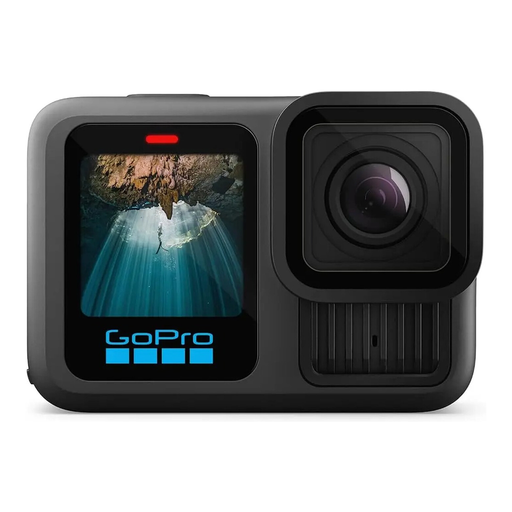
Why It Stands Out: The GoPro HERO13 Black focuses on maximum durability and performance under extreme conditions. It films with a resolution of up to 5.3K at 60 fps and features advanced HyperSmooth 6.0 stabilisation. It is waterproof down to 10 metres without an additional housing.
Pros:
Who Is It For? The classic sports camera for adventurers. Perfect for mountain bikers, skiers, surfers, and anyone who needs an extremely durable camera that delivers stable footage even during the fastest movements.
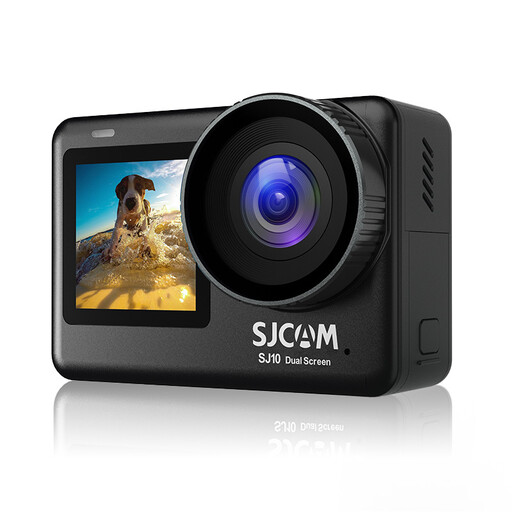
Why It Stands Out: The SJCAM SJ10 Pro offers a comprehensive feature set. It has a dual-screen design with a 2.33-inch rear touchscreen and a 1.3-inch front display for selfies. The 6-axis gyro stabilisation ensures smooth shots, and with the included housing, it is waterproof down to 30 metres.
Pros:
Who Is It For? A versatile option for beginners and advanced users looking for a feature-rich vlogging camera for various scenarios, from motorcycling to diving. The dual-screen setup is particularly practical for self-portraits.
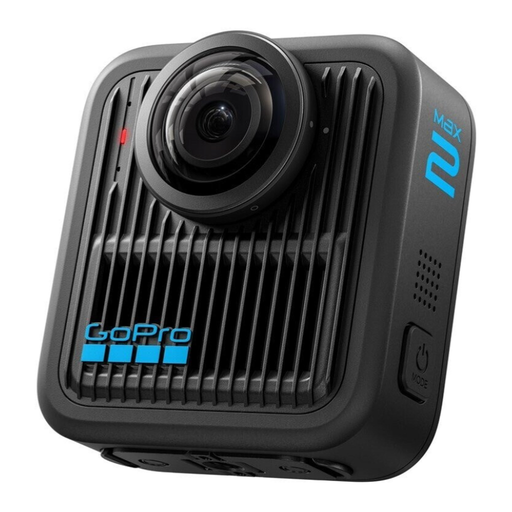
Why It Stands Out: The GoPro MAX2 is more than just an action camera; it's a 360-degree camera that records everything around it in spherical 8K video. The main advantage is that you don't have to commit to a specific frame during recording. In post-production, traditional 4K videos can be created from any perspective.
Pros:
Who Is It For? For creative content creators and travellers who want to create immersive videos and desire maximum flexibility in post-production. It is ideal for realising unique perspectives and dynamic POV shots without constantly having to re-aim the camera.
The models presented cover a broad spectrum. However, if you are looking for more specialised cameras or other models, you will find a larger selection in our category.
Discover more models in the Video Recording Camera category
1. What is more important in an action camera: resolution or image stabilisation? For most action scenarios, effective image stabilisation is more important than the highest possible resolution. A stable 4K video is generally more appealing than a shaky 8K video. Stabilisation ensures that the footage looks professional and is pleasant to watch, while a very high resolution is primarily relevant for post-processing (e.g., cropping) or playback on very large screens.
2. Do I need a 4K action cam for my purposes? For most users, a 4K action cam is a future-proof choice. The high resolution offers more detail and flexibility in video editing. If you mainly share your videos on social media or mobile devices, a 1080p recording may also suffice. However, 4K has established itself as the standard and is supported by most modern playback devices.
3. How does a gimbal camera differ from a normal action camera? The main difference lies in the type of stabilisation. A gimbal camera like the DJI Osmo Pocket 3 uses a motorised head to physically align the camera and smoothly compensate for movements. A typical action camera like the GoPro HERO13 uses electronic image stabilisation (EIS), which corrects shakes through software. Gimbals often produce smoother, more cinematic movements, while EIS is very robust against extreme vibrations.