A compact USB-C card reader with a microSD slot is a good starting point if you want to copy action camera footage to a compatible smartphone or laptop while travelling by train. Check the card format, file system and access options on your destination device. For large files, the card, reader and device all play a part. UHS-II only matters if your card supports it too, while a hub may be a better choice if you need extra ports or charging.
Choosing the right card reader for you
Copying videos to your smartphone
If you want to open or back up action camera footage on your smartphone while travelling by train, check the card format, file system and available storage. Apple Support explains how to access supported external storage using the Files app. Some Insta360 workflows also have app and device requirements.
Transferring larger volumes of video to your laptop
If you regularly copy lots of files, consider the card, reader and laptop connection together rather than relying on a single speed figure. The SD Association distinguishes card bus speed from the performance you can actually achieve. Lexar also notes that performance depends on the card and system.
Travelling with a laptop and accessories
If you need extra ports or a way to charge while copying files, a hub may suit your needs better than a standalone reader. Anker notes that the 565 requires an additional charger for pass-through charging.
What to consider when buying
First, decide whether you’ll be copying files to a smartphone or laptop. Then consider the card standard and whether you need extra ports.
| What you need |
What to check before buying |
Who it matters to most |
| Access on your destination device |
Check for a microSD slot, device connection, supported file system and file access. |
If I want to open footage directly on my smartphone, the card, file system and device need to work together. Around 36% of consumers put smartphone access first. |
| Transfer time |
Consider the card standard, the reader’s bus mode and the device’s USB connection together. Don’t treat maximum speeds as guaranteed copy speeds. |
If I regularly copy large video files, I want to consider the card, reader and destination device together. Around 29% of consumers prioritise transfer time for larger files. |
| Ease of use on the go |
Check the ports on the devices you’ll be taking with you, as well as the SD or microSD slots you need. |
If I switch between devices while travelling, the reader needs to suit their connections and my cards. Around 21% of consumers prioritise ease of use on the go and switching between connections. |
| Extra ports and power |
Check card data speeds separately from USB port speeds, and find out whether you need a suitable charger for pass-through charging. |
If I want to connect or charge other devices while copying files on my laptop, a hub may be a good option. Around 14% of consumers prioritise extra laptop ports or charging. |
Common assumptions to avoid
-
Assuming USB port speed is the same as card speed
A USB port’s stated speed doesn’t automatically tell you how fast the card slot can read. The card also limits transfer speeds. The SD Association distinguishes bus speed from card performance.
Check the microSD slot specifications separately, and don’t treat manufacturers’ maximum speeds as guaranteed copy times.
-
Buying a UHS-II card just because of the reader
Reader compatibility and camera compatibility are two different things. For the Insta360 X3, Insta360 specifies UHS-I microSD and advises against using UHS-II and UHS-III cards in the camera.
Check the requirements for your specific camera model before buying a card. A card that isn’t suitable for your camera could be a wasted purchase.
-
Assuming USB-C guarantees instant access to files on your smartphone
Having the right connector doesn’t necessarily mean your smartphone can read the card format or file system. Apple also notes that your device needs to be unlocked to use storage accessories.
Before travelling, check the whole process, from your camera card to the Files app on your specific device.
Depending on your device, you may need a suitable adapter or a different reader.
Key brands at a glance
UGREEN
The UGREEN 50706 has USB-C and USB-A connections, plus SD and microSD slots. It may suit a setup where you switch between different destination devices.
- UGREEN specifies USB 3.0 with a 5 Gbit/s interface speed and UHS-I support.
- The stated 5 Gbit/s is not a verified read speed for an inserted card.
Lexar
The Professional USB-C Dual-Slot Reader is designed for users with compatible SD or microSD cards and USB-C computers.
- For this model, Lexar specifies read speeds of up to 312 MB/s and backwards compatibility with UHS-I.
- Lexar says results depend on the card and system configuration. Another Lexar model also offers USB-A and is a different product.
BENFEI
The SD 4.0 USB-C/USB-A 2-in-1 Reader combines two types of connection with SD and microSD slots.
- BENFEI specifies UHS-II support and speeds of up to 312 MB/s.
- According to BENFEI, actual speeds depend on the card and USB connection.
Anker
The 565 USB-C Hub is an option for laptop users who need extra ports alongside SD and microSD slots.
- Anker specifies speeds of up to 104 MB/s for the card slots and 10 Gbit/s for USB data ports.
- Anker says you need a separate charger for pass-through charging. The USB port speed is not the card reader speed.
Verbatim
The USB-C Essentials Multiport Hub 32156 combines SD and microSD slots with extra laptop connections and a PD input.
- Verbatim lists the card slots separately from the 5 Gbit/s USB-A port.
- The information on card read and write speeds is inconsistent, so it isn’t possible to establish a reliable read speed.
Joybuy products for transferring files on the go
This selection includes USB-C hubs with SD/TF card readers, a USB-A/USB-C card reader and the Insta360 X5 Quick Reader for different ways to transfer files on the go.
 No image available
Acer 7-in-1 USB-C Hub Docking Station ODK6V0
For users who need extra connections when reading cards on a USB-C device.
100 W PD; 3 × USB 3.0 at 5 Gbit/s; SD/TF card reader.
View at Joybuy
 No image available
Insta360 X5 Quick Reader
For the intended Quick Reader workflow with an Insta360 X5. Don’t treat it as a general-purpose card reader for other action cameras.
Model: Insta360 X5.
View at Joybuy
 No image available
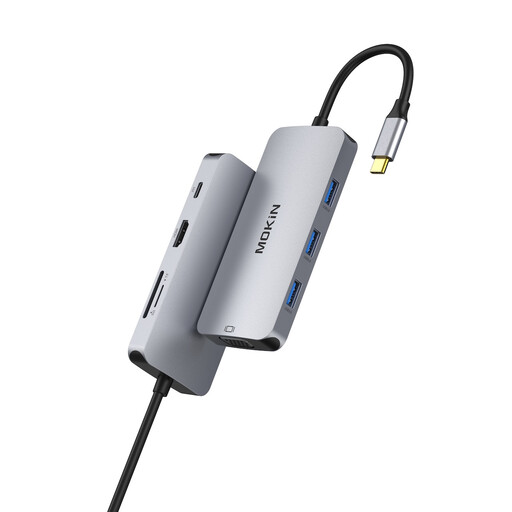
MOKiN USB-C hub with HDMI, VGA, USB 3.0, SD/TF and PD
For users who need extra connections on a USB-C device as well as a card reader.
HDMI, VGA, 3 × USB 3.0, SD/TF and PD, according to the product title.
View at Joybuy
 No image available
HOCO HB45 Spirit 2-in-1 USB-A/USB-C Card Reader, Metal Grey
For mobile workflows with microSD cards and devices with USB-A or USB-C.
USB-A and USB-C connections; microSD (TF) card reader.
View at Joybuy
Frequently asked questions
Can I copy action camera videos straight to an iPhone using a USB-C reader?
Yes. With a compatible card reader connected, Apple explains how to access SD cards using the Files app and import photos and videos. Check your iPhone’s connection, the card format and the available storage. Apple lists exFAT among the supported file systems. Your iPhone needs to be unlocked to use storage accessories.
How do I copy footage to a Windows laptop?
For GoPro files, GoPro Support explains how to open the card in File Explorer and copy footage from the DCIM folder to your computer. This is the documented GoPro process; other cameras may use a different folder structure.
Do I need a UHS-II card reader for 4K video?
Not just because of the video resolution. The SD Association distinguishes recording speed classes, which specify minimum write speeds, from bus speeds. For reading files, the card, reader and destination device all matter. Check the card requirements for your specific camera too.
What should I do before removing or formatting the camera card?
First, copy the files you need to a suitable storage location and check that you can access the videos there. Don’t format the card to fix an access problem until you’ve backed up any footage you need. Format and card requirements can vary by camera model.
What are my rights in Germany if the card reader I bought is faulty?
When you buy a new product as a consumer, your statutory rights against the seller for faulty goods are separate from a voluntary manufacturer’s guarantee. For the claims that generally apply here, § 438 BGB sets a limitation period of two years from delivery. Verbraucherzentrale explains the difference between statutory rights and a guarantee. The details depend on the purchase and the fault.


