What should you look for when buying?
Start by working out where you can sit and listen, then check that the connections and amplifier requirements suit your existing setup.
| Buying consideration |
What to look for |
Who is it important to? |
| Stereo imaging from your listening position |
Check whether you have room for two speakers at roughly ear height and can angle them towards your seat. ELAC recommends this as a general guide to positioning. |
When I listen to folk recordings from a dedicated seat, I want to hear the vocals and instruments in stereo and position the speakers accordingly. Around 30 % of consumers put stereo imaging first. |
| Space in a small room |
Measure the width, height and depth, including room for cables. Only use a wall bracket designed for the specific model; DALI lists one for the KUPID. |
When both speakers need to fit in a small living room, the usable space and mounting method matter to me. Around 30 % of consumers prioritise space. |
| Connections and system setup |
Compare the outputs on your sources with the inputs on the active model. Passive speakers need a separate amplifier; for example, KEF recommends an amplifier rated at 10–150 W for the passive Q1 Meta. |
When I want to connect a phone, streamer or other equipment I already own, I want to know in advance whether I’ll need an amplifier and which inputs will work. Around 20 % of consumers make connections and system setup their main consideration. |
| Total system cost |
When planning for passive models, include an amplifier and speaker cables, as well as stands or a suitable bracket if needed. Also check whether an offer includes a pair or a single speaker. |
When I don’t already have a suitable system, I want to factor in all the components I’ll need rather than budgeting for the speakers alone. Around 20 % of consumers pay particular attention to the total system cost. |
Joybuy product options
The following Joybuy offers include active and passive bookshelf speakers. If you’re considering a passive model, pay particular attention to the amplifier you’ll need. For every model, check that the inputs are suitable and that you have enough space.
 No image available
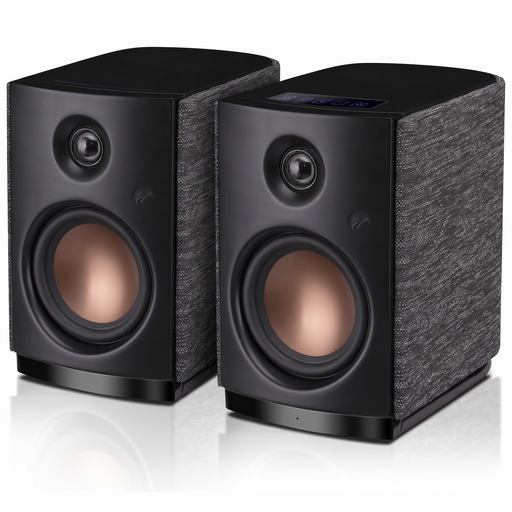
HiVi-Swans OS-10 active stereo bookshelf speakers
This active model doesn’t need a separate amplifier; check that the connections suit your music source.
Bluetooth 5.0 and AUX are listed as connection options. The title specifies a 4-inch woofer.
View at Joybuy
 No image available
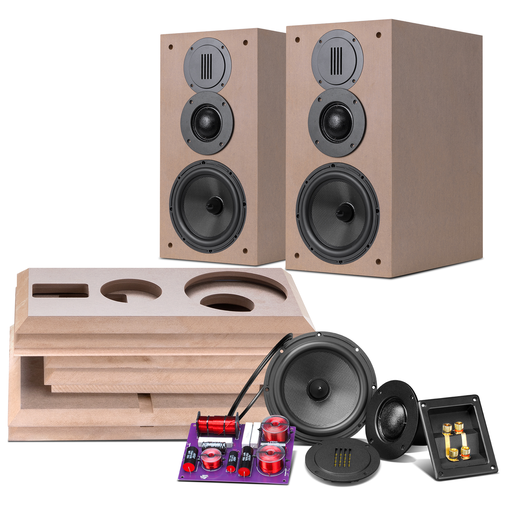
HiVi-Swans DIY3.1 passive bookshelf speaker pair
This passive pair could be a good option if you already have a suitable amplifier or plan to choose one separately.
The description lists a nominal impedance of 8 Ω, a 6.5-inch mid-woofer, a 26-mm dome tweeter and a rear bass reflex port. Take the rear wall into account when positioning the speakers.
View at Joybuy
 No image available
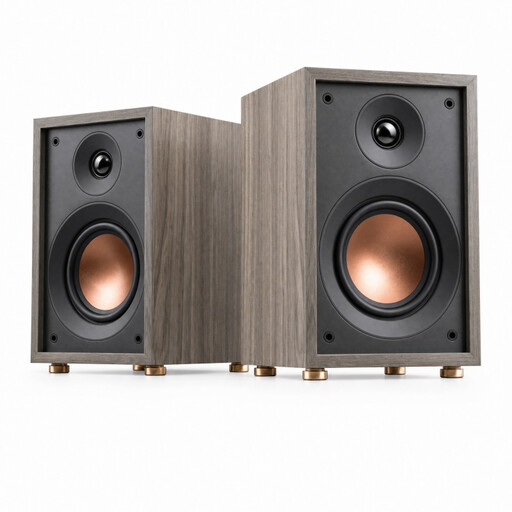
HiVi-Swans Oasis passive two-way bookshelf speaker
This passive speaker needs a separate amplifier; check that it’s suitable for the specifications listed.
The title lists a 4-inch woofer, a 20-mm dome tweeter, 4 Ω and a frequency range of 60 Hz–20 kHz. The stated amplifier power is 10–50 W.
View at Joybuy
 No image available
HiVi D3.1MKII passive hi-fi stereo bookshelf speakers
This passive model requires a separate amplifier. Compare the listed specifications with your system, and bear in mind the rear bass reflex port if you’re positioning the speakers close to a wall.
The title lists 8 Ω and a recommended amplifier power of 10–120 W. The description specifies a 6.5-inch mid-woofer and a 28-mm dome tweeter.
View at Joybuy
Frequently asked questions
Do I need an amplifier for passive bookshelf speakers?
Yes, passive bookshelf speakers need a separate amplifier. KEF explicitly describes the Q1 Meta as passive; compare the specifications of the specific speaker with your system. Active models have amplification built in.
How should I position a pair of speakers for listening to music?
Start by positioning both speakers at roughly ear height and angling them towards your preferred listening spot. ELAC recommends this as a general guide. Then check how close they are to the walls in your own room, and follow the guidance for the specific model.
What should I look for in an active Bluetooth speaker in Germany?
Check the product and manufacturer information, along with any required documents and instructions, for the specific offer. For products within its remit, Germany’s Federal Network Agency lists requirements including the CE marking, product and manufacturer identification, and German-language instructions with any required warnings. The CE marking is the manufacturer’s declaration of conformity; it isn’t an independent sound or quality mark.
What are my rights if a speaker I’ve bought is faulty?
For consumer purchases in the EU, you generally have at least two years of statutory legal guarantee rights against the seller. Any additional manufacturer’s guarantee offered doesn’t replace these rights.
How should I dispose of an old electrical speaker?
Take electrical waste to an authorised collection point, such as a local council recycling centre. Retailers are subject to additional take-back conditions; where retailers are required to accept returns, you can return an item without buying a new one only if none of its external dimensions exceeds 25 cm.


