
Lieferung heute & morgen

Qualitätsgarantie

Willkommens-Angebote freischalten: KOSTENLOSE Lieferung | Bis zu 80 % RABATT | Kostenlose 30-Tage-JoyPlus-Testphase
App herunterladen
The search for the perfect privacy or sun protection for rental apartments, offices, or your own home often leads to a practical solution: the no-drill roller blind. The promise of a simple, damage-free installation on window frames or walls is appealing. However, not every product delivers on that promise. Incorrect measurements, unstable brackets, or exaggerated marketing claims can quickly lead to purchase regret.
As your Joybuy Product Recommendation Officer, I'm here to help you sort the good from the bad. This guide highlights the crucial criteria you should consider before buying and introduces you to suitable models for various needs.
Many products on the market look identical at first glance, but the difference is in the details. Watch out for these three common problems to avoid disappointment:
To find the right privacy screen, focus on these three objective features. They will help you realistically assess a product's functionality and durability.
The most common method is the clamp-fit roller blind. Here, adjustable brackets are clamped directly onto the window sash.
The choice of fabric determines how much light and heat enters the room.
This is the most critical point for avoiding light gaps at the sides.
Here are some recommendations tailored to different needs and living situations.
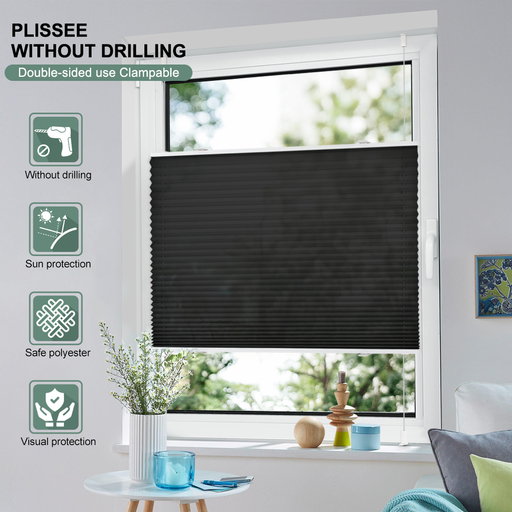
Why it's a great fit: This pleated blind is a straightforward and functional solution for anyone looking for reliable privacy without complex installation. It's ideal for standard windows in rental apartments, home offices, or kitchens where both privacy and daylight are important.
The clamp-fit system is designed for common window sash thicknesses and ensures a stable hold when measured correctly. The opaque fabric provides effective privacy without promising 100% blackout, making it an honest solution.
Tool-free installation; infinitely adjustable from both the top and bottom; easy-care polyester material.
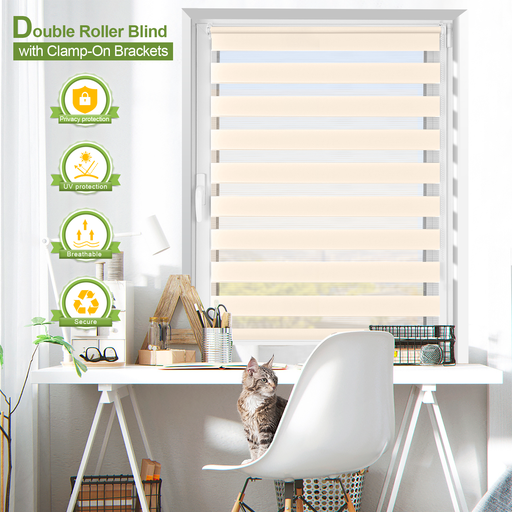
Why it's a great fit: For users who want more than just simple privacy. The dual roller blind allows for flexible control over light and privacy. It combines functionality with a modern aesthetic that fits well into living and working spaces.
The dual-layer design offers a clear, visible functional advantage, avoiding vague promises. The combination of transparent and opaque segments allows for precise light regulation that isn't possible with simple roller blinds.
Seamless adjustment of light and privacy; side-pull chain operation; combination of polyester fabric and aluminium rail.
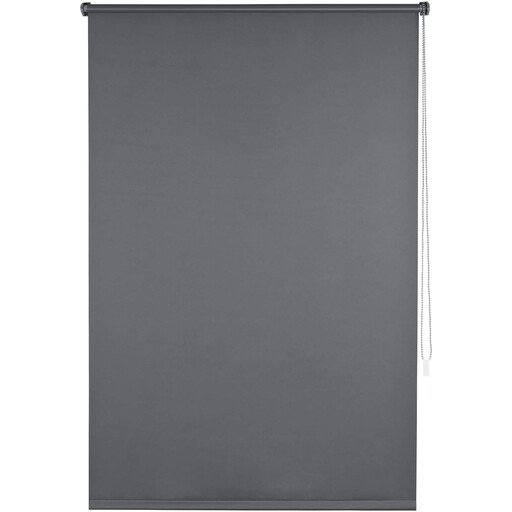
Why it's a great fit: This blind is designed for maximum light-blocking and thermal insulation. It's the right choice for bedrooms, children's rooms, or shift workers who need a dark and quiet room even during the day.
It addresses the "false blackout" pitfall with a special light-stop aluminium coating on the back, which, according to the manufacturer, blocks nearly 100% of light. The product description also explicitly points out the difference between the total width and the fabric width.
High degree of blackout thanks to a special coating; thermal properties for heat and cold reflection; clamp-fit installation and optional screw set included.
We've compiled a comprehensive, up-to-date list of products that meet these strict selection criteria. Find the perfect solution for any window.
1. How do I measure correctly for a clamp-fit roller blind? Measure the width of the glass pane. To this measurement, add 2 cm on each side to minimise light gaps (for a total of glass width + 4 cm). This gives you the recommended fabric width. Then, check the product description to see which order width corresponds to this fabric width, and ensure the total width of the blind won't interfere with the window handle.
2. Is a no-drill roller blind really secure? Yes, with correct installation and a compatible window sash thickness, high-quality clamp brackets provide a secure and stable hold for daily use. Look for products with robust, adjustable brackets made of metal or high-grade plastic. For very large or heavy blinds, additional screwing, if offered by the manufacturer, can further increase stability.
3. What is the difference between a blackout blind and a privacy blind? A privacy blind (often described as "opaque") prevents people from seeing into the room from the outside but still allows diffuse daylight to pass through. A blackout blind, on the other hand, is designed to block almost all light. This is achieved with thicker fabrics or special coatings on the back of the blind, making it ideal for bedrooms.