
Lieferung heute & morgen

Qualitätsgarantie

Willkommens-Angebote freischalten: KOSTENLOSE Lieferung | Bis zu 80 % RABATT | Kostenlose 30-Tage-JoyPlus-Testphase
App herunterladen
As the owner of a large dog, you know that the right equipment is crucial for your pet's well-being. An adjustable feeding station is often promoted as a solution for better posture and digestion. However, the market is flooded with products of widely varying quality and utility. Many models turn out to be unstable, unhygienic, or impractical purchases.
This guide will help you recognise the most important features. We'll show you three common product flaws to avoid and which technical parameters are essential for finding a durable and functional feeding station for your large dog.
When searching for a dog bowl with a stand for large dogs, many buyers encounter recurring problems that negate the product's benefits. Pay close attention to these weak points to avoid a poor investment.
To find a suitable ergonomic dog bowl, you should focus on objective and measurable criteria. The following three parameters are crucial for functionality and durability.
The most important function of an adjustable feeding station is its ability to adapt to your dog's size. A common guideline is to set the height so that the rim of the bowl is roughly level with the lower part of your dog's chest. The dog should be able to lower its head slightly without having to overextend its neck or bend down too far.
The choice of material directly impacts the hygiene, stability, and longevity of the feeding station.
Large dogs need not only an elevated dog bowl but also one with sufficient capacity. A bowl that is too small needs constant refilling and can lead to a mess during feeding.
Based on the objective criteria mentioned above, we have identified products that are suitable for specific user profiles.
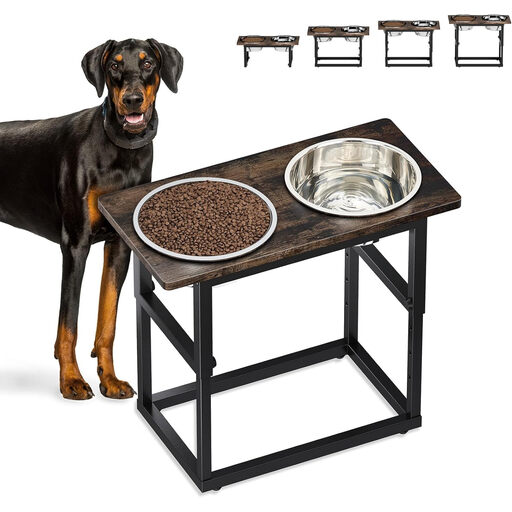
Why This Fits Their Persona: This model is specifically designed for the needs of owners of very large dog breeds such as Great Danes, St. Bernards, or large German Shepherds. The exceptionally wide adjustment range also meets the needs of dogs with a shoulder height of over 70 cm (27.5 inches).
The sturdy metal frame with non-slip feet prevents sliding (Flaw 1). The two 304 stainless steel bowls are hygienic and durable (Flaw 2). The five height settings up to 44 cm (17.3 inches) offer practical and flexible adjustment (Flaw 3).
Wide Adjustment Range: Five levels from 21 cm to 44 cm (8.3" to 17.3"). High Capacity: Each bowl holds 1600 ml (54 oz), ideal for the daily needs of large dogs.
We have compiled a complete, up-to-date list of products that fully meet these strict selection criteria and safety standards.
A general recommendation is to measure the withers height (the highest point of the shoulder blades) of your standing dog and subtract about 15 cm (6 inches). The top edge of the bowl should be at approximately this height. The key is that your dog can eat comfortably by tilting its head slightly, without having to stretch or crouch. Observe your dog's posture and adjust the height as needed.
An elevated feeder can promote a more ergonomic eating posture and reduce strain on the neck and joints. For some dogs, a more upright posture can also reduce the swallowing of air during meals. However, there is no one-size-fits-all rule. If your dog has existing health issues, especially related to the oesophagus (e.g., megaoesophagus), you should definitely discuss the purchase and the correct height with your veterinarian beforehand.
Cleaning depends on the material. Stainless steel bowls are usually dishwasher-safe or can be hand-washed with hot water and soap. The frame should be wiped down regularly with a damp cloth to remove food residue and saliva. Consistent, daily cleaning of the bowls is crucial to prevent bacterial growth and ensure hygiene at the feeding area.