
Lieferung heute & morgen

Qualitätsgarantie

Willkommens-Angebote freischalten: KOSTENLOSE Lieferung | Bis zu 80 % RABATT | Kostenlose 30-Tage-JoyPlus-Testphase
App herunterladen
By Joybuy Product Recommendation Officer, August 29, 2026
Choosing a helmet for a child seems straightforward at first glance. In practice, however, vague product descriptions and overlooked details often lead to a helmet that is either unsafe or refused by the child. An ill-fitting helmet is a safety risk. This guide highlights the crucial criteria for finding a suitable and safe helmet and sheds light on common pitfalls to avoid.
Before we dive into the technical details, it's important to understand the most common issues that can lead to a poor investment.
To avoid the mistakes mentioned above, you should carefully examine three technical aspects. These features determine the safety and durability of a helmet.
For the European market, the EN 1078 standard is the decisive benchmark. A helmet bearing this certification has been tested for its shock absorption, construction, and the resilience of its strap system. It is approved for use with bicycles, skateboards, and roller skates. Look for this specific label in the product description. A helmet without this seal is unsuitable as a kids safety helmet.
A high-quality adjustable kids' bike helmet features a dial-fit adjustment system at the back of the head. This allows for millimetre-precise adjustment to the head circumference, ensuring the helmet sits firmly without causing pressure. This is especially important as children's heads grow quickly. Such a system ensures the helmet maintains a correct fit over a longer period. It is the functional foundation for any good bike helmet for kids.
A helmet's outer shell typically consists of two types of materials with different properties:
kids' skate helmet or kids' scooter helmet, where more frequent, minor falls occur.Based on the criteria above, we have compiled a selection of helmets suitable for different user profiles and age groups.

Why This Fits Their Persona: Ideal for toddlers and preschoolers starting with a balance bike or their first bicycle. The size S (48-52 cm) fits small heads, and the robust ABS shell forgives the typical small tumbles and bumps at this age.
It features a dial-fit adjustment system for a precise hold and is CE EN1078 certified, avoiding the "improper fit" and "inadequate certification" traps.
Durable ABS hardshell for longevity; removable inner pads for easy cleaning.
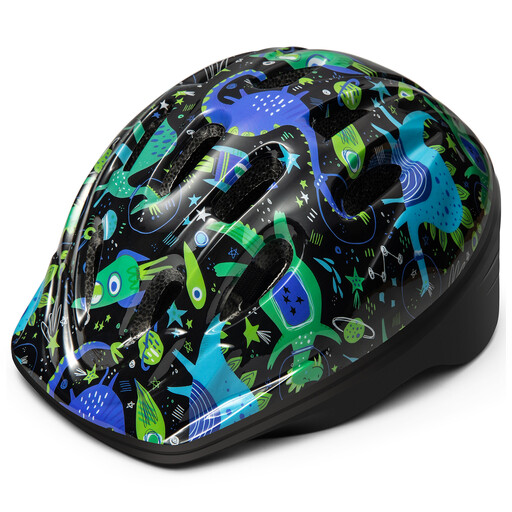
Why This Fits Their Persona: Suitable for children aged 5 and up who not only ride bikes but also use scooters or skateboards. The reinforced ABS shell provides robust protection for various activities. The appealing design increases acceptance among boys and girls.
Comes with two removable inner liners of different thicknesses, allowing for an even finer adjustment to the head shape and bypassing the comfort pitfall.
Meets US CPSC safety standards; ventilation system for breathability during physical activity.
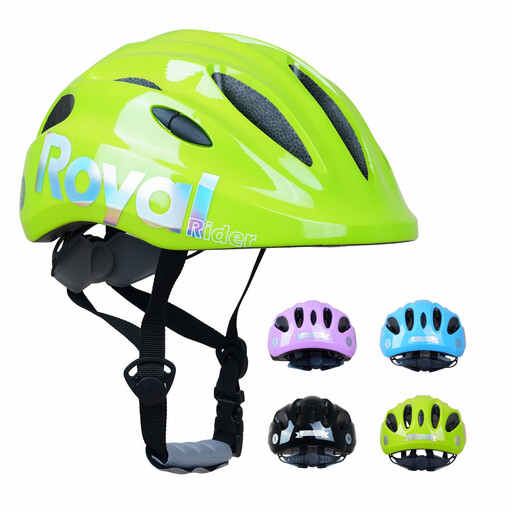
Why This Fits Their Persona: Perfect for children who are sensitive to weight or go on long rides. At only about 213 grams, this helmet is extremely light without compromising on safety, thanks to its in-mold construction.
Directly addresses the comfort pitfall: The low weight and 10 ventilation openings ensure the helmet is barely noticeable even during extended wear, increasing acceptance by the child.
Extremely lightweight (approx. 213 g); dual-adjustment system with dial and adjustable strap; suitable for many sports.
We have compiled a complete, up-to-date list of products that fully meet these strict selection criteria and safety regulations.
Use a flexible measuring tape. Place it about a finger's width above the eyebrows and ears and wrap it around the widest part of the back of the head. The tape should be snug but not tight. Note the measurement in centimetres to find the correct helmet size, such as kids' helmet 48-52 cm.
A helmet must be replaced immediately after any significant fall or impact, even if no external damage is visible. The internal EPS foam structure can become compressed and will no longer provide adequate protection. Regardless of falls, most manufacturers recommend replacing a helmet after about 3 to 5 years, as the material can degrade due to UV radiation and environmental factors.
Yes, if the helmet meets the EN 1078 standard. This certification applies to helmets for cyclists and for users of skateboards and roller skates. For intensive riding at the skate park or practicing tricks, a special kids' skate helmet with a deeper shell at the back of the neck can offer additional protection.