
Lieferung heute & morgen

Qualitätsgarantie

Willkommens-Angebote freischalten: KOSTENLOSE Lieferung | Bis zu 80 % RABATT | Kostenlose 30-Tage-JoyPlus-Testphase
App herunterladen
A flexible stool is a practical seating solution in many situations – whether as a work stool with wheels in the office, a salon stool in a studio, or a practitioner's stool in medical facilities. But the vast selection of models also has its pitfalls. Many buyers only realise after a few months that their new swivel stool squeaks, loses height, or scratches the floor.
This guide will show you which critical features to look for to find a functional and durable height-adjustable rolling stool, and how to spot common weaknesses before you buy.
Marketing images often promise more than the products deliver. Three design flaws, in particular, can quickly render a stool unusable:
To avoid a bad buy, you should focus on objective and verifiable product features. Three factors are crucial for the durability and functionality of a rolling stool.
The maximum weight capacity, specified in kilograms, is a key indicator of the overall construction's stability. A solid office stool or practitioner's stool should be designed to hold at least 120 kg. Pay attention to the material of the base: chrome-plated steel or robust aluminium is the more reliable choice compared to simple plastic. A larger base diameter also ensures a more secure footing and reduces the tendency to tip.
Not every caster is suitable for every floor. The standard version often includes hard casters, which are designed for carpeted floors. For hard surfaces like parquet, laminate, tile, or vinyl, you need soft-floor casters. These have a rubberised coating that protects the floor and ensures quieter, smoother rolling. For a flexible work stool with wheels, 360-degree rotating twin-wheel casters are standard, allowing movement in all directions without jamming.
The required seat height adjustment range depends heavily on the intended use. Measure the height of your work surface, whether it's a desk, treatment table, or kitchen counter. A good height-adjustable rolling stool offers an adjustment range of at least 10–15 cm to ensure an ergonomic sitting position for different body sizes and table heights. The adjustment is typically made via a gas lift operated by a lever under the seat. You can recognise a high-quality mechanism by its smooth and stepless adjustability.
Here are some recommendations tailored to specific user profiles and their requirements.
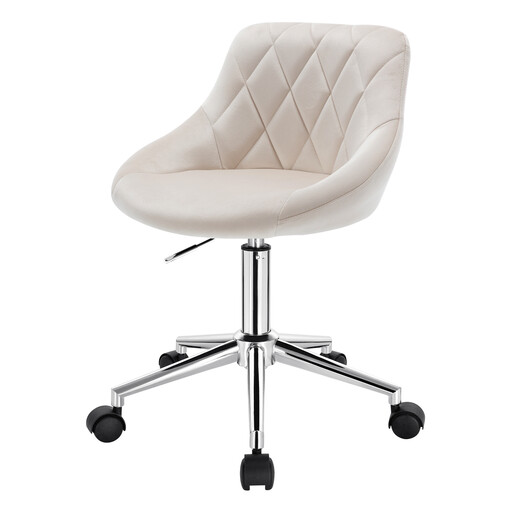
Why this model is a good fit: Ideal for a home office or as a flexible stool for a vanity table. It offers the essential functions – height adjustment and mobility – in a simple design without breaking the bank. A functional solution for occasional to regular use.
The model uses a metal base instead of simple plastic, which increases stability. The PU cover is easier to maintain and more durable than cheap fabric covers.
Versatile for various tasks around the home and office. The adjustment range of 45.5 to 57.5 cm covers common table heights.
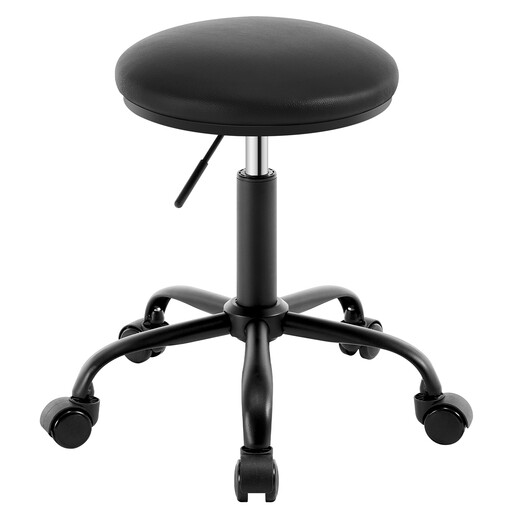
Why this model is a good fit: For use in beauty salons, medical practices, or studios where hygiene and mobility are paramount. The smooth PU cover is easy to disinfect, and the 360° casters allow for quick manoeuvring around treatment tables or workstations.
The gas lift and sturdy metal frame are designed for daily, intensive use. The PU cover resists common cleaning agents and disinfectants and will not become porous.
The combination of an easy-to-clean surface and smooth-rolling casters meets the practical demands of a professional environment.
We have compiled a complete, up-to-date list of products that fully meet these strict selection criteria and German safety regulations.
Most rolling stools come with standard hard casters for carpets. If you plan to use the stool on sensitive hard floors like parquet, laminate, or tile, you should ensure it is equipped with soft-floor casters (often with a grey tread) or purchase them separately. These prevent scratches and roll more quietly.
For an ergonomic posture at a standard desk (approx. 72-75 cm high), the seat height should be adjustable so that your feet are flat on the floor and your knees form an angle of about 90 degrees. Your forearms should be able to rest horizontally on the tabletop. An adjustment range of approx. 45 cm to 55 cm is suitable for most people.
A cover made of polyurethane (PU) is very easy to maintain. A slightly damp cloth is sufficient for regular cleaning. For heavier soiling, a mild soap solution can be used. It is important not to use harsh or solvent-based cleaners, as these can damage the material and make it porous. Afterwards, wipe with a dry cloth.