
Lieferung heute & morgen

Qualitätsgarantie

Willkommens-Angebote freischalten: KOSTENLOSE Lieferung | Bis zu 80 % RABATT | Kostenlose 30-Tage-JoyPlus-Testphase
App herunterladen
An adjustable weight bench is the cornerstone of effective strength training at home. It enables a wide variety of exercises, from bench presses to rowing variations, making it a central element for any home gym. However, the market is flooded with models whose quality differences are barely noticeable at first glance. Many buyers invest in a fitness bench that soon proves to be unstable, unsafe, or impractical.
This guide focuses on the critical features that define a durable and functional weight bench. We'll highlight the three most common pitfalls that lead to a bad purchase and show you what to look for to make an informed decision.
Before you make a decision, it's important to understand the typical weaknesses that often only become apparent during daily use after the purchase.
To avoid the pitfalls mentioned above, you should check three core technical parameters. These define the safety, functionality, and longevity of your future strength training bench.
The maximum load capacity is a crucial indicator of construction quality. Look for a specified total capacity of at least 250 kg (approx. 550 lbs) to ensure you have enough reserve for advanced training. A robust alloy steel tube frame is the foundation for this. Stability is also influenced by the shape of the feet. Designs like inverted T-shaped legs provide a wider base and prevent lateral tipping. Rubberized end caps are also essential to prevent slipping on smooth floors.
A high-quality adjustable weight bench is characterized by precise and securely locking adjustment options. Check the number of positions for the backrest and seat. Multiple levels (e.g., 6 for the backrest, 3 for the seat) allow for exact adaptation to different exercises and body types. A solid metal locking pin is essential for safety. The ability to set the bench to both a positive incline (incline bench) and a negative incline (decline bench) maximizes your training options.
For a home fitness bench, compact dimensions and easy storage are often crucial. A foldable workout bench can be stored in a space-saving manner after your workout. Pay attention to the dimensions when folded. The upholstery material affects both comfort and hygiene. Modern materials like breathable synthetic leather (Leathaire) with micro-perforations can reduce heat buildup during training and are also easy to clean and durable.
Choosing the right equipment depends on your individual goals and training style. Here are three options tailored to different user profiles.
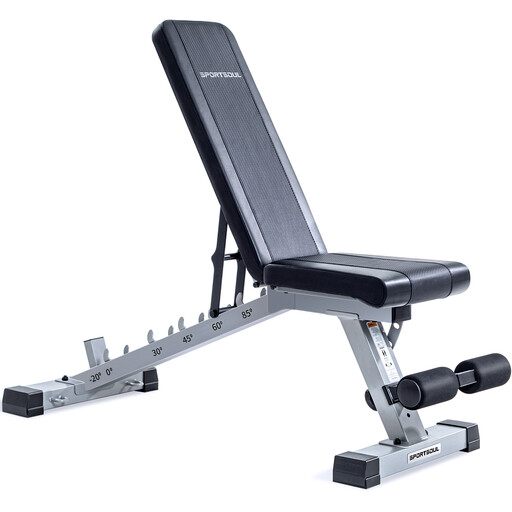
Why This Fits Their Persona: Ideal for users seeking a robust, versatile, and high-capacity bench for classic free-weight training. It forms the centerpiece of a traditional home gym.
The robust alloy steel frame and clear 277 kg (610 lbs) load capacity rating prevent instability and misleading specifications. The multiple adjustment options for the backrest and seat ensure maximum exercise versatility.
High load capacity for demanding workouts. Fully foldable for space-saving storage. Breathable upholstery material for enhanced comfort.
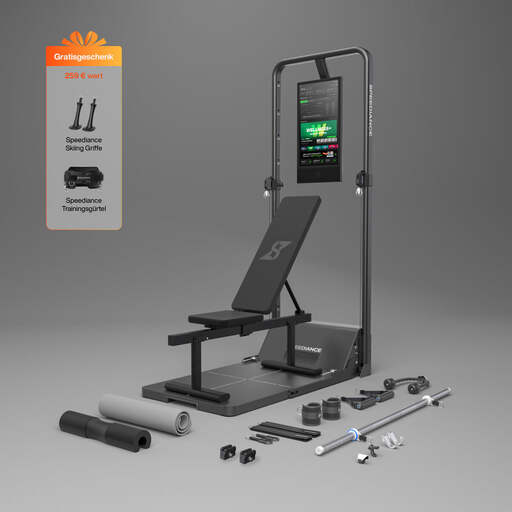
Why This Fits Their Persona: For users who prefer a complete, smart fitness ecosystem over individual pieces of equipment. The adjustable bench is part of an AI-powered, all-in-one system with digital resistance.
As an integrated system, the bench and resistance unit are perfectly matched, eliminating instability from the start. The digital resistance is precisely controllable, replacing the need for heavy, cumbersome weight plates.
All-in-one home gym with an AI coach and progress tracking. Replaces a multitude of fitness machines in a small footprint. Includes an adjustable bench.

Why This Fits Their Persona: A focused alternative for users whose primary goal is strengthening their abdominal and core muscles. Ideal for beginners or as a supplement to an existing setup.
This device is designed for a specific purpose, bypassing the complexity and potential weaknesses of a multi-functional weight bench. Its ergonomic design guides the movement, reducing the risk of improper strain on the neck and back.
Targeted and guided abdominal muscle training. Compact and easy-to-store design. Reduces strain on the back and neck.
We've compiled a complete, up-to-date list of products that fully meet these strict selection criteria and safety standards.
The required space depends on the model. A typical weight bench has a length of about 120-150 cm (47-59 in) and a width of 40-60 cm (16-24 in). You should also plan for at least one meter (about 3 feet) of free space around the bench to perform exercises with dumbbells safely. A foldable workout bench significantly reduces the storage footprint, often to a height of under 30 cm (12 in).
For beginners, such a high load capacity might seem excessive. However, it is an important quality indicator that points to a more robust construction, higher-quality materials, and a longer lifespan. Investing in a bench with a higher capacity is future-proof and provides greater stability and safety from the very beginning.
Maintenance is straightforward. Wipe down the upholstery with a slightly damp cloth after each workout to remove sweat and dirt. If necessary, use a mild soap solution, but avoid harsh chemical cleaners as they can damage the material. Allow the bench to air dry completely. Materials like the aforementioned Leathaire are particularly low-maintenance and durable.