
Lieferung heute & morgen

Qualitätsgarantie

Willkommens-Angebote freischalten: KOSTENLOSE Lieferung | Bis zu 80 % RABATT | Kostenlose 30-Tage-JoyPlus-Testphase
App herunterladen
A wooden high chair that grows with your child is a cornerstone purchase for many families. It often accompanies a child for years, from their first solid meals at the family table to doing homework as a school kid. The selection is vast, and choosing the right model depends on individual needs regarding safety, functionality, and design.
This article serves as a guide to help you navigate your options. It highlights key criteria to consider when selecting a durable children's chair and presents a curated selection of different models to make your decision easier.
To make an informed choice, several technical and functional aspects are important. The following points summarise the most essential features.
Stability is a critical criterion. A solid construction and a wide base contribute to tip-over resistance, even when a child pushes off from the table. Models with special floor gliders or a slightly rear-tilted design can further enhance stability. For the early stages, when a child uses a high chair from 6 months old, restraint systems like a 5-point harness or a combination of a safety bar and crotch strap are essential. Also, look for non-toxic finishes and materials that are safe for contact with children.
An ergonomic high chair supports healthy posture. This is achieved with a fully adjustable children's high chair. The seat and footplate should be independently adjustable in height and depth to fit the child's size. A correct setup is achieved when the thighs rest horizontally on the seat, the knees form a 90-degree angle, and the feet are flat on the footrest. This allows the chair to be perfectly adapted to the height of the dining table, enabling the child to participate in family life at eye level.
A wooden baby high chair is often made from robust materials like solid beech wood. This material is not only sturdy and durable but also a sustainable choice when sourced responsibly. A sustainable children's chair may be indicated by certifications like the FSC seal, which stands for wood from responsibly managed forests. The durability of the material allows for use far beyond the toddler years, making the chair a long-term investment.
The following models showcase different approaches in terms of design, features, and adaptability.

Why it stands out: Its high flexibility and long service life up to a weight of 70 kg make it a versatile companion from toddlerhood to adolescence.
Advantages:
Who it's for: Families looking for a functional and adaptable grow-with-me high chair that will accompany their child for many years and focuses on core features.
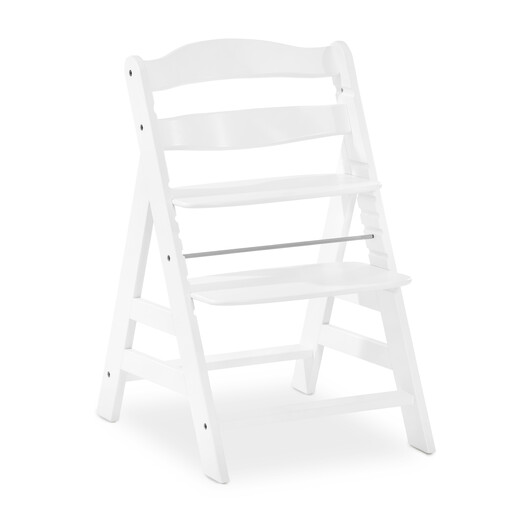
Why it stands out: The construction from FSC-certified beech wood and a high load capacity of up to 90 kg highlight its focus on sustainability and an exceptionally robust build.
Advantages:
Who it's for: Quality-conscious parents who prioritise sustainability (FSC certification) and high tip-over resistance.
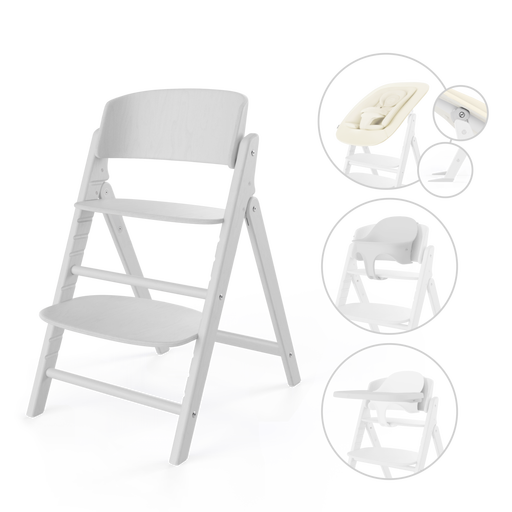
Why it stands out: This model is a comprehensive 4-in-1 system that can be used from birth, thanks to the included bouncer attachment, and features a convenient folding mechanism.
Advantages:
Who it's for: Families looking for an all-in-one solution from birth who value modern design, a space-saving folding function, and a wide range of features.
The models presented here are just a sample of the available options. If you want to compare more designs or specific features, you can find a wider selection in our category.
Discover more models in the White High Chair category
An adjustable high chair is generally useful from the moment a child can sit upright independently and stably. This is usually around six to nine months of age. Some models, known as combination high chairs, offer special attachments like a bouncer, allowing for use right from birth.
Essential safety features include a wide, stable base to ensure tip-over resistance, a reliable harness system (e.g., a 5-point harness), and a safety bar for younger children. It is recommended to regularly check all screw connections and tighten them as needed to maintain long-term stability.
The lifespan depends on the maximum load capacity of the specific model. Many chairs are designed to support weights of up to 70 kg, 90 kg, or even more. By removing the front bars and adjusting the seat height, they can continue to be used as a full-fledged chair for children, teenagers, and sometimes even adults.