
Lieferung heute & morgen

Qualitätsgarantie

Willkommens-Angebote freischalten: KOSTENLOSE Lieferung | Bis zu 80 % RABATT | Kostenlose 30-Tage-JoyPlus-Testphase
App herunterladen
A wooden playpen should be a safe haven—a place where your baby can explore the world in a protected environment while you have your hands free for a moment. But the market is vast, and not every model lives up to its promises. Well-intentioned purchases often lead to frustration when the product proves to be impractical or unstable.
As your Joybuy Product Recommendation Officer, I'm here to help you navigate the common pitfalls. We'll focus on the facts so you can make an informed decision. Three frequent problems to watch out for are:
To avoid buyer's remorse, focus your attention on three core aspects. These objective criteria are more critical than any marketing promise.
A safe playpen for babies should meet the European safety standard EN 12227. This standard isn't just an empty phrase; it sets specific requirements for the product:
Ensure the manufacturer explicitly states compliance with this standard, as is the case with many roba playpens.
Not all wooden playpens are created equal. Stability depends heavily on the material used. Models made from solid wood (e.g., beech) are generally more durable and sturdier than those made from plywood or MDF. High-quality craftsmanship is evident in smooth, splinter-free surfaces and stable joints that don't loosen with active use.
The defining feature of an adjustable-height wooden playpen is crucial for its longevity and convenience. A 3-level height adjustment is the standard for flexible use:
A playpen with wheels (ideally lockable casters) offers added flexibility. This allows the play area to be moved effortlessly from the living room to the kitchen or home office without having to take the child out.
Instead of a one-size-fits-all recommendation, we've identified models that suit different living situations and needs.
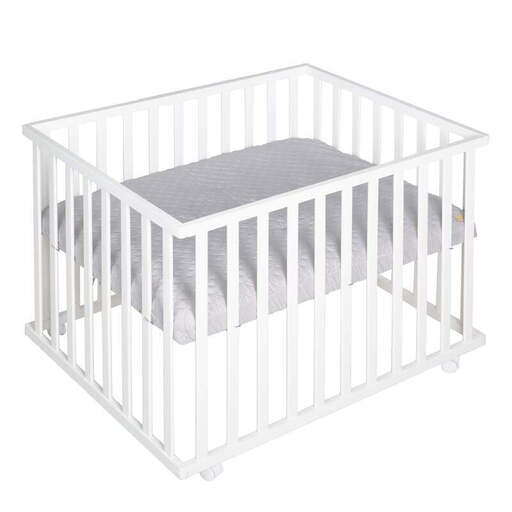
Why This Fits Their Persona: Ideal for apartments where flexibility is key. The rectangular shape (75 x 100 cm) fits well in various room layouts, and its four locking casters make it easy to move from the living room to the home office.
According to the manufacturer, the construction is developed in compliance with the EN 12227:2010 standard, providing a stable base. The 3-level height adjustment is field-tested and grows with your child, rather than becoming obsolete after a short time.
A combination of compact size, mobility, and a 3-level height adjustment. The washable fabric liner ensures easy hygiene.
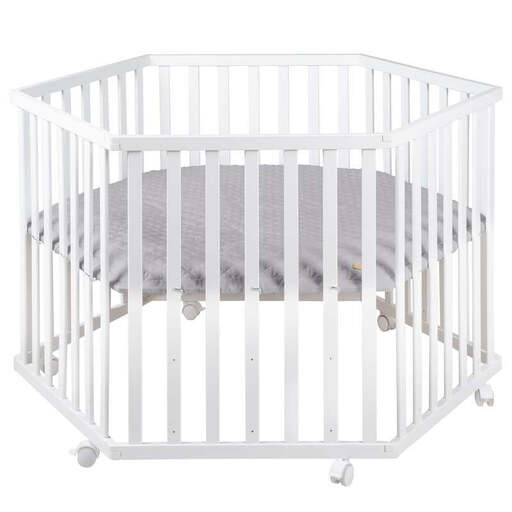
Why This Fits Their Persona: For parents seeking a modern, eye-catching piece with a large play area. This hexagonal playpen is a visual highlight in white and offers the child more freedom of movement. It fits perfectly into open-plan living areas.
Instead of a wobbly frame, this model uses six locking casters for stability and mobility. The manufacturer states that the materials are tested for harmful substances and the finish is skin-friendly, addressing concerns about material safety.
A spacious, hexagonal play area and modern aesthetics. The 3-level height adjustment and high mobility from six casters are additional functional advantages.
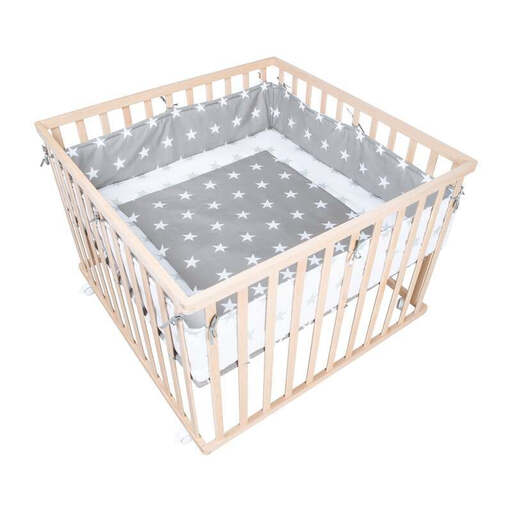
Why This Fits Their Persona: Perfect for families who prioritise an extra-large and robust play environment. The solid beechwood frame and generous 100x100 cm area offer plenty of room to explore.
This model relies on solid beechwood, which ensures high durability and stability, avoiding the pitfall of unstable construction. Its development according to safety standard EN 12227:2010-12 puts certified safety first.
Made from solid beechwood for superior stability. It offers a very large square play area of 1 m? and features four practical locking casters.
We have compiled a complete, up-to-date list of products that fully meet these strict selection criteria and relevant safety regulations.
The correct height setting for the base depends on your child's development:
Most playpens come with a padded, washable floor liner. This typically provides sufficient comfort and protection. Using an additional, separate playpen with a mattress is often discouraged. A mattress that is too thick can reduce the safe internal height of the playpen, making it easier for a child to fall or climb out. Furthermore, a gap between the mattress and the playpen wall can pose a safety risk. Stick to the liner provided or recommended by the manufacturer.
Most playpens are designed for children from birth up to about 24 months of age or a maximum weight of 15 kg. However, the key factor determining how long you can use it is your child's motor development. As soon as your child is able to climb out of the playpen on their own, it is no longer considered a safe play area and should be discontinued.