
Lieferung heute & morgen

Qualitätsgarantie

Willkommens-Angebote freischalten: KOSTENLOSE Lieferung | Bis zu 80 % RABATT | Kostenlose 30-Tage-JoyPlus-Testphase
App herunterladen
A 150mm adjustable wrench is a compact and versatile tool designed for precision tasks and use in hard-to-reach areas. Its ability to accommodate a wide range of nut and bolt sizes makes it a fundamental component in the toolkits of both DIY enthusiasts and professional users. Selecting the right model depends on specific technical requirements and the intended application.
The functionality and longevity of an adjustable wrench are determined by objective parameters. The following criteria serve as a guide for making an informed purchasing decision.
The core material is crucial for the tool's strength and corrosion resistance.
The quality of the adjustment mechanism affects both handling and safety during use.
The handle affects comfort and torque transfer.
Based on the aforementioned technical specifications, we present two models that cater to different user profiles.
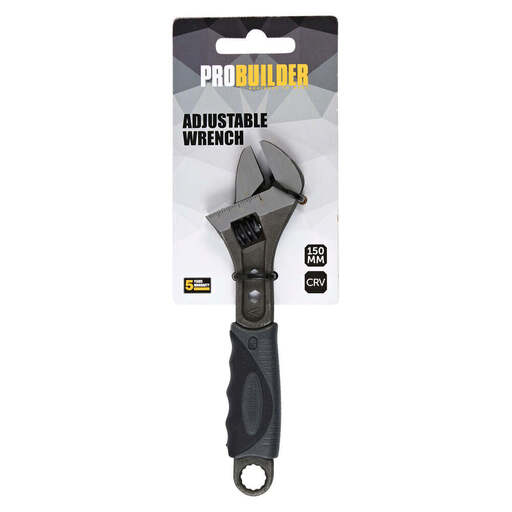
Why we recommend this product The PROBUILDER adjustable wrench is a no-frills, versatile tool that focuses on core functionality. Its Chrome Vanadium steel construction ensures high strength and longevity. The solid metal design makes it extremely durable and resistant to mechanical impacts and workshop chemicals. The precision-machined adjustment screw allows for accurate jaw alignment, providing a secure grip.
Pros
Who it's for This model is designed for users who prefer a functional, durable, and slim tool without extra comfort features. It is suitable for professional mechanics and plumbers, as well as for DIY enthusiasts who value robustness and a classic tool design.
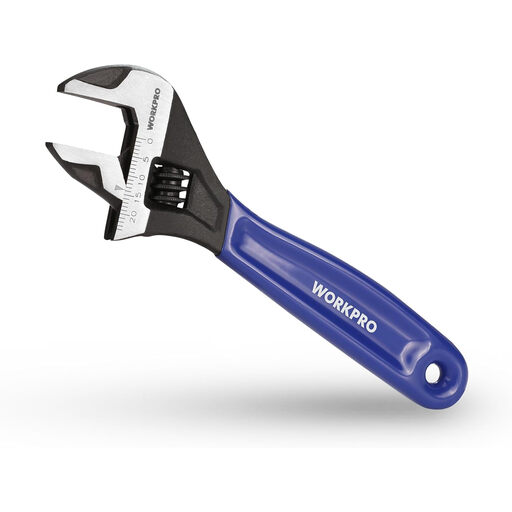
Why we recommend this product The WORKPRO adjustable wrench combines a solid CR-V steel construction with user-focused features. Its ergonomic bi-material grip ensures high comfort and a secure hold, reducing fatigue during repetitive tasks. A key differentiator is the dual-sided, laser-etched metric scale (0-24 mm), which allows for quick and precise pre-setting of the jaw opening, thereby speeding up the workflow.
Pros
Who it's for This tool is aimed at DIY enthusiasts and professionals who frequently work with various bolt sizes and value comfort and efficiency. The scale is particularly useful for users who need to switch quickly between different fasteners.
An adjustable wrench is the optimal solution for many, but not all, tasks. Depending on the application, specialized tools may be required. For work on drill presses or other equipment with clamping mechanisms, tools like a chuck key might be more appropriate. A broader selection of wrenches and related tools can offer additional solutions for specific mechanical challenges.
1. What is the difference between an adjustable wrench and an adjustable spanner? In common usage, particularly when comparing American and British English, the terms "adjustable wrench" and "adjustable spanner" are used synonymously. Both refer to an adjustable open-end wrench where one of the two jaws can be moved via a worm screw. While there are minor historical differences in design, modern tools of this type are generally known as adjustable wrenches.
2. What is a small 150mm adjustable wrench particularly good for? A small adjustable wrench with a 150mm length is ideal for jobs where space is limited. Typical applications include plumbing work under sinks, repairs in a vehicle's engine bay, bicycle maintenance, or assembling furniture. Its compact size allows for easy handling in nooks and corners where larger tools won't fit.
3. How should an adjustable wrench be properly maintained to maximize its lifespan? To maintain the tool, it should be cleaned of dirt and moisture after each use. The adjustment mechanism, particularly the worm screw and the movable jaw's guide, benefits from occasional cleaning and a drop of light machine oil. This ensures the adjustment remains smooth and protects against corrosion. Store the tool in a dry place.