An electric adsorption dehumidifier can help when drying laundry in the bedroom if excess moisture is a problem and the room tends to stay cool. It doesn’t replace ventilation. Before buying, also check the noise level and power consumption at the setting you’ll actually need, as well as the tank capacity and where the appliance can be placed. In a warm bedroom, compare specific performance and energy-use figures for a suitable compressor model rather than assuming that the type of dehumidifier alone determines running costs or drying time.
Who is this relevant to?
People who regularly dry laundry in the bedroom
If you often dry laundry in the bedroom, keep an eye on the extra moisture in the room and continue to ventilate it. The German Environment Agency recommends opening the bedroom windows wide before going to bed and again in the morning.
Light sleepers
If you sleep in the same room, check the noise level for the setting you’ll actually need. A night mode doesn’t mean the appliance will be just as quiet when running in laundry mode.
People with a cool bedroom
If the room temperature is low, it’s worth including adsorption models in your comparison. Trotec points out that actual water extraction depends on the surrounding conditions, even with adsorption models.
What should you look for when buying?
First, compare performance under conditions that suit your bedroom. Then consider the noise and power consumption at your preferred setting, as well as how easy the tank and drainage are to manage day to day.
| What matters to you |
What to look for |
Who is it important to? |
| Moisture when drying laundry |
Laundry mode and humidity control; only compare litre figures if the temperature and relative humidity are also given. |
If I regularly dry laundry in the bedroom, I want to keep an eye on the room’s humidity rather than relying solely on a high litre figure. Around 29% of consumers put humidity control first when drying laundry. |
| A peaceful night’s sleep |
Check the noise level for each setting, as well as night mode and whether the display or alerts can be switched off. |
If the appliance runs in the same room as my bed, I’d rather minimise disruption than get the fastest possible help with drying. Around 23% of consumers prioritise a peaceful night’s sleep. |
| Performance in cold conditions |
Check performance figures at a room temperature that’s suitable for your bedroom. |
If my bedroom stays cool while I’m drying laundry, I want to know how the appliance performs in those conditions. Around 18% of consumers prioritise suitability for cool rooms. |
| Power consumption |
Compare the power consumption in watts for your preferred setting with the expected running time. |
If I plan to use the appliance often, I want to be able to estimate how much power the setting I actually use will consume. Around 18% of consumers put running costs first. |
| Tank and maintenance |
Check the tank capacity and automatic shut-off when full. Only plan to use a drainage connection if you have a suitable drain. |
If I want the tank to be easy to manage day to day, I also consider emptying and maintenance. Around 12% of consumers prioritise ease of use. |
Common misconceptions
-
The maximum litres-per-day figure also applies to your bedroom
Temperature, relative humidity and additional moisture all affect how much water the appliance extracts. For example, Aktobis gives the WDH-DS3’s maximum figure at around 8 °C and 80% relative humidity.
Only compare performance figures when the test conditions are clear, and keep an eye on the room’s humidity too.
-
A quiet night setting dries laundry as well as laundry mode
Operating modes can differ in airflow and noise. A practical review describes separate laundry and sleep modes on the Meaco DD8L Pro.
Check the noise level and power consumption for the setting you actually plan to use while drying laundry.
-
A dehumidifier means you don’t need to ventilate
Laundry adds moisture to the room. The German Environment Agency still recommends adequate ventilation and highlights the risk of mould on cool surfaces.
Ventilate the room and keep an eye on the humidity. If the walls remain damp, find out why rather than simply choosing a more powerful appliance.
Brands and product ranges to consider
Trotec
Trotec describes the TTR 57 E as an electric adsorption model with a laundry-drying function, suitable for rooms up to 20 m² or 50 m³.
- The manufacturer gives this model a 5-l tank and a capacity of up to 9 l/24 h.
- The litre figure isn’t an independent guarantee of performance for a particular load of laundry; the stated room size is also a suitability limit.
Meaco
The DD8L range includes electric adsorption models. The DD8L Pro and DD8L Zambezi are different models with their own features.
- A practical review by testsieger.de describes the DD8L Pro as having laundry and sleep modes, as well as alerts that can be switched off.
- The German Zambezi manual states 300 W at low fan speed and 600 W at medium or high speed. These figures apply to the Zambezi, not the DD8L Pro or the range as a whole.
Aktobis
Aktobis describes the WDH-DS3 as an electric adsorption dehumidifier for cooler rooms, suitable for areas up to 25 m² or 62 m³.
- The manufacturer states a capacity of up to 10 l/day at around 8 °C and 80% relative humidity.
- This figure applies under those conditions and can’t be directly applied to warmer or drier rooms.
Wood’s
The manufacturer’s manual describes the WDD80 as a portable electric adsorption dehumidifier that’s also intended for utility rooms.
- For the WDD80, Wood’s states a 2-l tank, 650 W at 20 °C and 60% relative humidity, and a noise level of 36–50 dB.
- The power figure applies under the stated conditions; the noise range alone doesn’t tell you how disruptive the appliance will be while you’re sleeping.
Joybuy product selection
The Joybuy options below are dehumidifiers with a stated laundry mode. If adsorption is essential because your bedroom is cool, check the type of dehumidifier before buying; a laundry mode alone doesn’t confirm that it uses adsorption.
 No image available
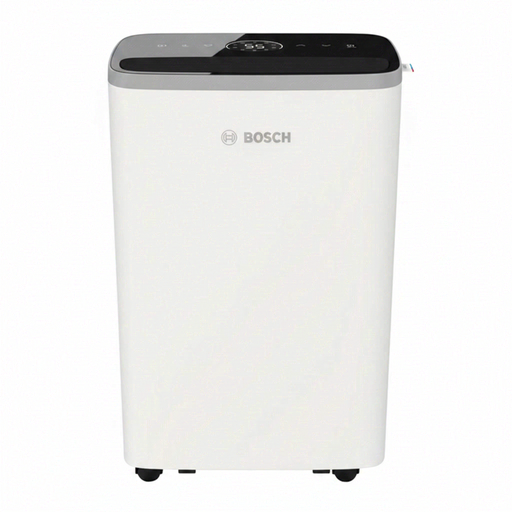
Bosch Dry 4000
An option for anyone looking for a dehumidifier with a dedicated laundry mode and two fan speeds.
16 l/day; for rooms up to 75 m³; 2.5-l water tank; 40 dB; two fan speeds; automatic night and laundry modes; LED display.
View at Joybuy
 No image available
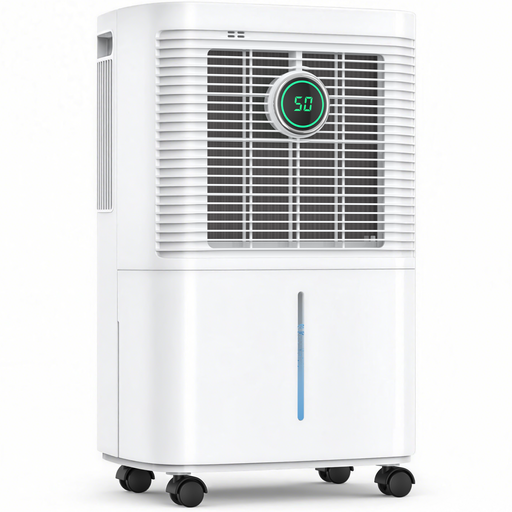
Ateroll dehumidifier with automatic humidity control
An option for anyone looking for a dehumidifier with a laundry mode and automatic humidity control.
16 l/day; laundry mode; automatic defrost function; sleep mode at 36 dB; automatic humidity control.
View at Joybuy
Frequently asked questions
Do I still need to ventilate if I dry laundry in the bedroom with a dehumidifier?
Yes. A dehumidifier doesn’t replace ventilation: the German Environment Agency recommends opening the bedroom windows wide before going to bed and again in the morning. As a guide to reducing the risk of mould, it gives a relative humidity of 40–60%.
Where should I place a dehumidifier when drying laundry?
Keep laundry and other items clear of the air inlet and outlet, and follow the clearances given in the manual for your specific model. Empty the tank and clean the filter as instructed. A drainage hose is only useful if you have a suitable drain.
Can I work out the electricity cost per load of laundry from the wattage?
Wattage alone isn’t enough; you’ll also need the running time and your electricity tariff. To calculate energy consumption: kWh = watts × hours ÷ 1,000. For example, the German manual for the Meaco DD8L Zambezi states 300 W at low fan speed and 600 W at medium or high speed. This doesn’t tell you how long it will take to dry your laundry.
Can I return my old dehumidifier when I buy a new one?
Retailers that are required to accept returns may offer free take-back when you buy a new appliance. The stiftung elektro-altgeräte register describes this for an old appliance of the same type and with essentially the same functions, either at the place of purchase or nearby. Before buying, check whether the retailer is covered by this requirement and how returns are arranged.


