Who should consider this choice?

People with a large, damp living room

You need a model with stated room coverage that suits your entire living room, rather than choosing on the basis of its extraction rate in litres per day alone. Meaco Germany and Trotec specify different coverage areas and room volumes, depending on the model.

People with a cool living room

If your living room is only heated occasionally, check the lowest room temperature the specific model is designed to work in. Meaco Germany, Trotec and Wood’s describe models for different operating conditions.

People who use a dehumidifier every day

If you want to keep humidity under control regularly, consider noise, heat output, electricity use and water drainage as part of everyday life at home. Meaco and Wood’s list different operating and maintenance features for their models.

What should you look for when buying?

Adsorption dehumidifier

Suitable if: Your living room is cool or only heated occasionally, and the manufacturer’s stated room coverage is sufficient. Meaco lists coverage of up to 46 m² for its DD8L models, while Trotec lists up to 20 m² for the TTR 57 E.

Consider: Adsorption dehumidifiers release heat into the room as the desiccant is regenerated. You should also check the noise level and power consumption of the specific model.

Compressor dehumidifier

Suitable if: Your living room is heated most of the time, or its area is larger than the stated coverage of the adsorption models you’re considering. Meaco lists coverage of up to 100 m² for the Arete One 20L.

Consider: Dehumidifying performance may drop in cool rooms. A dehumidifier won’t fix an underlying structural cause of damp either.

Measure humidity and investigate the cause

Suitable if: You haven’t measured the humidity yet, or damp keeps returning despite airing the room. The German Environment Agency recommends regular airing and suggests using a hygrometer to monitor humidity.

Consider: Airing the room won’t solve every cause of damp, and a dehumidifier is no substitute for investigating the cause or removing existing mould.

What you need What to check before buying Who it matters most to
Room coverage and humidity control Compare the floor area and ceiling height with the model’s stated coverage or room volume; check for a humidistat and humidity display. If my living room is large, I want to make sure the stated coverage suits the room rather than relying on the daily extraction rate alone. Around 31% of consumers prioritise room coverage.
Noise and heat Check the noise levels for each operating mode, as well as the fan settings and heat output of the specific model. I want to be able to use the dehumidifier while chatting or watching TV without noise or warm air making the room uncomfortable. That’s why around 25% of consumers prioritise a peaceful home.
Electricity use and drainage Check the power consumption and how long you plan to run the dehumidifier, as well as the tank size and whether it can drain through a hose. If I use it regularly, I want to know what to expect in terms of electricity use and emptying the water tank. Around 25% of consumers focus on these running costs and upkeep.
Suitability at low temperatures Compare the lowest room temperature you typically experience with the model’s approved operating temperature range, then check its stated room coverage. If my living room is only heated occasionally, I need a model with a stated temperature range to suit those conditions. Around 19% of consumers prioritise performance at low temperatures.

Common buying mistakes

  • Assuming a model suitable for cold conditions will automatically cover a large living room

    Being suitable for cold conditions doesn’t mean a dehumidifier has enough room coverage. Trotec specifies coverage of up to 20 m² or 50 m³ for the TTR 57 E.

    Compare your living room’s area and volume with the specifications for the particular model.

  • Expecting a dehumidifier to fix existing mould or structural damp

    The German Environment Agency advises identifying and addressing the causes of excess moisture. Buying a dehumidifier is no substitute for removing existing mould.

    Measure the humidity and investigate the cause. If there’s already mould, don’t put off having it removed because you’ve bought a dehumidifier.

  • Mistaking heat output for free heating

    Adsorption dehumidifiers release warm air, but they still use electricity. Their heat output doesn’t mean they provide free heating.

    If your living room is heated most of the time, consider a suitably sized compressor dehumidifier too. Work out electricity costs using the power consumption, actual running time and your electricity tariff.

    Longer running times increase electricity use, and the extra heat may not be welcome in your living room.

Brands to consider

Meaco

Meaco offers adsorption models in its DD8L range, as well as separate compressor models for larger rooms.

  • Meaco Germany lists coverage of up to 46 m² and 8 l/day for both the DD8L Zambezi and DD8L Pro. The Pro is also listed as app-compatible. The manufacturer specifies coverage of up to 100 m² for the Arete One 20L.
  • These are manufacturer specifications, not independent measurements for your living room. They don’t confirm suitability for areas larger than the stated coverage.

Trotec

The TTR 57 E is an adsorption dehumidifier that Trotec describes as suitable for cool rooms.

  • Trotec states that the TTR 57 E can operate from 1 °C and extract up to 9 l/24 h.
  • Its stated coverage is up to 20 m² or 50 m³, which limits its relevance for a large living room. These figures are also manufacturer specifications.

Wood’s

Wood’s describes its WDD series as compact adsorption dehumidifiers for small, cold rooms.

  • Wood’s lists an airflow of 120 m³/h for the WDD80 and 180 m³/h for the WDD90. Both models release warm air and have a hose connection.
  • The manufacturer recommends a different product range for larger rooms. These specifications don’t confirm that the WDD80 or WDD90 can dehumidify a large living room effectively.

Dehumidifiers at Joybuy

The Joybuy products below are described as dehumidifiers for larger living spaces. Compare the stated floor area or room volume with your living room, and take each model’s operating and drainage specifications into account.
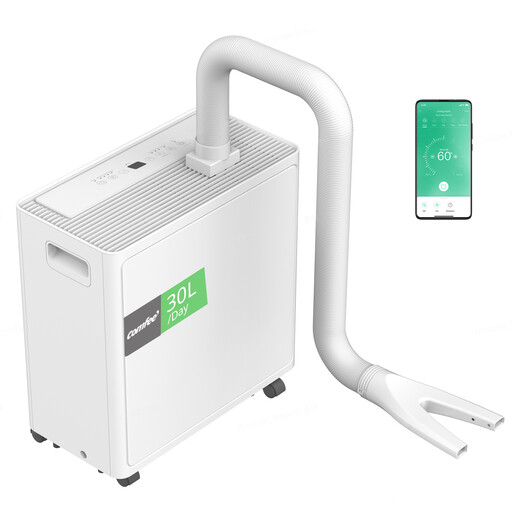
Comfee' MDDA-30DEN7-SD dehumidifier

Comfee' MDDA-30DEN7-SD dehumidifier

The stated room coverage makes this model worth considering if it suits the size of your living room.

The product specifications state coverage of up to 73 m² or 130 m³ and extraction of up to 30 L/24 h. They also list a 3,2-L tank, continuous drainage, app control, four operating modes and a 24-hour timer.

View at Joybuy
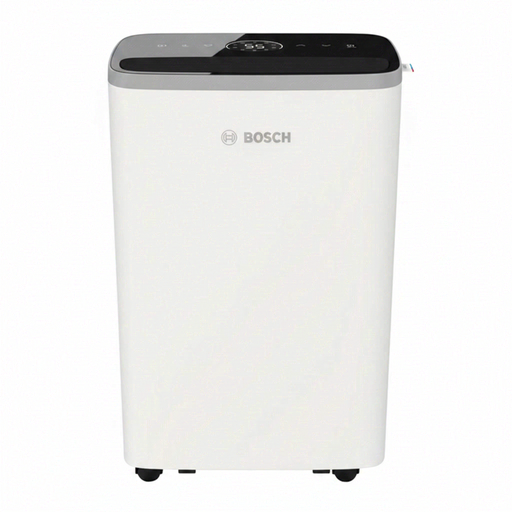
Bosch Dry 4000 dehumidifier, 16 L per day

Bosch Dry 4000 dehumidifier, 16 L per day

Its stated suitability for rooms up to 75 m³ may make it a relevant choice for a living room within that volume.

Specifications include extraction of up to 16 L per day, a 2,5-L tank, 40 dB, two fan speeds, Auto, Night and Laundry modes, and an LED display. A hose for continuous drainage isn’t included.

View at Joybuy
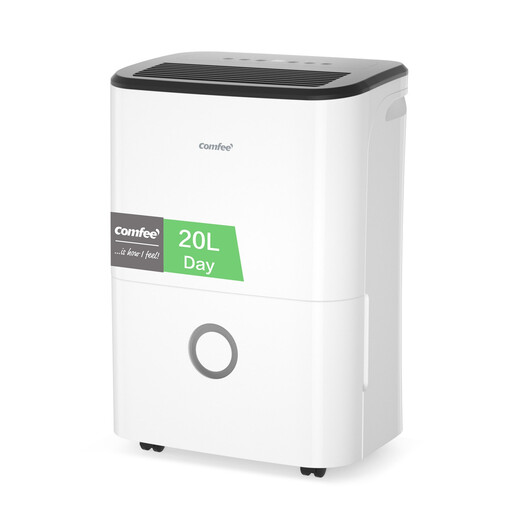
Comfee' MDDF-20DEN7 dehumidifier

Comfee' MDDF-20DEN7 dehumidifier

The stated floor area and room volume can help you decide whether this model suits your living room.

Specifications include coverage of up to 40 m² or 100 m³ and extraction of up to 20 L/24 h. The tank holds 3 L; a 24-hour timer and continuous drainage are also listed. The hose for continuous drainage isn’t included.

View at Joybuy
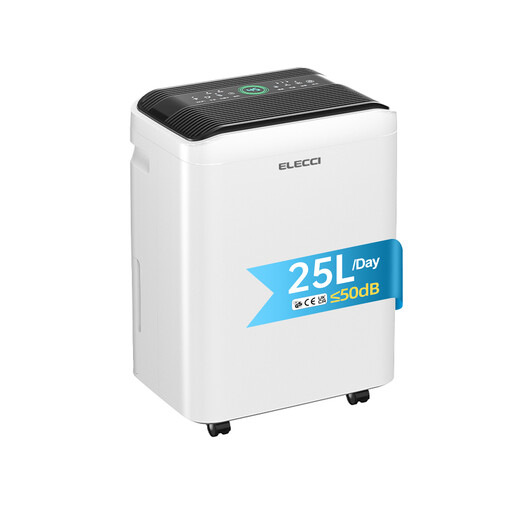
ELECCI 25L/D dehumidifier

ELECCI 25L/D dehumidifier

Its stated coverage of up to 50 m² may be relevant for a living room of a similar size.

The description lists extraction of up to 25 L per day under the stated conditions, a 4,8-L tank, three fan speeds, a 24-hour timer and continuous drainage with a drain hose.

View at Joybuy
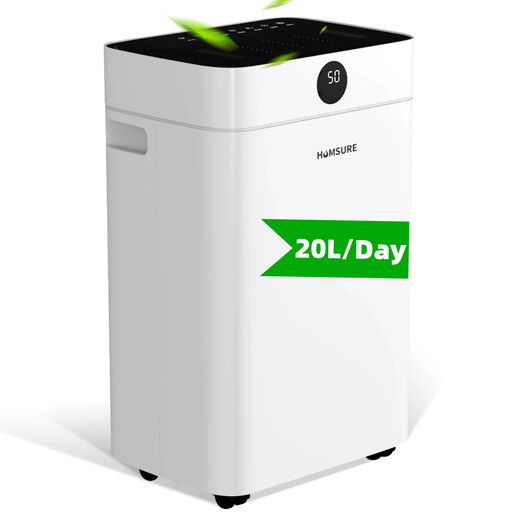
HUMSURE 20L/Day dehumidifier

HUMSURE 20L/Day dehumidifier

Its stated coverage of up to 50 m² makes this model worth considering if it suits the size of your living room.

Specifications include extraction of up to 20 L per day under the stated conditions, a 2,8-L tank, a 24-hour timer, automatic defrosting and continuous drainage. The target humidity can be adjusted, and the filter is washable.

View at Joybuy

Frequently asked questions about living-room dehumidifiers

What humidity level should I aim for in my living room?

To reduce the risk of mould, the German Environment Agency recommends a relative indoor humidity of 40 to 60 per cent and suggests using a hygrometer to monitor it. This is a recommendation, not a legal requirement, and it doesn’t replace checking for damp in building materials.

Where should I place the dehumidifier?

Follow the instructions for the specific model. The Meaco DD8L Zambezi manual requires a stable, level surface and warns against operating the dehumidifier in standing water or with a damaged mains cable. These points aren’t a complete set of instructions for other models.

What maintenance and running costs should I consider?

Check how often you’ll need to empty the tank and whether the model can drain through a hose. Follow the care instructions for its filter too. To work out electricity costs, you’ll need the power consumption, actual running time and your electricity tariff. Wood’s lists a washable filter and hose connection for the WDD80.

How do I dispose of an old electric dehumidifier in Germany?

Waste electrical equipment is collected separately and can generally be taken to municipal collection points free of charge, as explained by the German Environment Agency. Section 17 of the German Electrical and Electronic Equipment Act (ElektroG) also sets out take-back obligations for certain retailers. For free one-for-one take-back, the conditions for both the retailer and the appliance specified in the Act must be met.