
Lieferung heute & morgen

Qualitätsgarantie

Willkommens-Angebote freischalten: KOSTENLOSE Lieferung | Bis zu 80 % RABATT | Kostenlose 30-Tage-JoyPlus-Testphase
App herunterladen
With so many models, technologies, and designs available, choosing the right bicycle helmet can be a challenge. Whether for the daily commute, a spirited ride on a road bike, or an adventure on a mountain bike trail, a helmet's requirements are as unique as the rider. As your Joybuy Product Recommendation Officer, my mission is to provide you with objective, factual information to help you make an informed decision. This guide will help you understand the key features and explore a selection of models for various uses.
To find the right helmet, it helps to familiarise yourself with the basic criteria. Three aspects are particularly important: safety technology, fit, and features specific to your intended use.
A modern and safe bicycle helmet offers more than just impact protection. One of the most well-known technologies is MIPS (Multi-directional Impact Protection System). This is a low-friction layer inside the helmet. During an angled impact, this layer can move by a few millimetres to help reduce the rotational forces that can affect the brain. Also, look for certification marks like CE (EN 1078), which confirm that the helmet meets essential safety requirements in Europe.
A helmet only provides effective protection if it fits properly. It should sit securely on your head without being too tight or wobbling. Most helmets feature an adjustment dial at the back to precisely fit the inner ring to your head's circumference. Adjustable chin straps provide additional security.
Good ventilation is crucial, especially on longer rides or warm days. The number and arrangement of vents determine how well air can circulate. A lightweight bicycle helmet with good ventilation significantly enhances comfort, which is particularly important for a road bike helmet.
Depending on where and how you ride, different features can be beneficial:
Whether a helmet is a women's bicycle helmet or a men's bicycle helmet is often a matter of design and available sizes. However, most models are designed to be unisex, differing primarily in colour schemes and fit range.
Based on the criteria mentioned, we have compiled a selection of helmets for different needs.
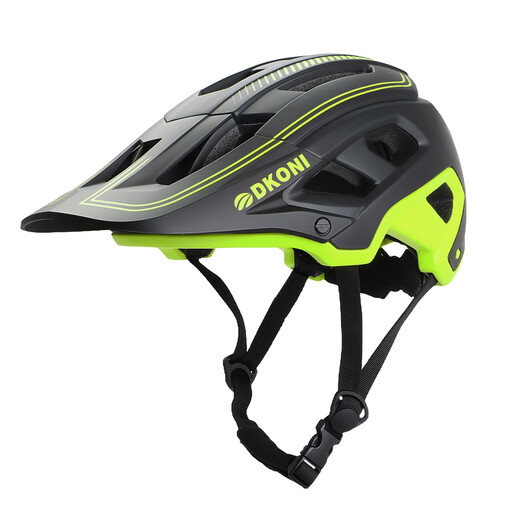
Why It Stands Out: This helmet is specifically designed for off-road use. Its most distinctive feature is the large, detachable visor made of ABS material, which offers extended protection from the elements. The robust in-mould construction directly fuses the PC outer shell with the EPS inner foam for excellent durability.
Features:
Who It's For: This MTB helmet is a great choice for mountain bikers and trail riders looking for a robust helmet with extended protection at the back of the head and an effective visor against sun and debris.
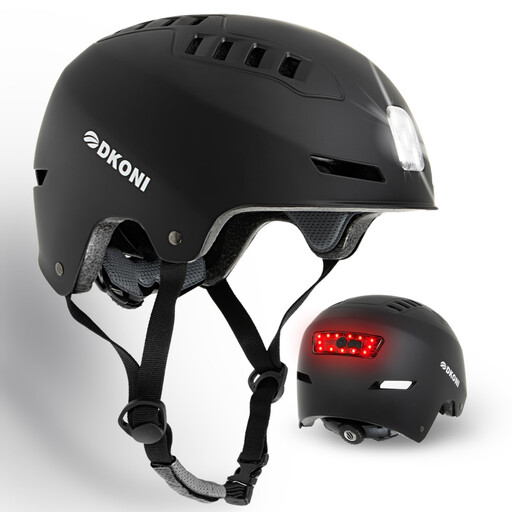
Why It Stands Out: The DKONI HS-158 is designed as a city bike helmet and focuses on visibility. The integrated LED system with 5 white LEDs at the front and 13 red LEDs at the rear (with four light modes) makes cyclists more visible in urban traffic. The lighting is conveniently rechargeable via USB.
Features:
Who It's For: Ideal for urban commuters, e-bike riders, and anyone who regularly rides at dawn, dusk, or night and values a helmet with a light for enhanced safety.
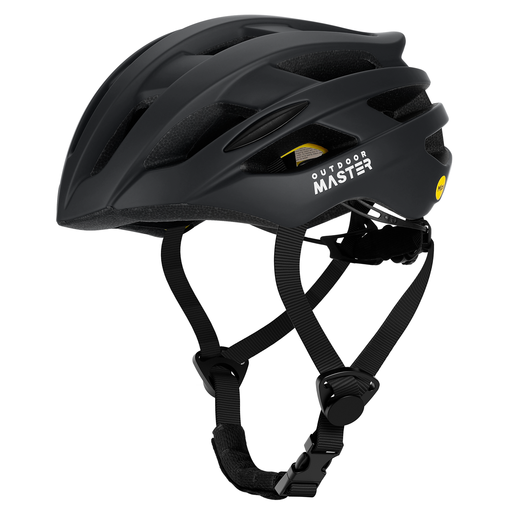
Why It Stands Out: This model integrates MIPS safety technology into a lightweight and well-ventilated road bike helmet. With 25 vents, it is designed for maximum cooling during performance rides and offers an additional protective mechanism in angled impact scenarios thanks to the MIPS system.
Features:
Who It's For: This helmet is aimed at ambitious road cyclists and performance-oriented riders who are looking for a lightweight bicycle helmet with advanced safety technology and excellent ventilation for long and intense rides.
The models presented here cover specific use cases. If these models don't quite meet your needs or you prefer a different colour, many other alternatives are available. Discover our full range of black bicycle helmets and find the model that's a perfect fit for you.
1. How often should you replace an adult bicycle helmet? Manufacturers generally recommend replacing a bicycle helmet after any significant impact, even if there is no visible damage. The protective structure of the EPS foam can be compressed and therefore weakened. Even without any impacts, replacement is recommended every 3 to 5 years. This is because materials like plastic and foam can degrade over time due to exposure to UV radiation, sweat, and temperature changes, diminishing their protective qualities.
2. What does MIPS mean on a bicycle helmet? MIPS stands for "Multi-directional Impact Protection System." It is an additional low-friction layer inside the helmet. In an angled impact, this technology allows the helmet to slide 10–15 mm relative to the head. This mechanism is designed to help reduce the rotational forces that might otherwise be transmitted to the brain.
3. Can I wear an MTB helmet in the city? Yes, that's perfectly fine. The choice depends on your personal preferences. An MTB helmet often provides better protection for the back of the head and includes a visor, which can also be useful in city traffic. A dedicated city helmet might be lighter and more subtle in design, or it may feature integrated lights. Functionally, both types of helmets fulfill their primary protective role.