
Lieferung heute & morgen

Qualitätsgarantie

Willkommens-Angebote freischalten: KOSTENLOSE Lieferung | Bis zu 80 % RABATT | Kostenlose 30-Tage-JoyPlus-Testphase
App herunterladen
An adult bicycle helmet should not be chosen solely based on colour, price or eye-catching design. What matters is whether the helmet suits its intended use, fits correctly and provides clear information about its construction and certification. A city commuter needs different features from a mountain bike or BMX rider.
Size labels such as S, M or L are not standardised across brands. Even if the stated size appears correct, a helmet may press, wobble or sit too loosely on the forehead. The key measurement is your head circumference in centimetres, taken horizontally around the forehead and the back of the head.
An adjustable bicycle helmet can make it easier to achieve a good fit. However, the adjustment dial cannot compensate for choosing the wrong size in the first place. There should be no large gaps between the inside edge of the helmet and your head, while the chin strap must sit securely without digging in.
A bicycle helmet with MIPS features an additional system which, according to the product description for certain models, is designed to address the effects of rotational forces in particular impacts. This does not guarantee protection in every accident. Similarly, a rear light improves the helmet’s visibility, but it does not replace bicycle lights or reflective clothing.
A bicycle helmet with a visor can help protect you from sunlight, rain, dirt or branches. If you use it extensively off-road, check whether the visor can be removed and remains securely attached. More features do not automatically mean that a model is suitable for every purpose.
A mountain bike helmet, BMX helmet or skateboard helmet is not automatically approved for motorcycling. Conversely, a motorcycle helmet is usually considerably heavier and designed to withstand different forces. A ski helmet with MIPS is intended for skiing and snowboarding and should not be used as a bicycle helmet.
If you ride a motorbike, look specifically for an ECE 22.06 motorcycle helmet and check the relevant marking on the actual product. The MY-936 included in this selection is described as meeting ECE R 22.06; this information applies to the motorcycle helmet, not to the bicycle models.
Measure your head circumference with a tape measure above your eyebrows and around the widest part of the back of your head. Compare the result with the size chart for the specific listing.
Look for:
A helmet should not shift noticeably when you shake your head. At the same time, it should not be so tight that it causes pressure points after a short period of wear.
Many models combine an outer shell made from ABS or polycarbonate (PC) with a shock-absorbing EPS foam core. In in-mould helmets, the outer shell and EPS core are bonded together during manufacture. However, the product should be assessed based on its specific details, rather than on a marketing term alone.
For example, the DKONI HS-062 is described as featuring a PC outer shell, EPS inner foam and in-mould construction. According to the product data, the OutdoorMaster Oryx uses a reinforced ABS shell and an EPS core. These are objective construction features, but they do not guarantee a particular outcome in an accident.
For commuters and longer bike rides, ventilation openings, inner pads and a reasonably low weight are all relevant. A lightweight bicycle helmet can be more comfortable, provided it still fits securely and is intended for your planned use.
The DKONI HS-062 is listed with 17 ventilation openings and a stated weight of 380 grams. According to the product description, the OutdoorMaster MIPS Gem I has 25 ventilation openings, an adjustment dial, two inner pads of different thicknesses and a removable visor. The RhinoUrban also features a removable visor, magnetic goggles and a rechargeable rear light with a USB-C connection.
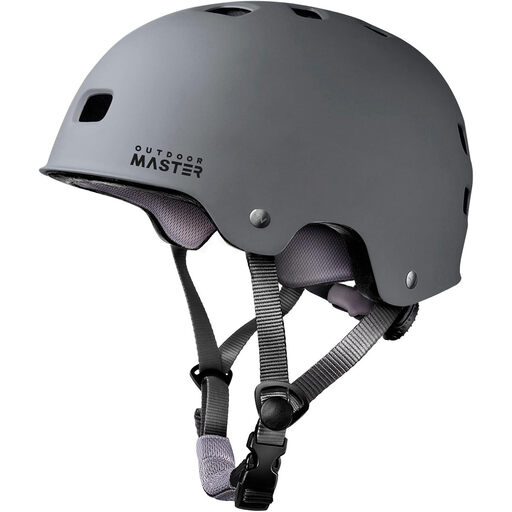
Why this product suits the profile: According to the product data, this multi-sport helmet is designed for cycling, skateboarding, BMX and inline skating. Two removable inner pads make adjustment and cleaning easier.
The adjustment dial and adjustable chin strap help prevent a loose fit, while the product data specifies an ABS shell, EPS core and ventilation.
Multi-sport use, two washable inner pads and an adjustable system.

Why this product suits the profile: This model combines a MIPS system, PC outer shell, EPS inner core, 25 ventilation openings and a removable visor for cyclists with a range of different needs.
MIPS is listed as a specific system feature, while the fit can be adjusted using the dial and two inner pads. Even so, the features do not replace the appropriate certification for specialist sports.
MIPS system, 25 ventilation openings and removable visor according to the product description.
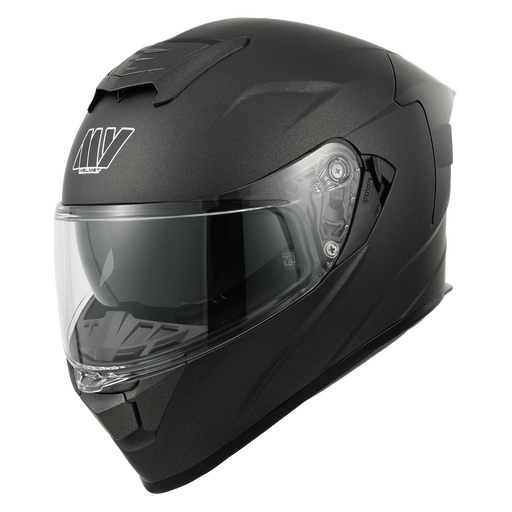
Why this product suits the profile: As a motorcycle helmet, the MY-936 is intended for a different purpose from a bicycle helmet. The product data specifies ECE R 22.06, an integrated sun visor and removable inner lining.
The stated ECE R 22.06 specification clearly distinguishes this helmet from bicycle helmets. It should not be used as a lightweight bicycle or ski helmet.
ECE R 22.06 according to the product details, full-face design, integrated sun visor and washable inner lining.
We have put together a complete, regularly updated list of products that fully meet these strict selection criteria and the safety regulations applicable in the EU.
Before every ride, check the shell, EPS core, straps, fastening and adjustment dial for cracks, deformation or loose parts. On many models, the inner pads can be removed and washed by hand with mild soap. The helmet should then be left to air-dry completely.
After a significant impact, the helmet must be replaced, even if no external damage is visible. An impact can affect the EPS without causing visible cracks in the shell. It is not possible to specify a standard service life for every model. Frequent use, UV radiation, perspiration and storage conditions all affect its condition. The manufacturer’s instructions and regular visual inspections should be your main guide.
The helmet should sit level on your head and cover your forehead and the back of your head evenly. It should not shift significantly when the chin strap is open. The strap should sit beneath your jaw; you should normally be able to fit one slim finger between the strap and your skin.
There is no fixed time limit that applies to every model. The helmet should be replaced immediately after an accident or significant impact. If there has been no accident, replacement is recommended as soon as the material, pads, straps or fastening system show visible signs of ageing or wear. The manufacturer’s information takes priority.
MIPS is an additional construction feature which, according to the relevant product information, is designed to address rotational movement in certain impact situations. It does not replace the correct size, properly fastened straps or the certification required for the intended use. Assess the helmet as a whole rather than relying on a single term.