
Lieferung heute & morgen

Qualitätsgarantie

Willkommens-Angebote freischalten: KOSTENLOSE Lieferung | Bis zu 80 % RABATT | Kostenlose 30-Tage-JoyPlus-Testphase
App herunterladen
An adult bike helmet shouldn't be chosen based solely on colour, weight or a flashy design. City traffic, commuting, road cycling, mountain biking and e-bikes all have different requirements when it comes to ventilation, fit and features. If you only focus on a low price or buzzwords like "High Performance", you'll miss important details.
A helmet can be technically well-equipped and still fit poorly. Too much play can cause the helmet to shift when you move. If it's too tight, you're less likely to wear it consistently.
Measure your head circumference with a tape measure just above your eyebrows and across the widest part of the back of your head. Then compare this measurement with the size chart for the specific model. Sizes like M or L aren't standardised: one model in size M might fit 54–59 cm, while another is designed for 55–58 cm.
A ventilated bike helmet with lots of openings can be more comfortable on longer rides. However, the number of ventilation channels alone says nothing about the overall construction. What really matters is how the air channels are routed, the stability of the outer shell, and whether the inner padding sits correctly.
A bike helmet with a rear light, visor or magnetic glasses can be practical for everyday use. A rear light doesn't automatically make you visible to other road users, and a visor doesn't replace bike lights. So check the fit, chin strap, shell, inner material and product labelling first. Extra features should complement your intended use, not distract from the fundamentals.
When choosing, look for clear certification details. The models featured here are described in the product information as CPSC-certified and in some cases ASTM-certified. CPSC and ASTM are US standards and testing references, and they aren't automatically equivalent to every requirement that applies in Germany. So also look for complete labelling, clear manufacturer information and details about the responsible person in the EU.
A bike helmet with MIPS technology has an additional slip layer designed to reduce the transmission of rotational forces in certain angled impacts. This technology isn't a substitute for a proper fit and doesn't guarantee protection against injury. However, it can be a relevant factor if you're looking for a MIPS bike helmet for road cycling, commuting or leisure riding.
An adjustable bike helmet should let you fine-tune the fit using a dial or similar adjustment system. The helmet sits correctly when it's level on your head, doesn't leave your forehead completely exposed, and doesn't shift noticeably when you shake your head. The chin strap should sit snugly without digging in.
Check before every ride:
For long distances, air channels and removable, washable padding are practical. A road cycling helmet is often designed for low weight and airflow, while an MTB helmet usually offers more coverage and a visor. For commuting or an e-bike helmet, a rear light and good visibility in traffic can be useful.
With a bike helmet with glasses, check whether the glasses attach magnetically or mechanically and whether they're compatible with your own prescription eyewear. A bike helmet with a visor can shield you from sun, wind, rain or kicked-up dirt. The product information for each model should clearly state whether glasses and visor are included and removable.
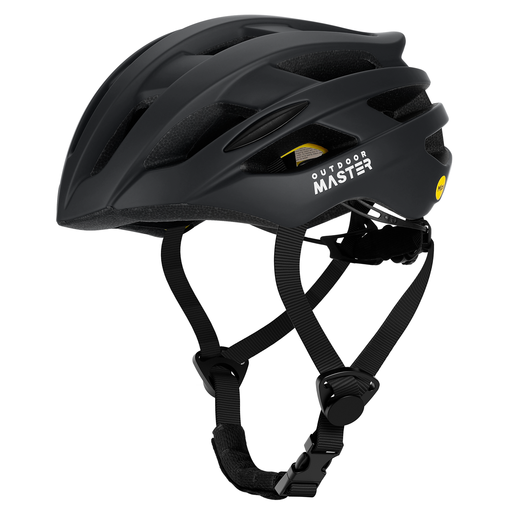
Why this product suits the profile: This model combines MIPS technology, an adjustable system and 25 ventilation openings for daily rides, leisure and commuting. Size M is specified for 55–58 cm according to the product information.
The head circumference specification and the dial help you avoid guessing a one-size-fits-all. The removable padding can be taken out for cleaning.
MIPS system, 25 ventilation openings and, according to the product information, CPSC and ASTM F1447-18 certification.

Why this product suits the profile: For longer road rides and regular training, this MIPS model offers a combination of 25 ventilation channels, a PC outer shell, EPS inner core and removable padding.
The features go beyond a marketing term: the material construction, ventilation, size and included padding are all clearly specified.
PC and EPS construction, MIPS technology, 25 ventilation openings and, according to the product information, CPSC and ASTM F1447-18 certification.
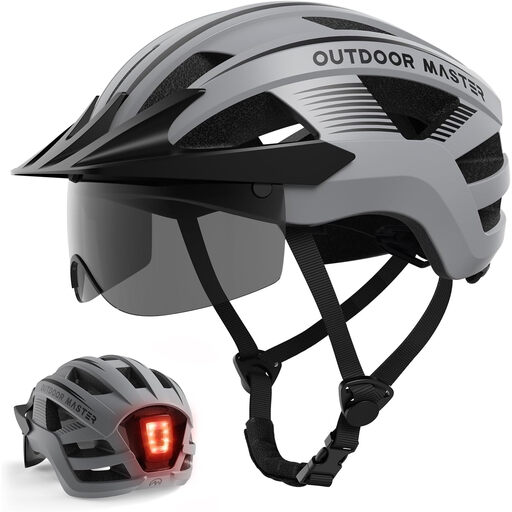
Why this product suits the profile: This model is aimed at adults who want to combine a rear light, detachable glasses and a visor for commuting, e-biking, mountain biking or road riding. Size L is specified for 58–61 cm.
The extra features are clearly named: a Type-C charging port, multiple light modes, magnetically detachable glasses and a removable sun visor.
17 ventilation openings, adjustable dial, PC shell and EPS inner lining; according to the product information, CPSC and ASTM certified.
We've put together a full, regularly updated list of products that fully meet these strict selection criteria and the safety regulations that apply in the EU.
Clean the outer shell with a soft, damp cloth and follow the manufacturer's care instructions. Harsh cleaning products, strong heat and unauthorised modifications to straps or padding can damage the materials.
After a significant impact, the helmet should be replaced regardless of whether there's visible damage. Even without an accident, it's a good idea to regularly check for cracks, damaged straps, loose components and deformed padding. For a model with a rear light, charge the battery before longer rides and check that the light is working.
The helmet should sit level on your head and not shift noticeably when you move. There should be only a little slack between your chin and the strap. Measure your head circumference and then use the adjustment system, rather than relying solely on the labelled size.
There's no fixed lifespan that applies to every model. What matters is the condition, material ageing, care and how often you use it. After an impact, the helmet should be replaced immediately. Visible cracks, damaged straps or brittle padding are also reasons to replace it.
MIPS can be an additional construction feature for certain angled impact situations. However, whether a model is suitable for commuting also depends on the fit, ventilation, certification details, visibility and everyday practicality. A correctly adjusted helmet remains the fundamental requirement.