For larger ornaments and wider shots, a mirrorless system camera with a kit lens may be enough. For tiny details, the magnification ratio of the specific lens matters more than the camera’s name. According to Canon Germany, the Canon RF-S 18–45 mm achieves 0.14× to 0.16× magnification with autofocus, depending on the focal length, so it is not a 1:1 macro solution. For deep, stationary ornaments, focus stacking and a stable shooting setup are worth considering. Check that the feature is compatible with your chosen lens.
Who are the different solutions suited to?
Crafters who photograph fine details
If you want to show the texture of small, handmade decorations, first check the lens’s magnification ratio and focusing capabilities. Canon Germany notes that precise focusing can be challenging in close-up photography because the depth of field is shallow.
Photographers using window light
If you’re photographing stationary ornaments in natural light, you’ll want to control brightness and shadows without immediately having to plan for extra lighting. The position of the window and a reflective surface can both help you shape the light.
Photographers taking product shots
If you need both close-ups and wider shots, consider depth of field and your workflow as part of the complete system. The key question is whether a suitable lens is included or needs to be chosen separately.
What should you look for when choosing?
First, check how close the specific lens can focus. Then decide whether you want to achieve greater depth of field in a single shot or by using focus stacking. Also plan for changing window light and check exactly what’s included in the package.
| Criterion |
What to check before buying |
Who is it important to? |
| Detail capture |
Check the maximum magnification ratio and working distance of the specific lens. Also consider the distance between the front of the lens and your subject. |
If I want to show beads or fine stitching large in the frame, the lens’s magnification ratio is key. Around 33% of consumers put detail capture first. |
| Window light |
Check exposure controls and RAW shooting. For stationary subjects, plan for a stable setup and, if needed, a reflective surface. |
With changing window light, I want to control brightness and shadows without immediately having to plan for extra lighting. Around 27% of consumers prioritise control over window light. |
| Depth of field |
For focus stacking, check the requirements for the camera model and chosen lens. For a single shot, also consider the aperture and shutter speed. |
If I want the front and back of a deep ornament to look sharp, I want to plan the setup and depth of field together. Around 20% of consumers put overall sharpness first. |
| System and package |
Compare the camera body or kit, included lens and mount. Don’t assume a separate macro lens is included with a body-only offer. |
Before ordering, I want to know whether the package includes a suitable lens for my subjects or whether I need to choose one separately. Around 20% of consumers prioritise keeping system costs manageable. |
Which buying decisions can be misleading?
-
Assuming “macro” in a camera description means true close-up magnification
The magnification ratio depends on the specific lens. With autofocus, the Canon RF-S 18–45 mm achieves 0.14× to 0.16× magnification, depending on the focal length. That’s not the same as 1:1.
Before buying, check the maximum magnification ratio of the lens actually included in the offer.
-
Thinking image stabilisation will solve shallow depth of field
Stabilisation compensates for camera movement, while close-up photography also involves depth of field. One feature doesn’t replace the other.
Consider aperture, a steady setup and, if needed, focus stacking separately from image stabilisation.
-
Comparing only the minimum focusing distance for 1:1 magnification
Minimum focusing distance alone doesn’t tell you how much room you’ll have in front of the lens to shape the light. Alongside a minimum focusing distance of 9.5 cm, Sony lists a distance of 2.4 cm between the front of the E 30 mm F3.5 Macro lens and the subject.
When comparing lenses, pay particular attention to the working distance, if it’s specified.
Which camera brands are worth considering?
Canon
The EOS R50 is a mirrorless APS-C camera with an RF mount. The RF-S 18–45 mm is a versatile kit zoom, but not a 1:1 macro lens.
- Canon Germany lists a 24.2 MP APS-C sensor for the EOS R50.
- With autofocus, the RF-S 18–45 mm achieves 0.14× to 0.16× magnification, depending on the focal length. The camera doesn’t have in-body sensor-shift stabilisation.
Panasonic
According to Panasonic, the LUMIX DC-G97 offers Post Focus and Focus Stacking. You’ll need to choose a suitable macro lens separately.
- Panasonic lists 20.3 MP, RAW for standard still images, and Post Focus and Focus Stacking.
- Individual images extracted from 4K Photo are specified as JPEGs. The LEICA DG Macro-Elmarit 45 mm, with 1:1 magnification, is sold separately.
OM SYSTEM
The OM-5 Mark II is an option with documented focus stacking. The M.Zuiko ED 60 mm F2.8 Macro is sold separately.
- OM SYSTEM lists the OM-5 Mark II at 20 MP and 418 g, including battery and SD card. The macro lens mentioned offers 1:1 magnification and a minimum focusing distance of 0.19 m.
- Check the requirements for the stacking function with your specific lens combination.
Nikon
Consider the Z50II as a camera body option. For 1:1 close-ups, the NIKKOR Z MC 50 mm 1:2.8 is a separate lens choice.
- Nikon lists 1:1 magnification for the NIKKOR Z MC 50 mm and says it can be used with Z-series DX cameras.
- This lens’s macro capabilities don’t carry over to a Z50II kit zoom. Check whether the offer you want includes a camera body or a kit.
Sony
For the α6400A, the E 30 mm F3.5 Macro is a separate option to consider for close-ups.
- Sony specifies 1:1 magnification for the E 30 mm F3.5 Macro, with a minimum focusing distance of 9.5 cm and 2.4 cm between the front of the lens and the subject.
- The short distance in front of the lens leaves little room to shape the light. Check whether this working distance suits your window-light setup.
Joybuy products on this topic
The range includes everything from a mirrorless camera with a 16–50 mm lens to compact vlog cameras. Before buying, check how close the specific lens can focus for photographing Advent decorations. Product names alone don’t confirm that a camera is suitable for macro photography.
 No image available
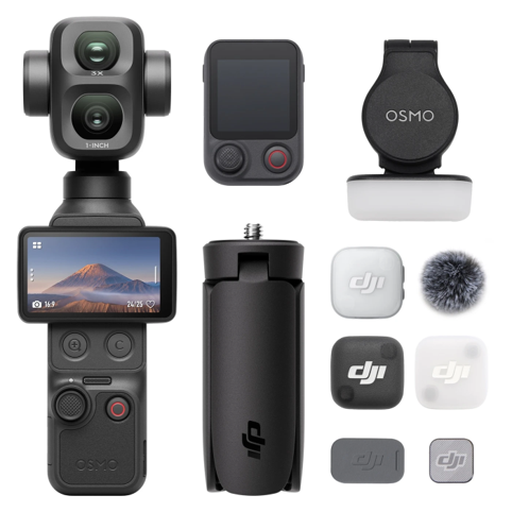
Osmo Pocket 4P Vlog Combo, Black
The listing describes this model as a Vlog Combo. Check before buying whether it can focus closely enough for very small ornament details.
Joybuy
 No image available
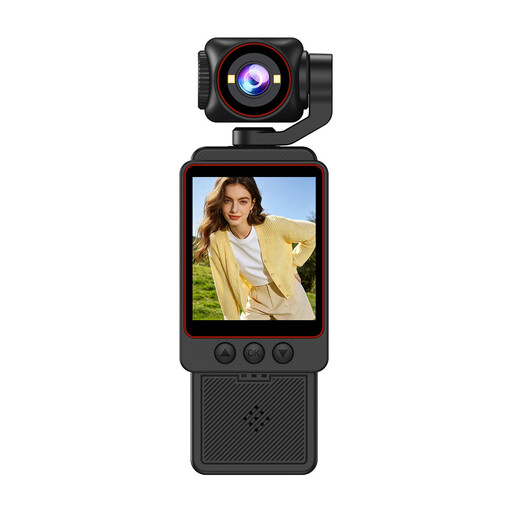
2K Pocket Vlogging Camera, 360° Rotating Lens
The listing describes a 2K vlogging camera with a 360° rotating lens. It doesn’t confirm close focusing for small decorations, so check this for the specific device.
Joybuy
 No image available
Sony Alpha 6100 APS-C with 16–50 mm Power Zoom
This offer describes a mirrorless APS-C camera with a 16–50 mm power zoom lens. If you’re photographing very small ornaments, check how close the included lens can focus before buying.
The product name specifies an APS-C sensor and a 16–50 mm power zoom lens.
Joybuy
 No image available
DJI Osmo Pocket 4 Standard Combo
The product description identifies this as a vlogging and photography camera. It lists 4K/240fps, 3-axis stabilisation, 2× zoom, 107 GB of built-in storage and a 2-inch rotating screen; none of these specifications confirm macro suitability.
Before choosing, check whether the device is suitable for the close focusing distance you need for your ornament.
Joybuy
 No image available
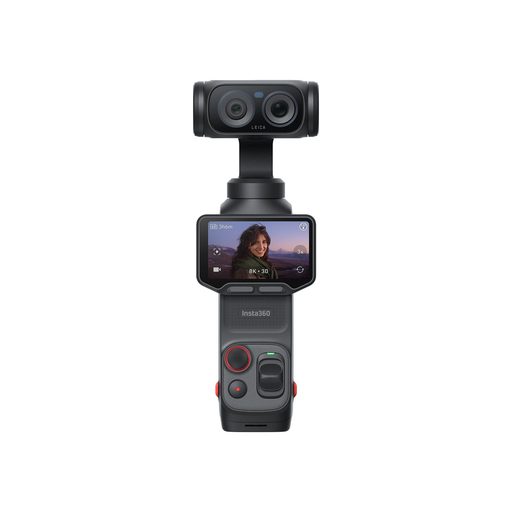
Insta360 Luna Ultra Standard Bundle, Cosmic Black
This offer is listed as the Standard Bundle in Cosmic Black. Check the specific camera and lens details to see whether the system included is suitable for close-ups of small ornament details.
Joybuy
Frequently asked questions
Do I need a particularly high megapixel count for tiny ornaments?
It shouldn’t be your first consideration. Start by checking how large the specific lens can make the detail appear in the image. With autofocus, the Canon RF-S 18–45 mm achieves a maximum magnification of 0.14× to 0.16×, while the macro lenses described here offer 1:1. These figures describe magnification ratios; they’re not a general measure of image quality.
How can I get started by the window without blurring the ornament?
Set up the stationary ornament and camera securely, take test shots at different apertures and check the focus. If you use a narrower aperture for greater depth of field, you may need a longer shutter speed. A reflective surface can bounce light back onto the darker side of your subject.
What should I check in the camera’s package contents?
Check whether you’re buying a camera body or a kit, and which lens is actually included. A separately sold 1:1 macro lens isn’t automatically part of a camera body offer.
What rights do I have when buying a camera online in Germany for personal use?
For a qualifying distance-selling contract, you generally have a 14-day right to cancel. Exceptions apply, and you should check when the cancellation period starts. The German federal portal explains this right to cancel. For ordinary goods, claims for defects generally become time-barred two years after delivery under § 438 of the German Civil Code (BGB). The right to cancel and statutory rights relating to defects are different rights.


