
Lieferung heute & morgen

Qualitätsgarantie

Willkommens-Angebote freischalten: KOSTENLOSE Lieferung | Bis zu 80 % RABATT | Kostenlose 30-Tage-JoyPlus-Testphase
App herunterladen
The AGIBOT X2 Ultra humanoid robot is designed for businesses, research organisations, educational institutions, and robotics and AI developers rather than typical households. If you’re looking to buy a bionic robot for autonomous tasks, though, you shouldn’t focus solely on terms such as “intelligent”, “autonomous” or “human-like”. What matters is having verifiable technical specifications, a suitable development environment and a safe, well-planned approach to operation.
A robot with autonomous navigation can gather information about its surroundings, plan routes and avoid obstacles. That doesn’t mean it’s suitable for every environment without preparation. Sensors may not reliably detect transparent surfaces, thin objects, steps or obstacles that appear suddenly.
The AGIBOT X2 Ultra is equipped with 3D LiDAR, an RGB-D camera, RGB cameras and intelligent algorithms. Even so, work areas need to be cleared and the robot’s movements monitored. The manufacturer recommends keeping a safety distance of at least two metres while it’s operating autonomously.
The figure of “31 degrees of freedom” describes the range of movements the robot can make. It doesn’t automatically indicate how well it moves or whether it’s suitable for a particular task. Reach, payload, joint torque, software access and control options are also important when choosing a robot.
According to the product specifications, the X2 Ultra has 31 degrees of freedom, an arm reach of up to 558 mm without an end effector and a maximum joint torque of 120 N·m. Its maximum payload is up to 3 kg in certain postures; across its full range of movement, the maximum specified payload is 1 kg without an end effector.
A robot with an automatic charging station means fewer manual steps, but the station needs to be installed correctly and kept clear. The X2 Ultra can optionally be used with an automatic charging station. The charging area must not be blocked, and the charging contacts must not be touched while the robot is docking.
For a humanoid robot with autonomous navigation, the sensors are a key consideration. LiDAR generates point clouds to map the surrounding space and can support 3D SLAM positioning. An RGB-D camera adds depth data to colour information. RGB cameras can be used for tasks such as gesture, object and face recognition.
The AGIBOT X2 Ultra is specified with multi-line LiDAR and an RGB-D camera. It also features an interactive RGB camera, a front camera and a rear-facing RGB camera. This combination supports the functions of a robot with obstacle avoidance, but it doesn’t replace safety supervision or careful planning of the operating environment.
At around 1.31 m tall and approximately 37 kg, the robot needs enough space for both storage and movement. Its stated walking speed is up to 1.5 m/s, while its typical speed is listed as no more than 0.8 m/s. According to the data sheet, its operating temperature range is -10 °C to 40 °C.
For development projects, it’s also important to know whether the robot can be modified or upgraded. The X2 Ultra supports secondary development. This includes additional computing power with Orin NX up to 157 TOPS, two USB-A and two USB-C ports, two RJ45 LAN ports and a Mini DisplayPort.
The battery has a capacity of around 500 Wh. At a walking speed of 0.5 m/s, the stated operating time is approximately two hours. According to the product specifications, charging takes no more than 1.5 hours. The X2 Ultra supports direct charging and a swappable battery, with automatic charging also available as an option.
For continuous use, businesses should plan for charging cycles, spare batteries, breaks and the expected workload. A robot for autonomous tasks won’t automatically run for an entire shift without a power and safety plan.
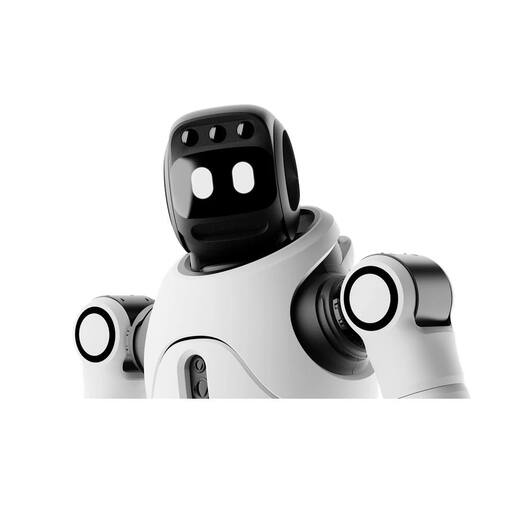
Why it’s a good fit: For those new to professional robotics, this platform brings together basic autonomous navigation, hand control, a mobile app and documented hardware specifications.
The specifications list specific sensors, reach, payloads and operating times, rather than relying solely on general marketing claims.
31 degrees of freedom, LiDAR, an RGB-D camera, a swappable battery and single-person operation using a hand controller.
Why it’s a good fit: Research teams and professional developers can factor secondary development and additional interfaces into their project planning.
Rather than limiting users to preset movements, the platform supports secondary development, according to the product description.
Orin NX with 157 TOPS, a 4G/5G module, LAN ports, OTA updates and video output via Mini-DP.
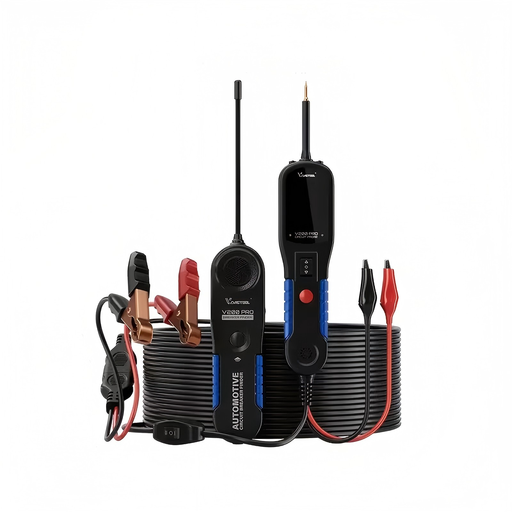
Why it’s a good fit: This isn’t a humanoid robot, but it may be useful in technical environments where 12-/24-volt vehicle and power supply circuits need to be tested.
Making the distinction clear helps prevent this diagnostic tool from being mistaken for a robot platform or development accessory.
Measures 0 to 65 V DC, resistance up to 100 kΩ, and can test continuity, polarity and wiring.
We’ve put together a complete, regularly updated list of products that meet these strict selection criteria and fully comply with the safety regulations in force in the EU.
Before putting the robot into operation, businesses should carry out and document a risk assessment, establish a cordoned-off test area and set out clear responsibilities. The joints can generate torque of up to 120 N·m. Keep hands, hair, clothing and pets away from moving parts.
The robot weighs approximately 37 kg and contains a lithium battery of around 500 Wh. It isn’t a toy and isn’t designed to operate in the rain, in high humidity or in contact with water. Only qualified developers should make changes to its programme. The stated warranty period is 18 months.
According to the product specifications, it can operate for approximately two hours at a walking speed of 0.5 m/s. Actual running time depends on movement, computing load, sensor use and the tasks being carried out. For longer periods of use, allow time for charging breaks or use swappable batteries.
No. The X2 Ultra can be charged directly and supports a swappable battery. An automatic charging station is optional. For autonomous docking, the station must be installed correctly, kept clear and be compatible with the robot’s software.
Yes. The Ultra version supports secondary development. Its available ports, computing modules and communication options allow it to be integrated into specific projects. Only qualified people should make changes to the software and movement sequences, which should first be tested in a controlled environment.