
Lieferung heute & morgen

Qualitätsgarantie

Willkommens-Angebote freischalten: KOSTENLOSE Lieferung | Bis zu 80 % RABATT | Kostenlose 30-Tage-JoyPlus-Testphase
App herunterladen
AHA BHA PHA skincare for blemish-prone skin is often promoted for delivering a smoother skin texture, reducing the visibility of blackheads, and providing a more thorough facial cleanse. However, these three acids each perform different tasks, and not every product suits every skincare routine. Particularly for oily skin, combination skin, or skin that is prone to blemishes, using too many active products at once can lead to tightness, redness, or dry patches.
This buying guide will help you compare Korean skincare objectively and avoid common purchasing mistakes.
AHA, BHA and PHA are often presented together as a particularly comprehensive formula. What really matters, however, are the specific ingredients, their order on the INCI list, the product type, and how often you use it.
A cleanser only stays on the skin for a short time, whereas an exfoliating serum or toner works for longer. That’s why you shouldn’t rely solely on the label “AHA BHA PHA”.
A clarifying toner, an exfoliating serum, a cleansing foam and an acid cream can all overlap in their function. If you combine several such products both morning and evening, the risk of over-treated or irritated-looking skin increases.
For beginners, it makes sense to use only one leave-on product containing acids and to increase the frequency slowly. If you have severely inflamed, broken or weeping skin, you should avoid acid-containing cosmetics and seek dermatological advice for persistent concerns.
AHA and, to some extent, BHA products can increase the skin’s sensitivity to sunlight. A broad-spectrum sun protection during the day and reduced direct sun exposure are therefore part of a responsible routine. This applies even if the product is marketed as gentle, for daily use, or for sensitive skin.
For a daily facial cleanse targeting blemishes, mild cleansing gel, foam or cream formulations with a short contact time are a different category from a high-concentration exfoliating serum.
Check whether the advertised acids actually appear on the ingredients list. Some products state concentrations, others do not. This makes a direct comparison difficult. Additionally, fragrances, essential oils or alcohol are relevant decision-making criteria for sensitive skin.
One example is the Haruharu Wonder Black Rice Triple AHA Gentle Cleansing Gel: according to the product information, it contains citric acid, tartaric acid and mandelic acid at 500 ppm each. That is a traceable claim, but it does not replace an individual tolerance test.
Pay attention to the batch number, best-before date or period after opening (PAO), and packaging that seals well. For two-phase products, such as a water-oil serum, shaking before use is important. The full INCI list on the packaging you receive is definitive, as formulations can change.
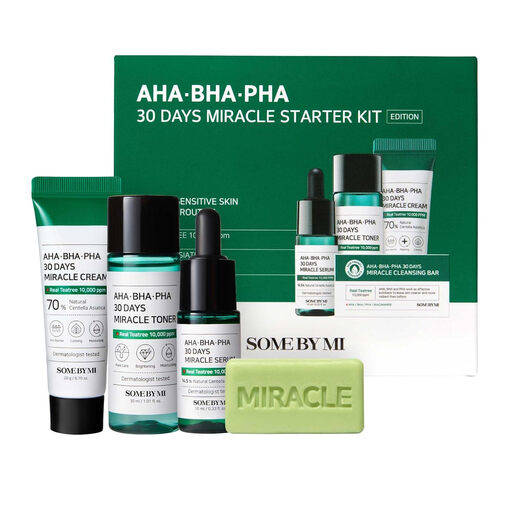
Why this product suits the profile: The set contains a cleanser, toner, serum and cream in travel sizes. This allows you to gradually get to know a Korean skincare routine without buying several full-size products straight away.
The trial sizes limit the risk of a bad purchase. Nevertheless, you shouldn’t use every product in the set together on the first day.
Four coordinated product categories, including a 30 ml toner, a 10 ml serum and a 20 g cream.
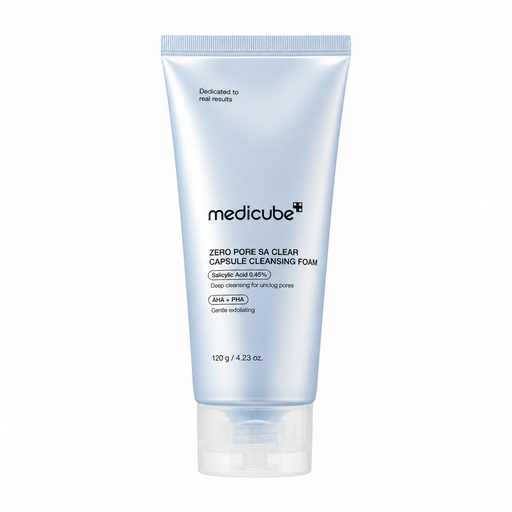
Why this product suits the profile: This cleanser combines AHA, BHA and PHA with a capsule texture. It is of interest to those who want to target the first step of their routine specifically at excess sebum and pores that look clogged.
As a rinse-off cleanser, the contact time is limited. This can be a more straightforward alternative to using several leave-on acids at the same time.
120 g content, AHA-BHA-PHA combination and, according to the product information, centella asiatica extract and niacinamide.
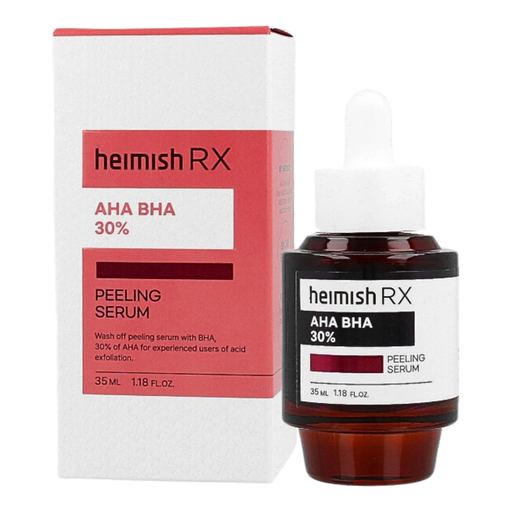
Why this product suits the profile: This product is designed as a wash-off serum for once or twice weekly use, making it ideal for users looking for a separate, time-limited exfoliating treatment.
The application is time-limited and, according to the product information, is rinsed off afterwards. Because of the stated high acid concentration, a patch test is especially important.
35 ml content, AHA and BHA combination, and a manufacturer-recommended application time of 10 to 15 minutes followed by rinsing.
We have compiled a complete, regularly updated list of products that fully meet these strict selection criteria and the safety regulations in force in the EU.
An AHA-BHA-PHA product should not automatically be combined with retinoids, other exfoliants or high-dose vitamin C products. For sensitive skin, it is advisable to test on a small area of skin before applying to a larger area.
That depends on the product type, formulation and individual tolerance. A mild cleanser can be used differently from a leave-on toner or a high-concentration exfoliating serum. Follow the manufacturer’s instructions and reduce the frequency if you experience stinging, severe redness or peeling.
BHA-containing products are often chosen for oily skin and sebum-related blemishes. AHA can care for the surface skin texture, while PHA can offer a gentler acid option. Visible pores cannot be permanently “closed” with cosmetics; however, a suitable cleansing routine and a moderate skincare plan can help the complexion appear more even.
That depends on the volume, dosage and frequency of use. A 150 ml toner usually lasts longer than a 35 ml serum when used sparingly. What matters are the printed expiry date, the period-after-opening symbol and storage away from direct sunlight. The packaging information on the individual product takes precedence.