
Lieferung heute & morgen

Qualitätsgarantie

Willkommens-Angebote freischalten: KOSTENLOSE Lieferung | Bis zu 80 % RABATT | Kostenlose 30-Tage-JoyPlus-Testphase
App herunterladen
AI glasses, also known as smart glasses, promise to seamlessly integrate digital information into our daily lives. From real-time translations to hands-free notes, the applications are diverse. However, the market is filled with products whose advertised features often fail to deliver in practice. Before you make a purchase, it's crucial to understand the most common pitfalls to avoid a poor investment.
This guide, created by the Joybuy Product Recommendation Officer, will help you separate the wheat from the chaff and find AI glasses that meet your actual needs.
Many models entice customers with impressive feature lists, but the devil is in the details. Pay close attention to these three areas where manufacturer claims and reality often diverge:
To avoid the issues mentioned above, you should examine three core technical aspects. These are the key determinants of a pair of AI glasses' everyday usability.
A reliable connection is the foundation of all smart features. Look for models with Bluetooth 5.3 and LE Audio (Low Energy Audio). These standards ensure a stable and energy-efficient pairing with your smartphone. Also, check if the glasses support a simultaneous connection to two devices. This is especially useful if you use both a personal and a work phone and want to seamlessly answer calls from either device.
Good audio glasses direct sound precisely towards your ears and minimise leakage. Models with dual speakers and dual microphones generally offer better performance in this regard. The microphones are crucial for call quality and the precision of voice commands, as well as for the real-time translator function. Good noise cancellation ensures your voice is clearly understood, even in noisy environments.
The term glasses with ChatGPT usually means the glasses act as an interface for AI services running on your smartphone. Find out which AI models (e.g., ChatGPT, Gemini, Claude) are supported. High-quality models also offer standalone features like intelligent meeting logging (AI Note), which can create transcripts and summaries directly, without you needing to constantly handle your phone.
Based on the criteria above, we have compiled a selection of products that are particularly well-suited for specific user groups in the UK and Europe.
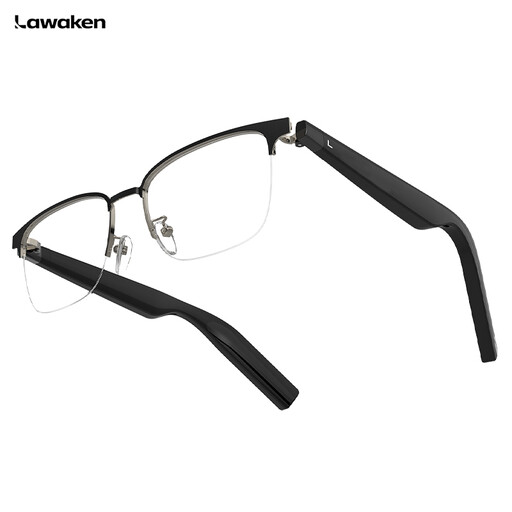
Why This Fits Their Persona: Ideal for frequent travellers who depend on a reliable communication aid. The lightweight design and long battery life are designed for long days at airports and in meetings.
The glasses avoid the pitfall of unreliable translation by supporting 128 languages and a stable Bluetooth 5.3 connection. The battery life of up to 12 hours of use prevents interruptions during a long workday.
Real-time translation for 128 languages: According to the manufacturer, it offers broad language coverage. Long battery life: Up to 12 hours of use and 5 days of standby.
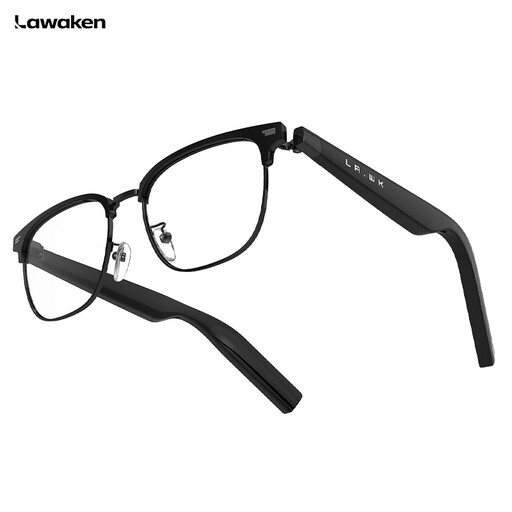
Why This Fits Their Persona: Designed for the modern workday, from the commute to the meeting. Productivity features like the AI Note function help maintain focus and optimise workflows.
This model addresses the problem of poor comfort with a lightweight TR90 material and a design for a secure fit. The dual speakers and microphones aim to deliver clear audio quality for calls and AI interactions.
AI Note for meeting summaries: Records meetings and automatically creates summaries. Compatibility with prescription lenses: The frame can be fitted with custom lenses by an optician.
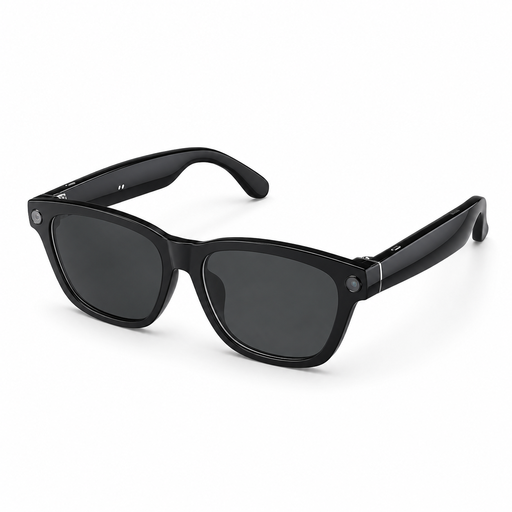
Why This Fits Their Persona: For users who want not only audio and AI features but also visual recording capabilities in one device. This model combines the functions of Bluetooth glasses with those of a camera.
This model goes beyond pure audio functions by integrating a camera, setting it apart from audio-only glasses. It bundles multiple functions (photo, video, translation, AI) into one device, appealing to users looking for an all-in-one gadget.
Integrated camera: Allows for taking photos and recording videos. Comprehensive voice control: Functions like music playback, calls, and photo capture can be activated via voice command.
We have compiled a complete, up-to-date list of products that fully meet these strict selection criteria and all relevant safety regulations.
The translation typically does not happen autonomously within the glasses themselves. The integrated microphone captures the foreign language and sends the audio data via Bluetooth to an app on your smartphone. The app forwards the data to a cloud-based translation service. The translated audio is then sent back to the glasses and played through the open-ear speakers. The quality and speed are highly dependent on the app, server performance, and your internet connection.
Some models, like those in the LAWAKEN AI Chat City series, are designed with frames that are compatible with prescription lenses. You can take the glasses to a qualified optician who will replace the standard lenses with your custom prescription lenses. It is important to have this done only by a professional to avoid damaging the frame or the integrated electronics.
When using AI features, audio data is recorded and sent to cloud servers for processing. It is important to review the manufacturer's privacy policy. Look for models that are compliant with GDPR (General Data Protection Regulation). If you record conversations, you may be legally required to inform all parties involved and obtain their consent. Many apps also offer settings to manage or limit data storage.