
Lieferung heute & morgen

Qualitätsgarantie

Willkommens-Angebote freischalten: KOSTENLOSE Lieferung | Bis zu 80 % RABATT | Kostenlose 30-Tage-JoyPlus-Testphase
App herunterladen
The terms "AI Laptop" and "Copilot+ PC" are creating a lot of buzz, but the market is flooded with marketing promises that cause more confusion than clarity. Many users invest in expensive devices only to find that the advertised "intelligent" features make little difference in daily use or that the performance doesn't meet their expectations. As your Joybuy Product Recommendation Officer, I'm here to help you separate fact from fiction and make an informed decision.
Before you spend your money, you should be aware of the most common pitfalls that await when choosing a laptop for artificial intelligence:
To ensure your new device is future-proof and powerful, you should closely examine three core components. These define what a modern AI notebook is all about.
A true AI laptop is distinguished by an integrated NPU. This specialised processing unit is designed to handle artificial intelligence tasks, such as real-time translations or image editing effects, far more power-efficiently than the main CPU or the graphics card (GPU).
Local AI applications require fast access to large amounts of data. This is where RAM and SSD become critical factors.
The most powerful AI hardware is only as good as the components you interact with.
Here are some models tailored to specific needs that cleverly avoid the pitfalls mentioned.
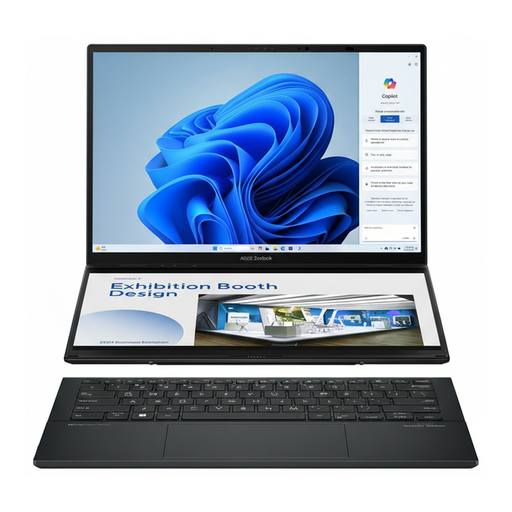
Why it's a great fit: Engineered for demanding multitasking. The dual 14-inch OLED touchscreens allow designers and video producers to keep tool palettes, timelines, and reference materials in view simultaneously, significantly accelerating their workflow.
This device avoids the unbalanced system trap. It combines a powerful Intel Core Ultra 9 processor with 32 GB of RAM, a 2 TB SSD, and two high-quality 120 Hz OLED displays. Here, the AI performance is part of a cohesive, high-end package.
The standout feature is the dual WQXGA+ OLED touch displays. Additionally, 32 GB of RAM and the Core Ultra 9 processor provide ample performance headroom for compute-intensive creative applications.
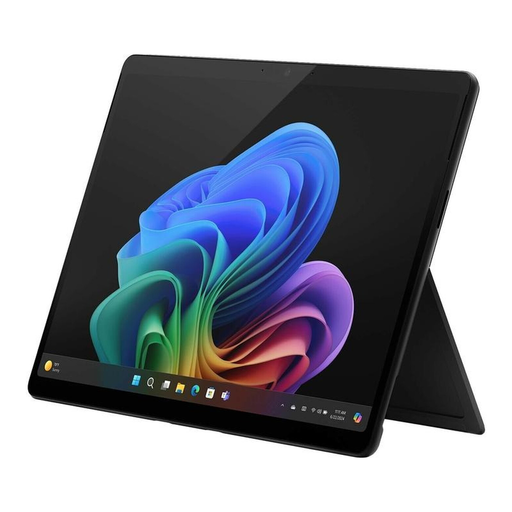
Why it's a great fit: Perfect for professionals who are constantly on the move. Its extremely lightweight 2-in-1 design, long battery life, and AI-optimised camera effects for video conferences make it the ideal companion for meetings, presentations, and working on a train or plane.
As a certified Copilot+ PC, the Surface Pro goes beyond vague "AI-ready" promises. It guarantees an optimised hardware and software foundation for practical AI applications like Windows Studio Effects, which offer real value in the daily workflow.
The combination of extreme portability (under 900g), flexibility (tablet and laptop), and professional security features (Secured-Core PC, Microsoft Pluton) is unique in this form factor.
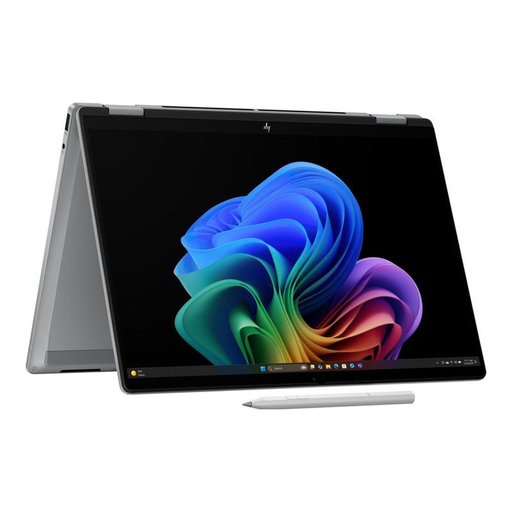
Why it's a great fit: Ideal for students and users looking for a versatile, modern device for work, study, and entertainment. The 2-in-1 design, brilliant OLED display, and powerful AMD Ryzen AI platform offer an excellent all-round package for a wide range of use cases.
This model provides transparent performance data (50 TOPS NPU performance) and combines it with a high-quality 3K OLED display. It avoids the trap of focusing only on the chip, instead prioritising the entire user experience.
A balanced combination of strong AI performance, excellent display quality (3K OLED), and high mobility (1.39 kg) in a flexible 2-in-1 form factor. Modern connectivity with Wi-Fi 7 is also on board.
We've compiled a complete, up-to-the-minute list of products that fully meet these strict selection criteria and German safety regulations.
For everyday tasks like browsing the internet or word processing, a conventional laptop is still sufficient. However, if you regularly use creative software, want to benefit from upcoming AI features in Windows (Copilot+), or simply want a more efficient and future-proof device, an NPU laptop offers tangible advantages in performance and battery life for those specific use cases.
Both are leading processor families with integrated NPUs for accelerating AI tasks. Intel Core Ultra processors popularised the NPU in Windows laptops. AMD Ryzen AI processors are their direct competitors and also offer strong NPU performance. The choice often depends on the specific device model, the overall configuration (graphics, battery), and software optimisation. Both platforms provide a solid foundation for a laptop for artificial intelligence.
One of the main advantages of an NPU is its efficiency. By offloading AI tasks from the more power-hungry CPU and GPU to the NPU, an AI laptop can often achieve longer battery life during mixed usage. This is especially true when using AI-powered features like background blur in video calls. However, the actual battery life still depends on the battery capacity (measured in Wh), screen brightness, and the intensity of the tasks being performed.