
Lieferung heute & morgen

Qualitätsgarantie

Willkommens-Angebote freischalten: KOSTENLOSE Lieferung | Bis zu 80 % RABATT | Kostenlose 30-Tage-JoyPlus-Testphase
App herunterladen
Manually transcribing audio recordings from meetings, interviews, or lectures is a time-consuming task that significantly limits productivity. An AI voice recorder promises a solution by not only recording but also automatically converting speech into text and even summarising it. However, the market is crowded, and many devices don't live up to their advertising claims. Before you make a purchasing decision, you should be aware of the common pitfalls.
To avoid a poor purchase, you should base your decision on objective technical parameters. Three criteria are of central importance.
A powerful voice recorder with transcription should do more than just convert speech to text. Look for the following features:
The hardware is the foundation for any good recording. A digital voice recorder for meetings or a voice recorder for interviews requires specific equipment:
Everyday usability depends heavily on design and handling.
Based on the objective criteria mentioned above, we have identified some models that represent a suitable solution for specific user groups.
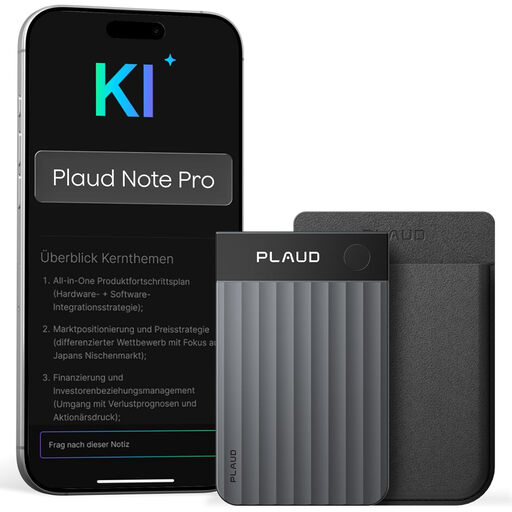
Why This Fits Their Persona: Ideal for consultants, managers, and field staff who are constantly on the move. The extremely slim aluminium body (2.99 mm) and low weight (30 g) allow for discreet portability and quick deployment.
Despite its slim design, four MEMS microphones ensure clear audio capture. The AI features go far beyond simple transcription, creating multi-dimensional summaries and thus avoiding the 'deceptive AI' trap.
Extreme Portability: At just 2.99 mm thick and weighing 30 g, it's one of the slimmest devices on the market. Long Battery Life: Up to 30 hours of continuous recording.
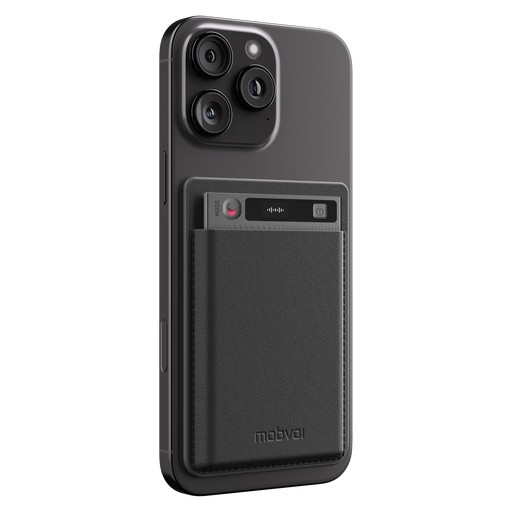
Why This Fits Their Persona: Perfect for project managers, students in seminars, or anyone who needs to regularly document group discussions. The 3-microphone array is optimised for recording in larger rooms.
This device directly addresses the weakness of many competitors in recording quality. With a range of up to 10 metres and a dedicated speaker mode, it avoids the pitfall of inadequate microphone performance in meetings.
Optimised for Groups: The 3-microphone system with a long range captures all participants clearly. Two Recording Modes: A special mode for calls and another for recording from speakers offer flexibility.
Why This Fits Their Persona: Journalists, podcasters, and researchers need more than just an audio recording. The ability to add notes, photos, and markers during an interview significantly enriches the context for later analysis.
The multi-modal input provides the AI with additional context, which improves the quality of summaries and goes beyond mere transcription. The included monthly transcription quota (300 minutes, according to the manufacturer) ensures cost transparency.
Multi-modal Input: Captures voice, text, and images for context-rich notes. Large Storage: 64 GB of internal storage for up to 50 hours of total recording time.
We have compiled a complete, up-to-date list of products that fully meet these strict selection criteria.
1. How accurate is the automatic transcription on an AI voice recorder? Accuracy depends heavily on several factors: the quality of the microphones, the distance to the speaker, ambient noise, and the clarity of speech. High-quality devices with microphone arrays and noise cancellation can achieve very high precision under ideal conditions. The error rate can increase with strong accents, technical jargon, or noisy environments. Manual correction of proper nouns or specific terms is often still necessary.
2. Are there extra costs for AI features like transcription and summarisation? The business model varies by manufacturer. Some devices include a monthly free quota of transcription minutes (e.g., 300 or 600 minutes). Once this is used up, you must purchase a subscription or a minute package for further use. It is important to check for these recurring costs before buying to be able to estimate the long-term operating expenses.
3. Can I also use an AI voice recorder for phone calls or online meetings? Yes, many modern devices offer solutions for this. Some models, like the Mobvoi TicNote, have a special "Call Mode" that uses a bone conduction sensor to record the user's voice directly. Others, like the PLAUD Note, use a magnetic ring to attach the device to a smartphone and record both sides of a conversation. For online meetings on a computer, the device can simply be placed next to the speakers to record the audio.