
Lieferung heute & morgen

Qualitätsgarantie

Willkommens-Angebote freischalten: KOSTENLOSE Lieferung | Bis zu 80 % RABATT | Kostenlose 30-Tage-JoyPlus-Testphase
App herunterladen
An air bed with a built-in pump is quick to set up and can be stored away compactly after an overnight stay. However, not every model automatically makes the right choice. Differences in power supply, sleeping height, weight capacity and construction can have a noticeable impact in everyday use.
A built-in pump may be electric, USB-powered, battery-operated or worked by foot pump. A model with a 220–240-volt pump is mainly suitable for indoor use where there is a socket. When camping, an air mattress with USB pump, battery pump or foot pump may be more practical.
Before buying, you should therefore check:
For example, the built-in pump on the Bestway Queen model requires four D batteries, which are not included according to the product details. This additional requirement should be factored into your plans.
An air bed for 1 person measuring 99 cm wide requires considerably less space than a double air bed measuring 137 or 152 cm wide. In small guest rooms, it is not just the mattress area that matters, but also the space needed to get in and out of bed.
For couples, an air bed for 2 people is generally more comfortable, provided there is enough room and the weight capacity is sufficient. If you frequently have guests, a raised model with a sleeping height of 33 to 46 cm may be more practical than a flat inflatable mattress.
Terms such as “plush”, “deluxe” or “comfortable” do not provide a consistent indication of how an inflatable guest bed will actually perform. More useful are verifiable features such as:
Even an air bed that looks premium can be damaged if placed in an unsuitable location. PVC surfaces should be positioned on a flat, clean area free from sharp objects.
A single air bed measuring approximately 191 × 99 cm is designed for one person. For two people, models measuring 191 × 137 cm or 203 × 152 cm offer more width. The stated maximum weight capacity must be considered separately from the sleeping area.
A raised design makes getting in and out of bed easier. This can be particularly useful when using a guest bed in a bedroom. For festivals or backpacking trips, however, low weight and a compact packed size are often more important than extra height.
An air mattress with an electric pump can be inflated in approximately three to four minutes in the models presented here, depending on the version. It is suitable for spontaneous overnight stays at home, but requires a socket.
An air mattress with a USB pump can be powered by a suitable 5-volt source, such as a power bank, laptop or USB power adapter. With a battery-powered pump, there is no need for a mains connection, but you will need to have the right batteries available. An air bed with a foot pump works without electricity and is suitable for places where no power source is available.
Fiber-Tech or Fibertech constructions use internal polyester fibres to stabilise the shape. Bestway describes the multi-layer PVC construction of its Tritech models as offering increased resistance to stretching. These details relate to the specific product construction and are not a guarantee of a particular service life.
A flocked or velour-like surface can alter the feel when lying down and may help prevent bed linen from slipping. However, it does not replace a suitable base. The weight limit – for example 136 kg or 272 kg – must not be exceeded.

Why this product suits this profile: The built-in foot pump requires no electricity and is designed for occasional overnight stays at home or when camping.
The power source is clearly defined: no socket or batteries are required. The Twin format is also relatively compact.
Velour-like sleeping surface, internal coil beams and a large two-way valve for releasing the air.
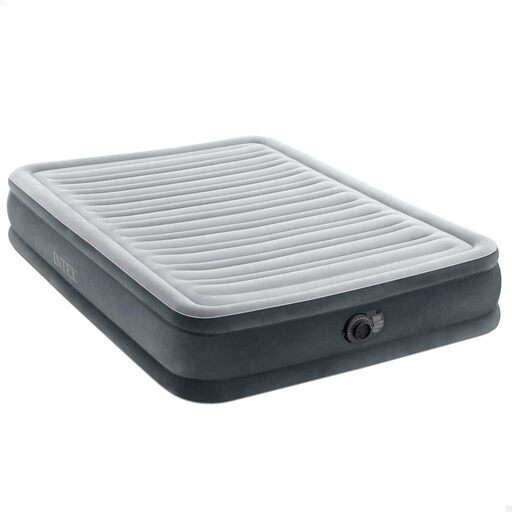
Why this product suits this profile: The raised double air bed combines a 220–240-volt pump with a height of 33 cm and a stated weight capacity of up to 272 kg.
The dimensions, number of people, pump type and maximum load are all clearly specified. This makes it possible to check whether it is suitable for a guest room before buying.
Fibertech construction, flocked surface, 2-in-1 mattress and base construction, plus an inflation time of approximately three minutes according to the product details.
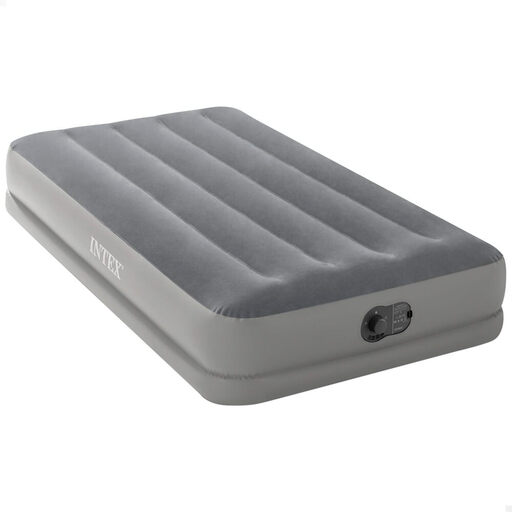
Why this product suits this profile: The 30 cm-high single air bed is designed for one person and can be inflated using a suitable 5-volt USB power source.
The USB requirement is stated explicitly. The product description also says that it can be inflated manually with a hand or foot pump.
191 × 99 × 30 cm, maximum weight capacity of 136 kg and a built-in pump with an inflation time of approximately four minutes according to the product details.

Why this product suits this profile: The Queen format provides room for two people, while the built-in battery pump makes it possible to set up the bed without a socket.
Mains-free operation is ideal for camping or temporary sleeping spaces. Important: four D batteries need to be purchased separately.
203 × 152 × 30 cm, an inflation time of approximately three minutes and a quick-release valve according to the product description.
We have put together a complete, regularly updated list of products that fully meet these strict selection criteria and the safety regulations applicable in the EU.
To keep an air bed usable for as long as possible, follow these basic rules:
The material may settle slightly after first use. Some models may then need to be topped up carefully. A damp cloth and mild soap are generally sufficient for cleaning. Harsh cleaning products can damage the surface.
According to the product details, the models listed require approximately three to four minutes. The actual time depends on the size, pump performance and desired firmness. With USB and battery pumps, you should also ensure that the power source being used is sufficiently charged or powerful enough.
There is no reliable one-size-fits-all answer. Its lifespan depends, among other things, on the material, frequency of use, storage and the surface beneath it. A clean, flat area, correct inflation and dry storage help reduce the usual strain on seams and PVC.
An electric pump usually runs only while inflating or deflating the bed. The air bed itself therefore normally has no continuous energy consumption. USB or battery-operated models instead place demands on a power bank, power adapter or batteries. The key is to choose the right power source for the intended location.