
Lieferung heute & morgen

Qualitätsgarantie

Willkommens-Angebote freischalten: KOSTENLOSE Lieferung | Bis zu 80 % RABATT | Kostenlose 30-Tage-JoyPlus-Testphase
App herunterladen
A good airbed is a flexible and space-saving solution, whether as an inflatable guest bed for visitors or as a comfortable sleeping surface for camping. But the market can be overwhelming, and many products don't live up to their promises. Before you make a decision, it's crucial to understand the common pitfalls that often only become apparent after your purchase.
As your Joybuy Product Recommendation Officer, I'll help you identify the essential features and distinguish marketing hype from genuine signs of quality.
Many buyers experience disappointment shortly after their purchase. This is often due to three common problems that can be avoided with an informed choice.
high airbed promises the comfort of a conventional bed. However, without a stabilising internal structure, the mattress becomes wobbly and unstable. Instead of getting up easily, it can feel like rising from an unsettled waterbed. Height alone is no guarantee of comfort.airbed with a built-in pump sounds convenient, but the type of pump is crucial. Slow, noisy, or battery-operated pumps can make setup a test of patience, especially when the batteries die unexpectedly. A self-inflating airbed should simplify the process, not complicate it.To avoid these issues, you should carefully examine three technical aspects before buying. These are what truly determine the durability and comfort of your airbed.
The internal structure is the skeleton of the airbed and is critical for stability. Basic models use simple air chambers (so-called "beam" constructions), which are prone to giving way and sagging.
More advanced technologies like Fiber-Tech or Tritech rely on thousands of high-strength polyester fibres stretched across the mattress interior. These fibres barely stretch, providing significantly greater structural stability and a level, firm sleeping surface. Such a system prevents the typical "wobble" and ensures the bed retains its shape even after repeated use.
The choice of pump depends on its intended use.
inflatable guest bed used at home. These pumps are typically powerful and can inflate a 2-person airbed in just a few minutes. Many models also offer a deflation function for quick takedown.camping airbed, this is often the most flexible solution.Most airbeds are made of PVC (Polyvinyl Chloride). The thickness and quality of the material are crucial for its durability. A flocked, velvet-like surface is not only comfortable against the skin but also prevents bedsheets from slipping during the night. For outdoor use, the material should be particularly resistant to abrasion and minor surface imperfections.
Instead of making a one-size-fits-all recommendation, we have identified products tailored to specific user profiles that meet the quality criteria mentioned above.
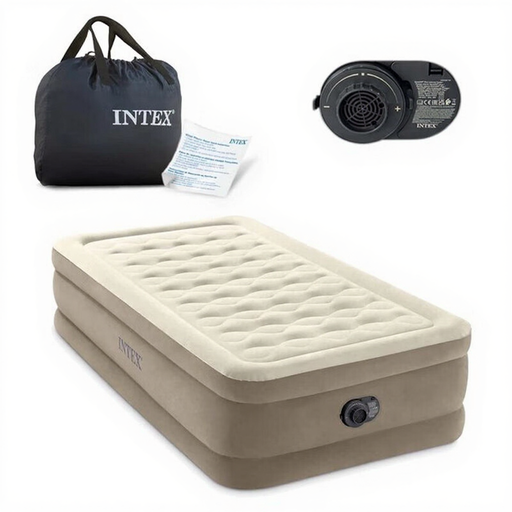
Why This Fits Their Persona: Ideal for those who want to offer their guests more than just a temporary fix. The comfortable height and stable construction provide the feel of a real bed, ensuring a restful night's sleep.
The Fiber-Tech construction prevents material stretching and overnight air loss. Despite its 46 cm height, the bed remains stable and doesn't wobble.
Integrated 220-240V pump for fast inflation (approx. 3 min). The 46 cm height allows for very comfortable entry and exit.
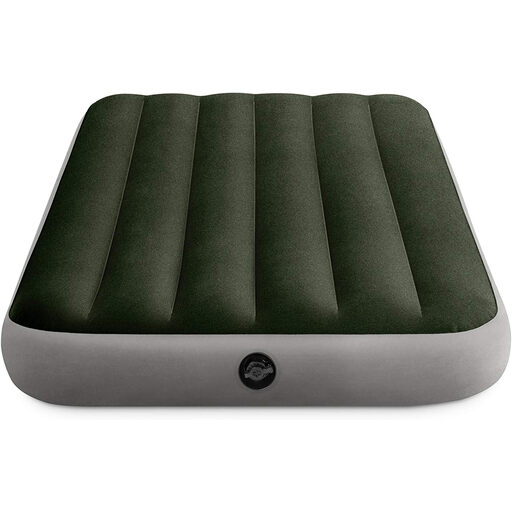
Why This Fits Their Persona: A durable and lightweight air mattress for outdoor use. It combines a stable construction with a low weight and small pack size, making it ideal for camping trips or festivals.
Even in this more basic model, the Fiber-Tech technology provides a stable sleeping surface and minimises sagging, a common issue with simple camping mats.
Low weight (approx. 1.7 kg) and a compact pack size. The 2-in-1 valve with an extra-wide opening allows for rapid inflation and deflation with an external pump.
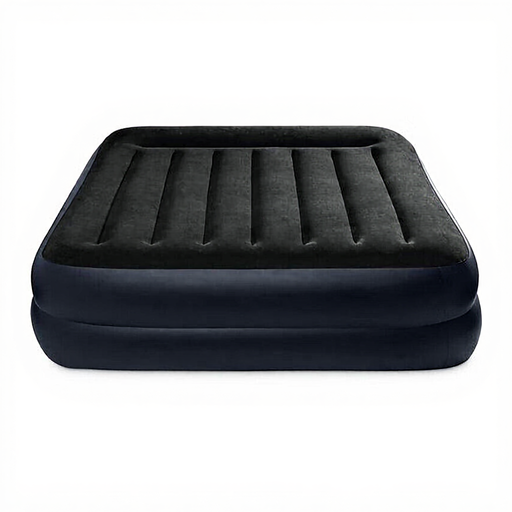
Why This Fits Their Persona: This `2-person airbed` offers ample space and comfort for couples or as a generous guest bed. Its quick setup and stable construction make it a reliable solution for the home.
The integrated AC electric pump is fast and reliable, avoiding the "pump trap." The Fiber-Tech structure ensures stability even when used by two people.
Generous sleeping surface (152 x 203 cm) with a weight capacity of 272 kg. The 42 cm height and flocked top provide superior comfort.
We have compiled a complete, up-to-date list of products that fully meet these strict selection criteria and all relevant safety standards.
The lifespan of an airbed depends heavily on frequency of use, storage, and care. A high-quality model with a robust internal structure like Fiber-Tech can last for several years with proper handling. It's important not to over-inflate the bed beyond the recommended firmness, to use it on a clean, flat surface, and to store it completely dry and at room temperature.
A slight loss of pressure during the first few nights can be normal, as the PVC material may stretch slightly at first. A drop in room temperature can also cause the air inside to contract, making the bed feel softer. However, significant, repeated air loss points to weak seam construction or a poor-quality internal structure—one of the key problems minimised by choosing a model with fibre technology.
A good camping airbed should be, above all, durable, lightweight, and compact. Models made from thicker, more resilient vinyl are advantageous here. A lower height (e.g., 22-25 cm) is often more practical as it takes up less space in a tent and inflates faster. Since a power outlet isn't always available, models that operate with an external manual or battery-powered pump are a flexible choice.