A breeze right by your armchair
If you usually sit in the same spot, an adjustable direction and several speed settings make it easy to position the airflow just right.


For a breeze right beside your armchair, choose a table fan or compact floor fan that you can point where you want it. If you also want to reach other parts of the bedroom, look for an oscillation function. What matters is how easily you can adjust the airflow and how noisy the fan is at the speed you’ll actually use, as well as its footprint, height and cable position. A fan moves air, but it doesn’t cool the room itself or replace opening the windows.
If you usually sit in the same spot, an adjustable direction and several speed settings make it easy to position the airflow just right.
If you also use the room for sleeping, look for quiet operation and check the noise level at the speed you actually need.
If you want air to move beyond your armchair and reach other parts of the bedroom, a suitable oscillation function is worth considering.
A good fit if: you mainly want an adjustable airflow beside your armchair.
Things to consider: A fixed direction won’t reach other seats unless you adjust it. Also consider the footprint, cable position and noise level where you plan to use it.
A good fit if: you want air to move in other parts of the bedroom as well as beside your armchair.
Things to consider: When the fan oscillates, the airflow won’t stay directed at your armchair. A pedestal fan also needs floor space.
| What you need | What to check before buying | Who is this especially important to? |
|---|---|---|
| Adjusting the airflow beside your armchair | Direction and speed settings; check whether oscillation can be switched off. | When I’m sitting in my armchair, I want to direct the airflow precisely towards me. Around 36% of consumers have this as their main concern. |
| Noise in the bedroom | Compare the noise rating and the speed setting it applies to, and check whether you can set a gentle airflow. | When I’m reading or settling down to sleep, I care about how loud the fan is at the speed I need. Around 29% of consumers prioritise quiet operation. |
| Space beside the armchair | Check the dimensions and allow room for the base or oscillation; consider the cable route and the position of the nearest socket. | If space beside my armchair is limited, I want to position the fan safely without blocking the way. Around 21% of consumers have the available space as their main concern. |
| Airflow in several areas | Check the oscillation range and power consumption at the setting you plan to use; a timer can limit the running time. | If I spend time in different parts of the bedroom, I want to spread the airflow around rather than point it only at my armchair. Around 14% of consumers have this as their main concern. |
A fan can make your skin feel cooler by moving air, but it doesn’t lower the room temperature or bring in outdoor air automatically.
If you want a breeze beside your armchair, choose based on direction and noise. If you need to remove heat or exchange the air, make sure you plan to ventilate the room separately.
A rating for the lowest speed doesn’t tell you how noisy the fan will be at the airflow setting you need beside your armchair.
Compare noise ratings only when they refer to the same speed setting, and check whether a low setting provides enough airflow.
Even a fan with the right airflow can be impractical beside your armchair if it won’t stand securely or the cable gets in the way.
Measure the space you have in mind and check the specific model’s dimensions, clearance, height and power supply requirements.
Table and pedestal air circulators for targeted positioning or airflow in several directions.
Adjustable table fans for a breeze where you sit.
Floor circulators that direct airflow away from your armchair and into the room.
Slim table fans for narrow spaces.
Compact table circulators, including the three-speed F100.
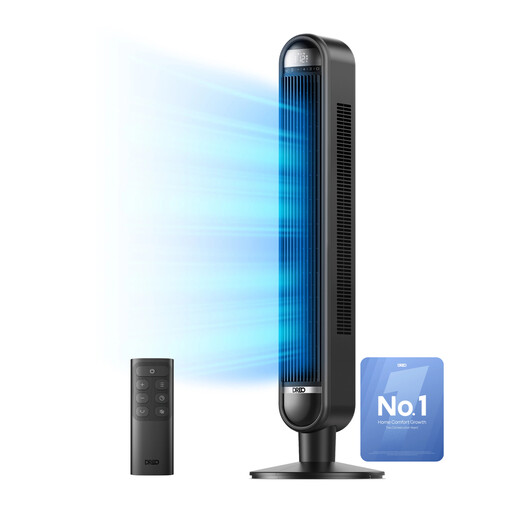
This selection includes table, floor and tower fans with adjustable direction or oscillation to move air beside your armchair.
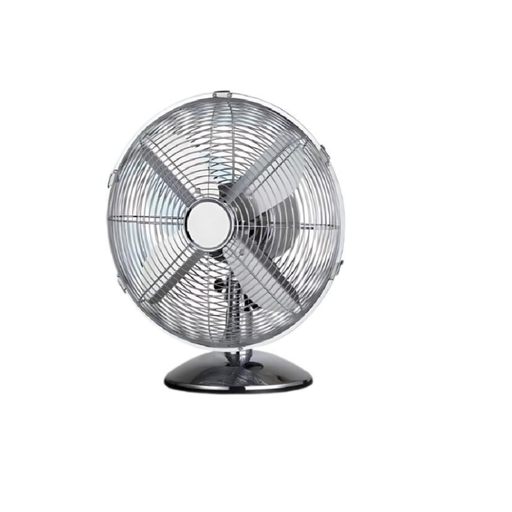 No image available
You can manually tilt the fan head to direct airflow beside your armchair. Automatic left-to-right oscillation is also listed.
30 cm; 35 W; three speed settings; four aluminium blades; metal casing; carry handle.
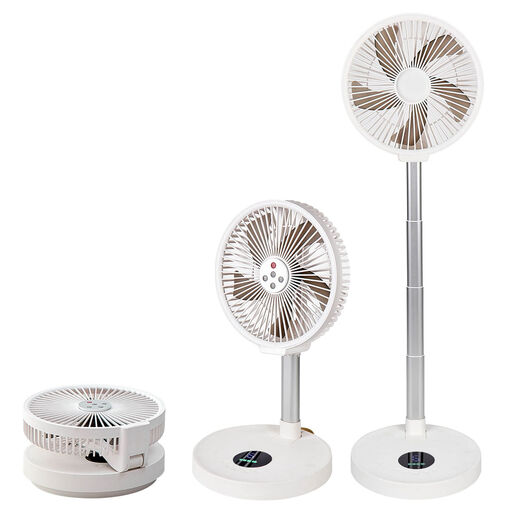 No image available
If you want to reach other areas as well as the space beside your armchair, the listed oscillation and manual tilt offer different ways to direct the airflow.
7200 mAh; six speed settings; manually tilts by 180°; 90° oscillation; height-adjustable; remote control and timer.
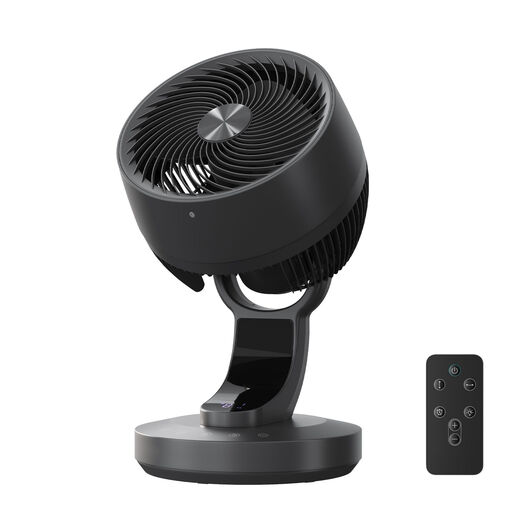 No image available
This oscillating table fan can be placed beside your armchair, and its eight speed settings offer plenty of ways to adjust the airflow.
Eight speed settings; oscillation; remote control; timer. The product name states 20 dB; check which operating speed this figure refers to.
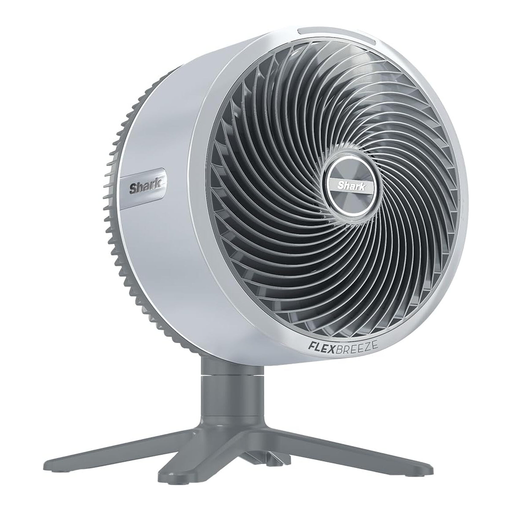 No image available
This tilting table fan is designed to direct airflow in different directions. It can run on battery power or from the mains.
Five speed settings; 55° tilt; 180° side-to-side oscillation; remote control. The runtime of up to 24 hours applies on the lowest setting with oscillation switched off. According to the product description, do not use in bathrooms, near swimming pools or in other damp areas or places where it may be splashed.
 No image available
The 90° oscillation spreads airflow around the room, while six speed settings and four modes give you different options.
Timer up to 12 hours; remote control and touch controls; sleep mode. The product name states 30 dB. According to the description, the fan must be used on a flat, dry surface with its base securely fitted.
No. Moving air can feel cool on your skin, but it doesn’t remove heat from your home. The German Environment Agency recommends airing bedrooms thoroughly before going to bed and again in the morning after getting up.
Choose a stable spot where you can direct the airflow as needed and the cable won’t get in the way. Unplug the fan before cleaning it or removing a safety grille, and follow the instructions for your specific model.
For a specific appliance and speed setting, multiply its power consumption in watts by the number of hours it runs, then divide by 1000 to calculate energy use in kWh. To work out the cost, you’ll also need your price per kWh. If a product is faulty, you have statutory rights against the seller under consumer law. The consumer advice centre distinguishes these rights from a voluntary manufacturer’s warranty.
According to Your Europe, CE marking is required only for products covered by harmonised EU rules that specifically require it. The requirements for returning an old appliance vary depending on the retailer and the size of the appliance. Stiftung ear explains, among other things, the 1:1 take-back obligation for retailers required to accept returns, and the 0:1 take-back option for up to three appliances, each measuring no more than 25 cm along its largest external dimension. Whether a particular retailer is required to accept returns depends on the applicable conditions.