People who are sensitive to draughts at their desk
If the fan is close to where you sit, a gentle breeze you can adjust is often more important than a strong blast of air directed at you continuously.


If you’re placing an air circulator near your office chair, a comfortably adjustable lowest setting, suitable positioning and tolerable operating noise matter more than maximum power. A tilting desk fan is a good choice if you want to change the direction of the airflow; a well-positioned pedestal fan can move air from a little further away, while a rechargeable model gives you more freedom to choose where to place it if there’s no socket nearby. A fan moves air, but it doesn’t lower the room temperature or replace ventilation.
If the fan is close to where you sit, a gentle breeze you can adjust is often more important than a strong blast of air directed at you continuously.
If you want some airflow during calls or while concentrating, pay particular attention to how noisy the lowest setting you’ll actually use is.
If there’s little room on your desk or no conveniently placed socket, stability, direction of airflow and, where relevant, battery power become important factors in your choice.
First, think about how close you want the fan to be to your chair, and whether you’d like the airflow directed at you or past your seat. Then you can compare size, power supply and controls more effectively.
| What you need | What to check before buying | Who it matters most to |
|---|---|---|
| Adjustable airflow | Compare the settings, direction and air speed at the stated distance; don’t confuse m/s with m³/h. | If the fan is right beside my chair, I want to be able to set a comfortable lowest speed rather than sit in its airflow all the time. Around 36% of consumers are likely to consider a gentle breeze their top buying priority. |
| Noise while working | Compare noise figures only when the fan setting and measurement conditions are also specified. | During calls or focused work, I want some airflow without the operating noise becoming a distraction. Around 29% of consumers are likely to make a quiet working environment their top buying priority. |
| Placement and airflow distribution | Check the space required, stability, direction of oscillation, tilt and cable routing; for rechargeable models, check what’s included. | If there’s little space beside my chair, I need a stable position and airflow directed to suit where I sit. Around 21% of consumers are likely to prioritise finding the right position and airflow distribution above all else. |
| Running costs and maintenance | Check the power consumption at your preferred setting, how easy the fan is to clean, and any battery or spare-parts requirements. | If I use a fan regularly, I want to consider its power consumption and maintenance as well as the initial cost. Around 14% of consumers are likely to put manageable running costs and upkeep first. |
When you’re sitting close to the fan, the lowest usable setting and how noisy it is at that setting matter most. IMTEST measured 2.9 m/s and 51 dB at a distance of one metre on the lowest setting of the Honeywell HT-900E. These figures apply to the model tested under the stated conditions.
Only compare measurements when the distance and fan setting are given. If you’re considering a powerful fan with a fixed direction, think about how far away you can place it from your chair.
According to Rowenta Germany, the VU2750F0 and VU2740F0 differ in their settings and controls. The product description and feature table also contradict each other on whether the VU2740F0 has automatic oscillation.
Check the full model number and confirm any conflicting features for the exact version being offered before you order.
Moving air can feel more comfortable, but it doesn’t lower the room temperature by itself or replace ventilation.
Make ventilation a separate part of your plan. The Verbraucherzentrale recommends opening windows when the outside air is cooler than the air indoors, often in the evening or early morning.
Desk and floor air circulators; according to Meaco Germany, the MeacoFan 1056 oscillates horizontally and vertically.
Desk fans available in different models with a range of controls.
The distributor describes the 533 as a floor or desk circulator that directs airflow around small to medium-sized rooms.
The HT-900E is a straightforward option for moving air from a little further away.
According to Philips Germany, the 3000 Series CX3050/01 desk fan combines three settings and two modes with a timer, tilt adjustment and oscillation.
The following Joybuy products include compact desk fans, including rechargeable models, and pedestal fans for moving air around your workspace.
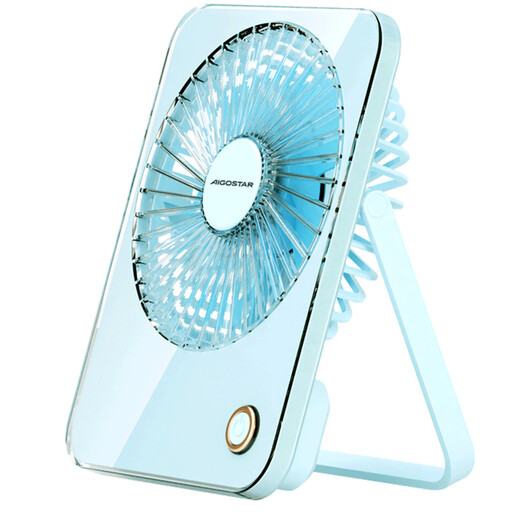 No image available
For a small workspace where you want a compact fan with battery and USB power options.
3,600 mAh battery, 3 speed settings and a foldable design with 180° adjustment.
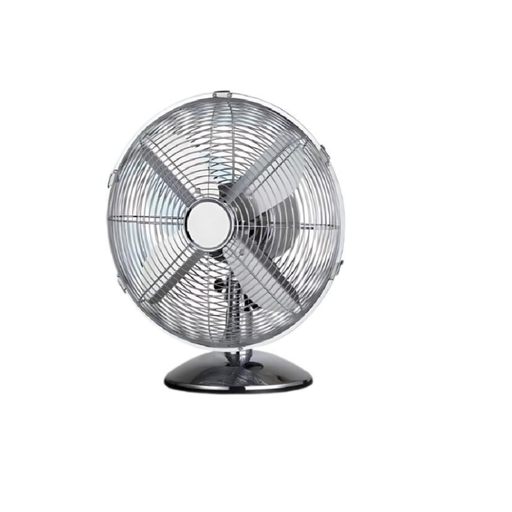 No image available
For a desk setup where you want to adjust the airflow by using oscillation and manual tilt.
3 speed settings, automatic left-to-right oscillation, manually adjustable tilt and 4 aluminium blades.
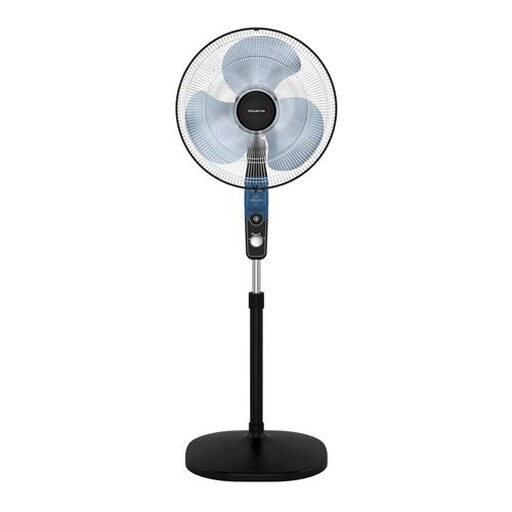 No image available
Described as a floor-standing option for your workspace if there’s no suitable space free on your desk.
3 speed settings, automatic horizontal oscillation and manually adjustable tilt. The seller quotes a noise level from 54 dB(A).
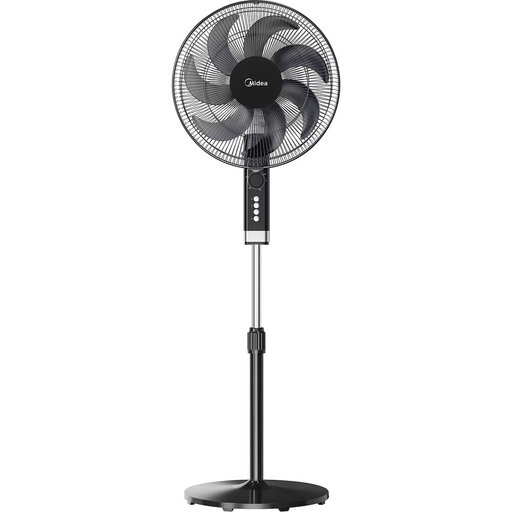 No image available
A pedestal fan option if you want to set up airflow around your workspace from the floor.
3 speed settings.
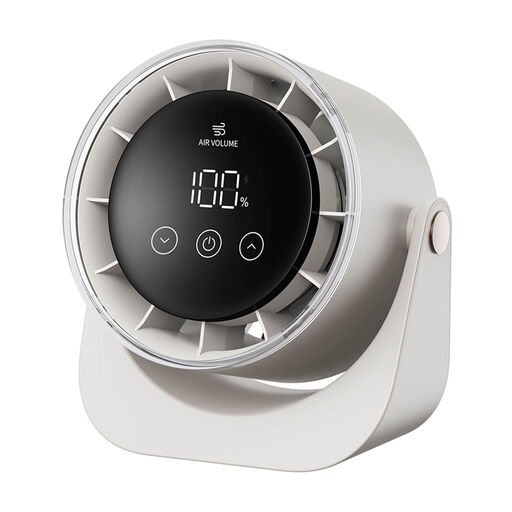 No image available
For a desk setup where you want cordless placement and a breeze you can direct where you need it.
100 speed settings and 90° tilt adjustment.
No. An air circulator moves air, but it doesn’t lower the room temperature by itself or replace ventilation. The Verbraucherzentrale recommends opening windows in summer when it’s cooler outside than indoors, often in the evening or early morning.
Follow the instructions for your specific model and place it on a stable, level surface, keeping the air inlets clear. If the airflow feels too strong where you’re sitting, point it past you or move the fan further away; position the cable so it won’t get in your way.
Multiply the power consumption of the setting you actually use, in kilowatts, by the number of hours it runs and your electricity price per kilowatt-hour. To do this, divide the wattage by 1,000, then multiply it by the operating hours and your price per kWh. There’s no universally applicable cost in pounds without knowing how long you use the fan and your tariff.
For the specific product, look for a valid CE marking, identifiable manufacturer details and German-language instructions with safety warnings. The Bundesnetzagentur lists these as criteria for its market surveillance; the CE marking isn’t an independent quality endorsement. If a product is faulty, distinguish your statutory consumer rights against the seller from a voluntary guarantee, as explained by the Verbraucherzentrale.
Take old electrical equipment to a local collection point or an appropriate take-back point, not to household waste. According to the Bundesumweltministerium, free take-back without a new purchase at a retailer that is required to accept it applies if no external dimension of the device is greater than 25 cm; different take-back rules apply when you buy an equivalent replacement.