
Lieferung heute & morgen

Qualitätsgarantie

Willkommens-Angebote freischalten: KOSTENLOSE Lieferung | Bis zu 80 % RABATT | Kostenlose 30-Tage-JoyPlus-Testphase
App herunterladen
The air fryer has established itself in many kitchens as an alternative to the conventional oven and deep fryer. It promises crispy results with less fat and lower energy consumption. But the market is crowded and confusing, and not every appliance lives up to its advertising claims. Before you make a decision, it's crucial to understand the common pitfalls that often lead to buyer's remorse.
This guide focuses on the objective criteria that truly matter, helping you separate marketing hype from genuine product benefits.
Many appliances entice buyers with impressive numbers and long feature lists. In practice, however, it's often three key points that determine daily satisfaction or frustration.
To make an informed decision, you should focus on the technical fundamentals. These three parameters determine the performance and durability of your future air fryer.
The most important question is: How many people do you regularly cook for?
The basket material has a direct impact on the cooking experience and durability.
The power, specified in watts (W), affects the heat-up and cooking time. A higher wattage doesn't necessarily mean higher electricity consumption, as the appliance reaches its target temperature faster and turns off sooner.
In general, an energy-saving fryer is a great supplement to a conventional oven. Thanks to its smaller cooking chamber and efficient hot-air technology, it heats up much faster and requires less time—and therefore less electricity—for many dishes.
Here are some models that represent a considered choice for specific user profiles based on their objective features.
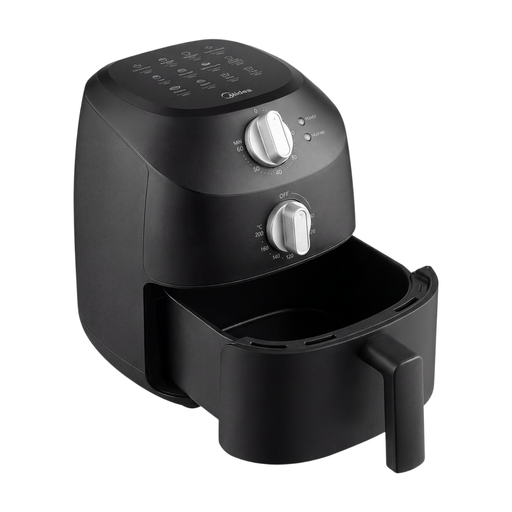
Why it's a good fit: Ideal for small kitchens, student flats, or for 1-2 people who want to quickly prepare a portion of fries or a few bake-off rolls. It avoids wasting counter space and prevents unnecessary leftovers.
This appliance focuses on a realistic, compact size of 2 litres instead of making exaggerated capacity claims. It is honestly designed for its intended purpose.
Extremely space-saving design (approx. 22x22 cm footprint) and a rapid heating process thanks to the 1150W power output, which is perfectly matched to its size.
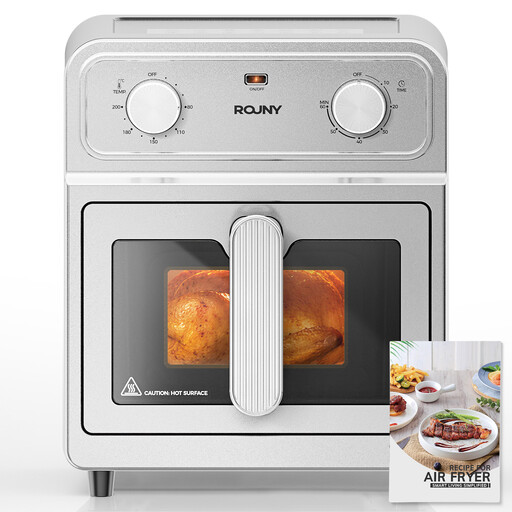
Why it's a good fit: With 6.5 litres, it offers a large capacity for family meals and prioritises material purity. Ideal for users who want to minimise food contact with plastics or coatings.
Completely bypasses the problem of peeling coatings by using a basket made of pure 304 stainless steel. The entire internal structure is made of metal.
No coating, a BPA-free cooking chamber, and a viewing window to monitor progress without opening the drawer. Operation is via simple rotary dials.
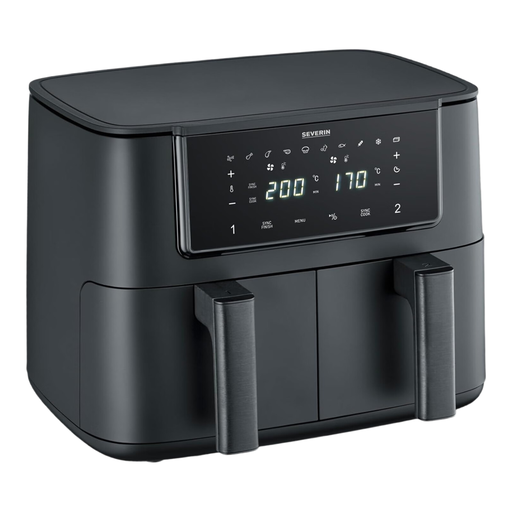
Why it's a good fit: Enables the preparation of a complete meal (e.g., main course and side dish) at the same time, with no flavour transfer. Perfect for families or home cooks who value efficiency and versatility.
It prioritises real functionality over a mere number of programmes. The Sync Finish function precisely coordinates different cooking times so that both dishes are ready to serve simultaneously.
Two independent 4-litre cooking baskets with separate controls. The high power output of 2600 watts ensures rapid cooking even when both baskets are fully loaded.
We have compiled a complete, up-to-date list of products that fully meet these strict selection criteria and safety standards.
1. How much electricity does an air fryer use compared to an oven? An air fryer is typically much more energy-efficient than a conventional oven. Due to the smaller cooking chamber and rapid heat-up time, less energy is needed for preheating and cooking. For many dishes, the preparation time can be 20-40% shorter, which directly reduces electricity consumption. Some manufacturers claim their appliances can be up to 70% more energy-efficient than a Class A rated oven, but this largely depends on the specific dish and model.
2. Do I need to preheat an air fryer? Preheating isn't mandatory for most dishes, but it is often recommended to achieve extra-crispy results. Many modern appliances have a very short heat-up time of just 2-3 minutes. For foods with short cooking times, like baking rolls, you can often skip preheating. For raw meat or homemade fries, a short preheat will improve the final result.
3. Are air fryers difficult to clean? Cleaning is generally easier than with a traditional deep fryer, as there is no old oil to dispose of. Most cooking baskets and inserts are removable and have a non-stick coating. Many of these parts are dishwasher-safe. With stainless steel baskets, food may stick more, but this can usually be removed by soaking and using a brush. It's important to clean the parts after each use to prevent food residue from baking on.