
Lieferung heute & morgen

Qualitätsgarantie

Willkommens-Angebote freischalten: KOSTENLOSE Lieferung | Bis zu 80 % RABATT | Kostenlose 30-Tage-JoyPlus-Testphase
App herunterladen
An air fryer can cook chips, vegetables, fish and baked goods using hot air circulation, often with considerably less oil than a traditional deep-fat fryer, depending on the recipe. However, appliances differ significantly in basket size, controls, cleaning requirements and the amount of space they take up. If you focus only on wattage or pre-set programmes, you could end up with a model that is too small for everyday use, awkward to clean or too bulky for your kitchen.
This guide from the Joybuy Product Recommendation Officer provides an objective overview of the key criteria and shows which models suit different households.
The stated capacity describes the volume of the container. However, for even results, the basket should not be filled to the brim. An air fryer with a capacity of 3 to 3.5 litres is more suitable for smaller portions or individual side dishes. For several people, models from around 5 litres upwards are more practical. With a large-capacity air fryer, the shape of the basket also matters: a wide basket may be more useful for flat foods than a very tall container.
Power affects heating and cooking performance, but on its own it says little about the airflow. The heating element, fan, basket shape and distribution of the food are also important. Claims such as “faster” or “more energy-efficient” should always be understood as manufacturer-specific product claims and depend on the dish, quantity and starting temperature.
Automatic programmes can make it easier to select the time and temperature. However, they do not automatically account for the thickness, moisture or quantity of every food. A touchscreen may look modern, while rotary controls may be more straightforward for some users. Easy-to-reach settings and clear instructions are more important than the number of programmes.
For a one- or two-person household, 3 to 4.2 litres may be sufficient. Families should check the portion size and the available space on the worktop. An air fryer for families often has a capacity of around 5 to 7 litres. If you want to prepare a main course and a side dish at the same time, you could choose a dual-basket air fryer. Two separate baskets allow different temperatures and cooking times, but they do not necessarily take up less space.
Vertically arranged baskets can reduce the amount of worktop space required. However, you will need to consider the height available beneath wall cupboards and in open kitchen shelving.
A temperature range of around 80 to 200 °C covers many standard recipes. Lower temperatures may be useful for delicate foods, keeping food warm or dehydrating. Some appliances reach up to 230 °C, while others offer additional functions such as grilling, baking, reheating or dehydrating.
Check the maximum timer duration and whether the basket can be pulled out during operation. Chips and vegetables often need to be shaken or turned. An air fryer with a viewing window allows you to check the food without pulling the basket out completely. However, the window does not remove the need to turn the food occasionally.
If you want an air fryer that is dishwasher-safe, the removable baskets and racks should be described as suitable for the dishwasher. Check which parts are actually dishwasher-safe. The housing and electrical base must not be immersed in water.
For coated baskets, soft sponges and suitable kitchen utensils are recommended. Metal cutlery or abrasive cleaners can damage the coating. The following practical safety rules also apply to all appliances:
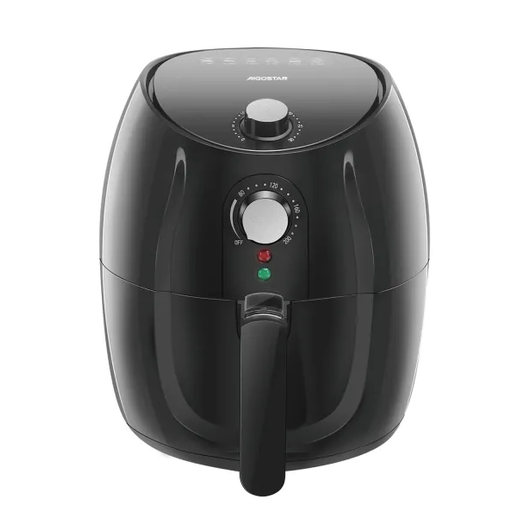
Why this product suits this profile: This compact model offers a 3.5-litre capacity, 1,500 watts of power, and separate temperature and time controls. It is suitable for smaller households and simple everyday meals.
The technical specifications state the exact capacity, power and a temperature range of 80 to 200 °C, rather than relying solely on the number of programmes as a selling point.
360-degree hot-air circulation, removable basket and manual controls with a timer of up to 30 minutes.
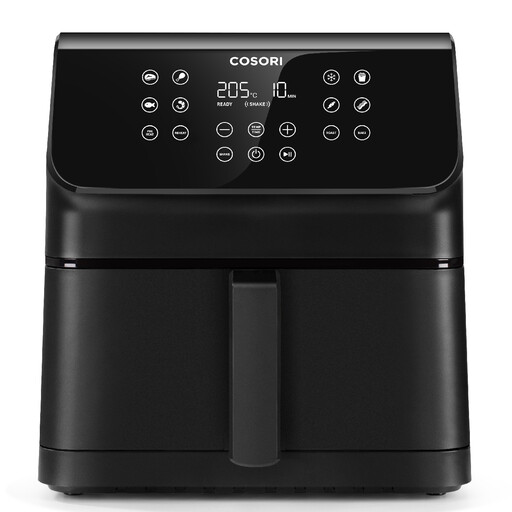
Why this product suits this profile: Its 6.2-litre capacity, 12 one-touch functions, temperature range of 75 to 205 °C and dishwasher-safe crisper plate make it a versatile choice.
The temperature can be adjusted manually, so users are not reliant solely on pre-set programmes.
Shake reminder, app with over 80 recipe suggestions according to the product details, and a stated noise level of 55 dB.
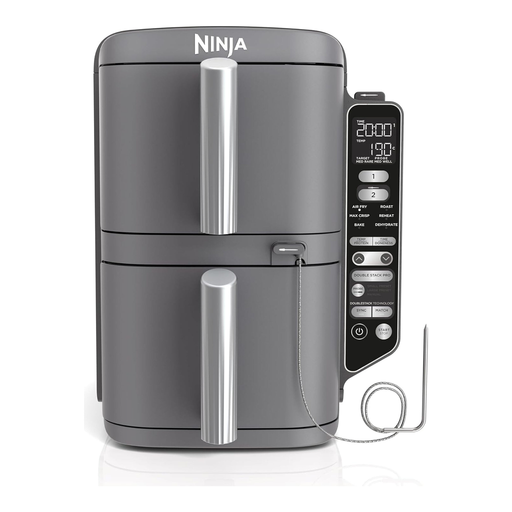
Why this product suits this profile: Two independent 4.75-litre drawers and four cooking levels allow different foods to be prepared at the same time.
The separate drawers prevent delicate foods and foods requiring more intense cooking from having to use the same settings.
Digital thermometer, six functions, and dishwasher-safe drawers and racks according to the product description.
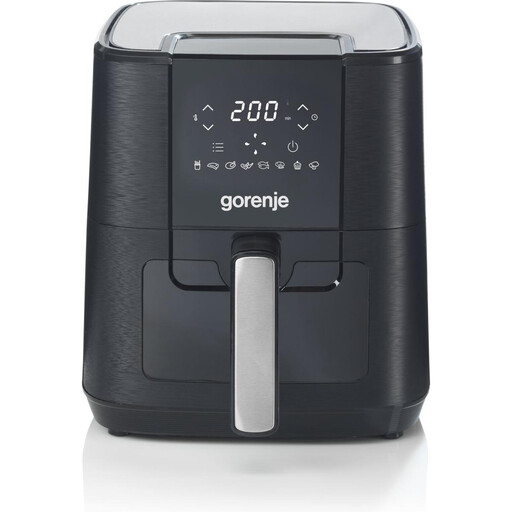
Why this product suits this profile: This 5.4-litre model features a viewing window, an illuminated cooking chamber, eight programmes and an LED touch control panel.
The viewing window lets you monitor the food without pulling the basket out completely each time you check it.
Temperature range of 80 to 200 °C, 60-minute timer and removable dishwasher-safe parts according to the product description.
We have put together a complete, regularly updated list of products that fully meet these strict selection criteria and the safety regulations applicable in the EU.
An air fryer usually has a smaller cooking chamber than an oven. Whether it uses less electricity in a particular situation depends on power, running time, portion size and preheating time. Do not compare wattage alone; consider the time required to prepare your typical meal. Manufacturer claims such as “up to 55% less energy” should be understood as product- or brand-specific claims and cannot automatically be applied to every household.
A useful comparison should also include replacement parts, warranty, cleaning and the ability to prepare several portions in a single cycle. An appliance that is too small may require multiple cycles, reducing its practical advantage.
For four people, around 5 to 7 litres is often practical. The key question is whether you want to prepare a complete meal or just a side dish. If you are cooking two different foods, a dual-basket model may be more useful than a single large basket.
It is not possible to guarantee a fixed service life reliably. It depends on how often the appliance is used, cleaning, the coating, storage and the availability of spare parts. Overfilling, metal utensils and blocked ventilation can increase wear. Follow the warranty and care instructions provided by the manufacturer.
Many dishes can be prepared with little or no additional oil. The result depends on the food, the surface and the air circulation. “Low-fat” describes the preparation method and is not a medical or therapeutic promise. For crisp results, food should not be placed on top of other pieces and should be shaken halfway through cooking where necessary.