
Lieferung heute & morgen

Qualitätsgarantie

Willkommens-Angebote freischalten: KOSTENLOSE Lieferung | Bis zu 80 % RABATT | Kostenlose 30-Tage-JoyPlus-Testphase
App herunterladen
An air fryer can prepare potato dishes, vegetables, fish and snacks with very little additional oil, while also complementing your oven. However, not every appliance is suitable for every household. Small baskets can quickly become impractical for several people, heavily advertised programmes often go unused, and a coating that is difficult to clean can make everyday use less convenient.
If you want to buy an air fryer or a multifunctional model, you should therefore look beyond wattage and the number of programmes. Capacity, air circulation, controls, materials and everyday cleaning are what really matter. The Joybuy product guide explains which specifications are genuinely relevant and how to avoid common purchasing mistakes.
A specification such as 5-litre air fryer describes the internal volume. It does not automatically indicate how much food can be cooked evenly and crisp. If the basket is filled too densely, hot air cannot reach every surface of the food. This can lead to uneven results with chips, breaded foods or vegetables.
For singles and couples, 4 to 5 litres is often sufficient. An air fryer for families should offer around 5.7 to 6.5 litres, or several levels, depending on your eating habits. If you regularly prepare a complete meal for several people, you should also check the usable basket surface rather than looking only at the litre capacity.
Six or twelve programmes may sound comprehensive. In practice, easy-to-understand controls and an adjustable temperature are more important. Different foods require different cooking times. You should therefore look for:
A digital air fryer with touch controls can be convenient. Mechanical dials, on the other hand, are appealing to users who prefer particularly direct operation.
A low-oil fryer reduces the need for additional oil, but it does not eliminate cleaning altogether. Fat, marinades and food residue can build up on the basket, rack and interior. A dishwasher-safe frying basket makes everyday cleaning easier, although you should follow the manufacturer’s care instructions. The main unit must never be immersed in water.
Compact drawer-style models generally require less space on the worktop. For two people, 5 to 5.3 litres is often sufficient, provided you do not intend to cook several components at the same time. Models with a capacity of 5.7 to 6.5 litres are more suitable for family meals or larger portions.
An air fryer oven with a 13-litre capacity offers greater flexibility thanks to several shelf levels and accessories such as a rotisserie spit. However, it requires more space and calls for careful monitoring of air circulation between the levels.
Power alone does not determine cooking quality. It must be suited to the size of the cooking chamber and the air flow. For example, the appliances featured here range from 1,450 to 1,700 watts. More important than a single wattage figure are even hot-air distribution, clear temperature control and a cooking surface that suits your needs.
With coated baskets, you should check whether the manufacturer provides information about the material composition. A coating labelled PFAS-free or PFAS/PTFE/PFOA-free should be understood as a specific manufacturer statement, not as a general quality rating. Metal utensils, scouring pads and harsh cleaning products can damage coatings.
If you want to reduce direct food contact with coatings, you can choose an air fryer with a stainless-steel basket. Frying pans are also available in versions such as a hybrid stainless-steel frying pan, a coated stainless-steel frying pan or a PFAS-free frying pan with a ceramic coating. Here too, care instructions, temperature limits and compatibility with your hob are important.
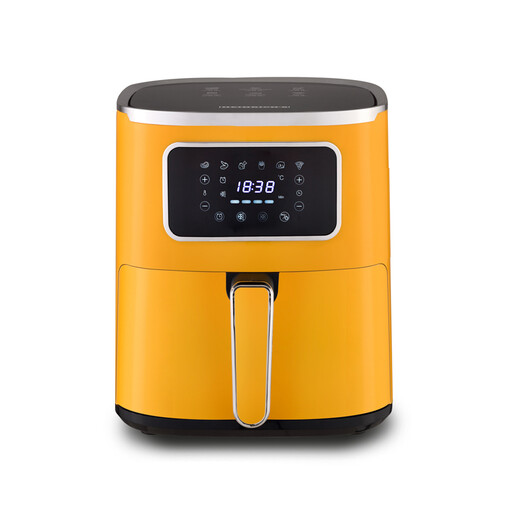
Why this product suits the profile: This model combines a 5-litre capacity with 1,450 watts, six automatic programmes, touch controls and a temperature range of 80 to 200 °C.
The temperature and timer can be adjusted independently, so the programmes are not the only way to operate the appliance. According to the product details, the basket is dishwasher-safe.
5-litre cooking chamber, six automatic programmes and sensor touch control panel.
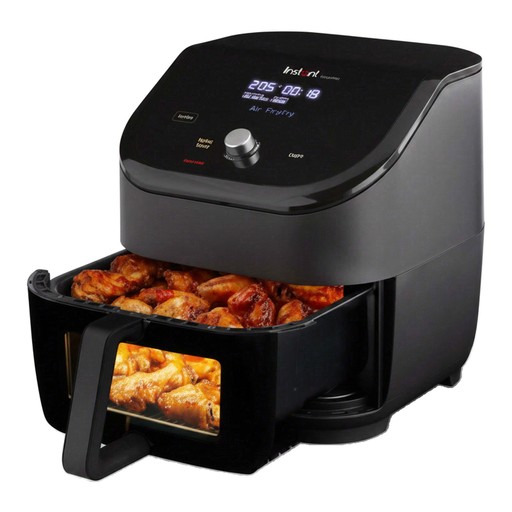
Why this product suits the profile: The six functions include air frying, grilling, baking, roasting, dehydrating and reheating. A viewing window with an interior light lets you check the food without opening the basket.
The viewing window reduces unnecessary opening and therefore heat loss. According to the product details, the drawer and baking tray are dishwasher-safe.
5.7 litres, ClearCook viewing window and digital controls with dial and buttons.
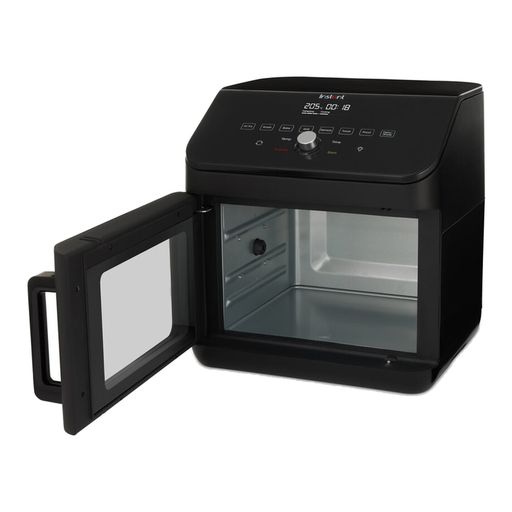
Why this product suits the profile: With its 13-litre design, two trays and rotisserie spit, this model is aimed at families, entertaining or users who want to combine several cooking methods in one appliance.
The oven-style design avoids the limitation of a single drawer. However, with several levels, you should still ensure there is enough space between the food items.
13-litre cooking chamber, nine programmes, two slide-in trays and rotisserie spit.
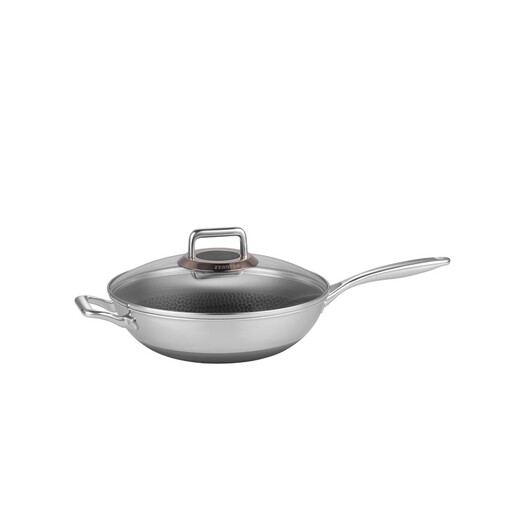
Why this product suits the profile: This deep hybrid stainless-steel frying pan is an alternative to an air fryer if you want to prepare dishes on different types of hob and in the oven.
According to the product details, the ceramic coating is free from PFAS, PTFE and PFOA. The three-layer construction has an aluminium core for even heat distribution.
Suitable for gas, electric, ceramic, halogen and induction hobs; according to the product details, oven-safe up to 260 °C.
We have put together a complete, regularly updated list of products that fully meet these strict selection criteria and the safety regulations applicable in the EU.
For two people, 4 to 5.3 litres is often sufficient. If you also want to batch-cook or prepare several components at the same time, a model with a capacity of around 5.7 litres or more is a better choice. The basket surface and maximum filling level are at least as important as the stated litre capacity.
The cost depends on the power rating, operating time and electricity tariff. Calculate it as follows: Power in kilowatts × operating hours × electricity price per kilowatt-hour. A 1,700-watt appliance running for 20 minutes uses approximately 0.57 kWh in theory. Actual consumption and cooking time may vary depending on the dish and whether you preheat the appliance.
It is not possible to guarantee a fixed service life reliably. It depends on how frequently the appliance is used, how it is cleaned, how the coating is treated and the quality of the heating element, basket and electronics. Regular cleaning, avoiding overfilling and observing the temperature limits can help reduce wear.