Small portions, limited space
During your kitchen renovation, you mainly want to cook a small portion of potato wedges and need to fit the appliance on a limited temporary worktop.


Choose an air fryer based on how many potato wedges you want to cook without overcrowding the basket, then check the space it needs, the power connection and how easy it is to clean. A compact single-basket air fryer is better suited to smaller portions. Two baskets make sense if you want to cook potato wedges and a second dish at the same time, but they take up more space.
During your kitchen renovation, you mainly want to cook a small portion of potato wedges and need to fit the appliance on a limited temporary worktop.
You often need to cook more potato wedges at once and want to avoid extra batches. Stated chip capacities can be a useful guide, but they don’t tell you how much usable basket space there is.
You want to cook potato wedges and another dish at the same time, and have space for an appliance with two baskets.
A good fit if: You want to cook small portions on a limited worktop. Tefal lists the EY1458 as having a 3-litre capacity; Philips gives the NA220/00 a 4.2-litre basket.
The trade-off: Larger quantities may need to be cooked in several batches. Philips’ stated maximum capacity for chips is not a tested guideline for freshly cut potato wedges.
A good fit if: You regularly want to cook a larger portion in one cooking chamber. Rommelsbacher lists the FRH 1500 as having a 5-litre basket and capacity for up to 800 g of chips.
The trade-off: Measure the space available and allow for the clearance specified in the manual for the particular appliance.
A good fit if: You want to cook potato wedges and a second dish at the same time. COSORI describes its Dual Basket model as having two baskets with a combined capacity of 8.5 litres.
The trade-off: The total capacity is split between the two baskets. Check the size of each individual basket, as well as the extra space and cleaning it will require.
| What matters | What to check when buying | Who should pay particular attention |
|---|---|---|
| Portion size | Compare the quantity you plan to cook with the basket shape and the food capacity stated for the specific model. | If I want to cook a larger portion with as few extra batches as possible, I check that there’s enough room for the potato wedges in the basket. Around 36% of consumers put portion size first. |
| Even cooking | Look for an easy-to-access basket and adjustable cooking time and temperature. | If an even, golden finish matters more to me than cooking the largest possible portion, I want to be able to adjust the cooking process easily. Around 29% of consumers prioritise the cooking results. |
| Space and power connection | Check the appliance dimensions and the clearance it needs; make sure its connection requirements match the socket available. | During the renovation, I need a suitable space and the right connection before setting up the appliance. Around 21% of consumers focus mainly on space and the power connection. |
| Cleaning | Check which parts are dishwasher-safe for the exact model, and how to clean the basket and insert by hand. | If I can’t use the dishwasher temporarily, I want to know how many parts I’ll need to wash by hand. Around 14% of consumers prioritise easy cleaning. |
Capacity in litres and stated chip quantities don’t tell you how many freshly cut potato wedges will fit in the basket for the results you want. Philips recommends not overfilling the basket and shaking it partway through cooking.
Compare the quantity you plan to cook with the basket shape and the information for the specific model. If necessary, allow for several batches.
The 8.5-litre capacity stated by COSORI for its Dual Basket model is split between two baskets; according to COSORI, the appliance is 46 cm wide. So the total capacity isn’t the same as the capacity of a single basket.
If you want to cook a large portion of potato wedges in one cooking chamber, check the size of an individual basket or compare it with a single-basket model.
Tefal’s comparison for the EY1458 is based, according to the manufacturer, on 300 g of frozen chips and a particular oven comparison—not on fresh potato wedges.
Assess potential electricity costs using comparable quantities, cooking times and appliances only. Don’t treat the advertised figure as a forecast of the savings you’ll make in your kitchen.
The NA220/00 is a single-basket model to consider for smaller portions.
According to Tefal, the Easy Fry Compact EY1458 is a single-basket air fryer with a 3-litre capacity.
The FRH 1500 is a single-basket model worth considering for larger portions.
The Dual Basket is a two-basket design for cooking two dishes at the same time.
The AF160EU is a single-basket model featured in an independent product review overview.
This selection includes compact and larger single-basket air fryers, as well as a dual-zone model. Before buying a mains-powered appliance, check the CE marking and conformity information for the specific product listing.
 No image available
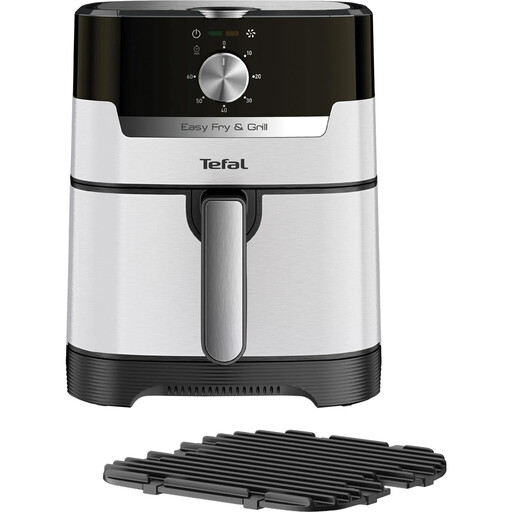
Adjustable cooking time and temperature give you options for preparing potato wedges in a smaller single-basket model.
4,2 l; 1.500 W; temperature range 80–200 °C; 60-minute timer; dimensions 324 × 270 × 361 mm.
According to the product information, the removable parts are dishwasher-safe. Follow the instructions on using a heat-resistant surface and leaving sufficient clearance.
 No image available
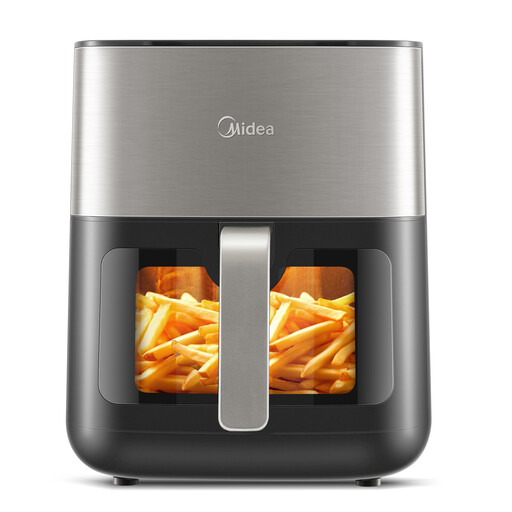
The stated basket size may suit a larger portion; compare the quantity you need with the usable basket area.
6,2 l; 1.600 W; viewing window and digital display. The product information describes the basket as dishwasher-safe.
Check the dimensions of the specific appliance and the clearance it needs before setting it up.
 No image available
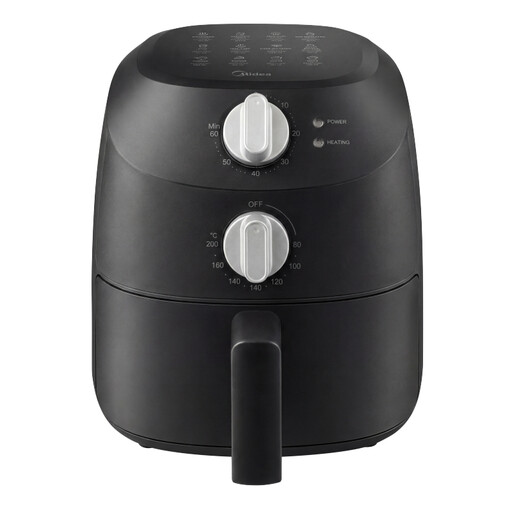
The 2-litre capacity is an option for smaller portions; check whether it’s enough for the quantity of potato wedges you want to cook.
2 l; 1.150 W; 60-minute timer. The product information describes the non-stick basket as dishwasher-safe.
 No image available
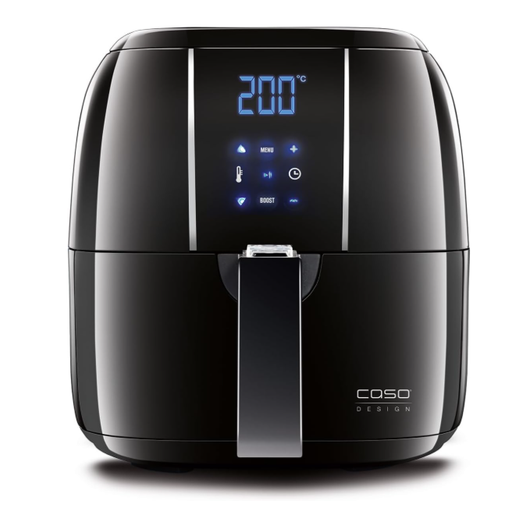
You can adjust the temperature and cooking time manually to suit the portion.
3 l; temperature range 60–200 °C; six automatic programmes; LCD display; dimensions 33,5 × 28 × 41 cm.
Dishwasher-suitability isn’t specified for this model; check the cleaning instructions before buying.
 No image available
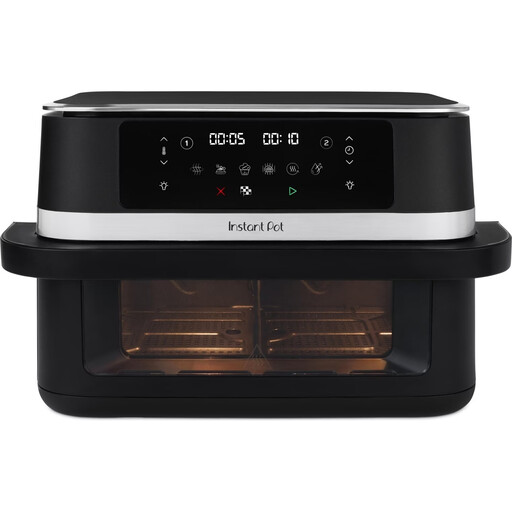
This dual-zone model is worth considering if you want to cook potato wedges and a second dish at the same time.
Product name: 12 l, 2.800 W and 220 V. The description specifies either a single usable 8.5-litre chamber or two separate zones; check which configuration suits your portion.
Dimensions: 41 × 43 × 32 cm. The product description lists dishwasher-safe parts. Use on a heat-resistant surface, with clearance around the air vents, and connect to an earthed 220-V socket.
Philips gives a recipe guideline of 300–500 g, 30 minutes and 180 °C. The quantity, size of the pieces and appliance can all affect the result: don’t overfill the basket, shake it partway through cooking and check how browned the wedges are. This guideline won’t necessarily suit every model.
Follow the manual for the specific appliance and use only a suitable power connection. For example, the instructions for the Rommelsbacher FRH 1500 require a properly installed earthed socket and a mains voltage that matches the rating plate; this doesn’t mean the same setup requirements apply to every model.
Mains-powered appliances covered by the EU Low Voltage Directive must meet its conformity requirements, including CE marking. This marking is the manufacturer’s declaration of conformity, not an independent quality seal. Check the information provided with the specific product listing.
No. When you buy from a business seller in the EU, you have statutory rights against the seller for at least two years from receiving the goods. A voluntary manufacturer’s guarantee is separate.
No. The German Federal Institute for Risk Assessment points out that acrylamide can form in potato products cooked at high temperatures, and levels rise as browning increases. Its recommendation is: “Go for golden, not burnt.”